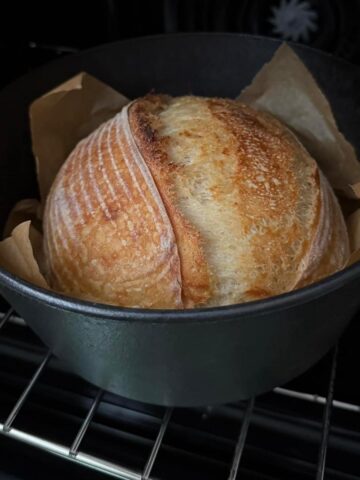

You can still hand-mix bread dough, even if you are making up to 100 loaves at a time, but you will want to try a dough mixer instead. Let's talk about the difference between hand mixing and using a spiral mixer, as well as how to choose the best one for you.

Hand mixing vs. spiral mixer: What's the difference?
Here are some differences between the two methods:
- Strengthening the dough: Hand mixing develops gluten through the mixing stage and continues strengthening the dough during bulk fermentation. A spiral mixer, however, builds gluten as it mixes, so you do not need to fold the dough as much during fermentation.
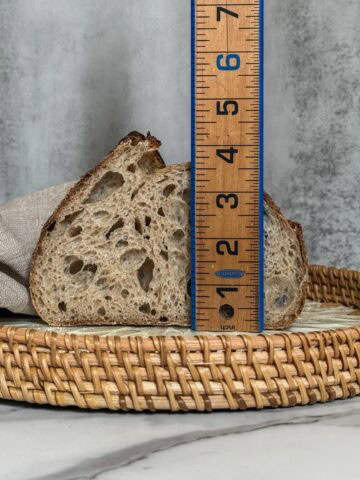
- Flavor vs. volume: Hand mixing produces less dough volume but offers better flavor. A spiral mixer brings more air into the dough than hand mixing, but it reduces the bread's flavor.
- Time and effort: Hand mixing takes longer and requires more physical effort, while mixers save time and energy.
- Dishwashing: A dough mixer creates more dishes to wash, so consider this before making your choice.
- Tradition vs. efficiency: Hand mixing follows traditional bread-making methods, while dough mixing focuses on efficiency.
How to mix sourdough by hand
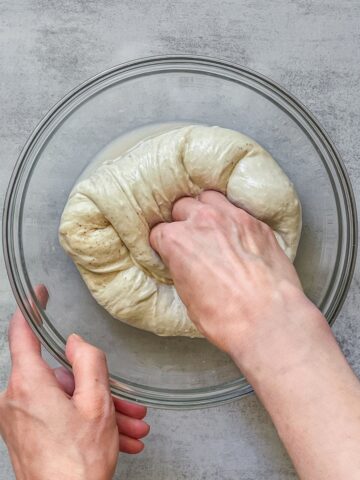
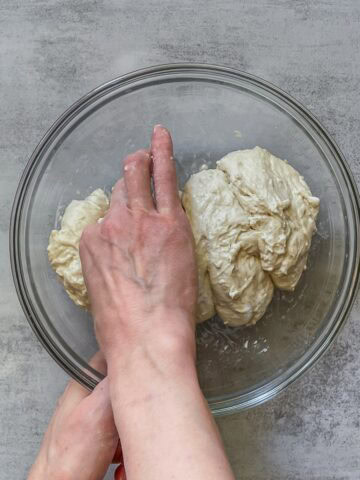
When you mix sourdough dough by hand, all you need is a bowl and your hands. It is a simple, tactile process that connects you to the dough and makes the experience feel personal and even meditative. Have you heard the phrase "sourdough is my therapy"?
There are a few bread dough mixing techniques:
- Pincer method: Folding and pinching through the dough layers to incorporate ingredients.
- Pinch and fold: A mixing technique for adding salt and water to the dough after fermetolyse.
- Folding in the bowl: A gentle technique perfect for beginners.
- Slap and fold: Great for developing gluten with high-hydration doughs.
- Rubaud method: A rhythmic, circular motion that builds structure and strength.
Mixing sourdough with a stand or spiral mixer
Using a mixer makes sourdough baking faster and more convenient, especially when making multiple loaves of bread.
There are two types of mixers commonly used in home baking:
- Planetary mixer: This versatile mixer handles cookies, cake batters, and frosting. While it can be used with sourdough, it is not ideal. It often struggles with heavier doughs and doesn't develop gluten effectively.
- Spiral mixer: Designed for bread dough, this mixer excels at sourdough. It mixes efficiently, helps gluten development, and adds just the right amount of air for a better crumb texture.
How to choose the best mixer for sourdough bread
When choosing a mixer, research all the options carefully and select one that suits your needs and budget. Always buy from a trusted seller and make sure that you have a warranty form in hand. Here is what to look for:
- Spiral dough hook: Ideal for kneading bread dough evenly and gently.
- Removable bowl: Makes cleanup easier and allows you to lift the dough out without hassle.
- Dough capacity: Aim for a mixer that can handle 5-10 kg (11-22 lbs) of dough, depending on your batch size.
- Breaker bar: A fixed bar in the bowl helps prevent the dough from climbing up the hook.
- Voltage: Choose a model with 110-120V if you plan to use it at home in the U.S.
- Weight and size: Make sure the mixer fits your kitchen and is easy to move if necessary.
Top dough mixer picks for sourdough
1. Kitchen Aid stand mixer
The KitchenAid stand mixer, a planetary mixer, works well for tasks like cookie dough and cake batter, but it is not considered the best choice for sourdough.
You can still make sourdough with a KitchenAid stand mixer by mixing the ingredients with the paddle and then switching to the dough hook to knead the dough. Or you can invest in a spiral dough hook (I use it for my 5 Qt KitchenAid), which helps achieve a perfect windowpane.
But be careful: to prevent the motor from overheating, knead the dough in 2-minute intervals for a total of 4-6 minutes.
Models up to 6 quarts use an alternating current (AC) motor, while the 7- and 8-quart versions have a direct current (DC) motor for consistent power at low speeds.
A professional 6-quart KitchenAid mixer can handle up to 14 cups of flour, enough for three loaves weighing approximately 950 grams each before baking. The 8-quart model can handle 16 cups of flour, allowing you to prepare four loaves of the same size.
2. Bosch stand mixer
The Bosch Universal Plus Stand Mixer, with its 6.5-quart bowl, is a great choice for mixing sourdough. It works well for bread dough, cookies, and bagels. Choose a stainless steel bowl with a dough hook attachment.
Sourdough enthusiasts often say this mixer can easily mix six to seven loaves of dough, each weighing about 900 grams before baking.
3. Ankarsrum mixer
The Ankarsrum mixer is an excellent choice for making sourdough and other baked goods, and it performs even better than KitchenAid and Bosch mixers.
It is quiet, handles both small and large batches with ease (unlike Bosch, which struggles with smaller recipes), and is easier to clean because it does not have Bosch's inconvenient center column. Plus, its motor comes with a 7-year warranty.
Bakers say it can easily mix seven loaves of bread dough at once. Although it takes some time to learn how to use it, helpful resources like the Ankarsrum USA Facebook fan page and YouTube tutorials can guide you.
4. Famag spiral dough mixer
The Famag spiral mixer is a great choice for home sourdough bakers. It comes in 5kg, 8kg, and 10kg sizes, perfect for home use with a 110V power supply. Choose a model with a tilting head and a removable bowl for easier use.
Some bakers claim that the Famag IM-8 or IM-8S can mix enough dough to produce 8 to 10 loaves in a single batch.
5. Sunmix spiral dough mixer
Sunmix is renowned for its high-quality commercial mixers, and its smaller models are well-built as well. They are available in 6kg and 10kg sizes for 110V home use.
The Sunmix spiral mixer is even better than the Famag. It is built with superior quality, kneads more gently, and has a reverse function to make mixing easier, even without a removable bowl.
The basic models are perfect for home bakers or small bakery businesses. The EVO line features additional benefits, including automatic mixing programs and a temperature sensor that shuts off the mixer if the dough becomes too warm.
Bakers say the SUN10 can mix enough dough for 12 loaves, each weighing 885g before baking. The Sunmix EVO15 can handle up to 20 loaves, each weighing 735g before baking.
6. Ooni Halo Pro spiral mixer
The Ooni Halo Pro Spiral Mixer, featuring a 650-watt motor, is another excellent choice for sourdough home bakers. It has a 7.3-quart stainless steel bowl that spins and a special spiral hook to help mix the dough. This mixer uses two types of kneading to develop strong gluten.
It also has a removable bar to stop the dough from climbing the hook, and the bowl can be tilted and washed in the dishwasher for easy cleaning. The Ooni Halo Pro Spiral Mixer can handle approximately 7-8 loaves, each weighing 885g before baking.
7. Estella spiral dough mixer
The Estella spiral mixer is an excellent option for small bakery businesses selling sourdough bread. It is more affordable than the Famag and Sunmix mixers, but handles large amounts of dough very well.
Estella mixers are available in 20- and 30-quart sizes, both of which use a 120V power supply. The 20-quart model can mix enough dough for about 18 loaves, while the 30-quart model can handle about 25 loaves at once.
Other dough mixers
If you find a 20-quart Hobart spiral mixer on the Marketplace, it is a great option. It is very reliable and can mix dough for 12 loaves at a time.
Wolf, Vevor, and Omcan are planetary mixers, which are not the best for mixing sourdough.
Let's talk sourdough
Do you use a spiral mixer or stick to hand mixing? What works best for you? Share your favorite method in the comments.
Ready to keep learning?
Once you have mastered the basics of mixing, whether by hand or with a mixer, try my Stand Mixer Sourdough Bread recipe and take your dough to the next level with sourdough lamination.