

One of the most common questions sourdough bakers ask is: "When is sourdough starter ready to use?" or "When to use sourdough starter after feeding?"
The best time to use your sourdough starter is when it is at its peak. However, you can still use it while it is rising or just after it has peaked. Each stage has its benefits, and understanding them helps you bake amazing bread.
This is an important topic if you want to bake the perfect sourdough bread. Many believe a starter has peaked when it doubles in size and forms a domed top, but that's not really the case.
At a Glance
- Best for: Beginner sourdough bakers who are unsure when their starter is ready to bake with after feeding.
- What you'll learn: How to recognize the stages of a fed starter, identify peak activity, and choose the right timing for different recipes.
- Skill level: Beginner
- Time commitment: About 5-10 minutes of hands-on time, plus 4-8 hours for the starter to rise and reach peak activity, depending on temperature and feeding ratio.
- Key techniques: Feeding a starter, tracking rise and fall, identifying peak activity, and using visual cues instead of relying only on the clock.
- Optional steps: Mark the starter's level with a rubber band or jar marker and experiment with different feeding ratios to better predict timing.
- Main takeaway: The best time to use your sourdough starter is usually at or near its peak, when it's bubbly, active, and has reached its maximum rise.
- Next step: Put these signs into practice with a Beginner's Sourdough Bread Recipe and learn how starter timing affects your final loaf.
Jump to:
- At a Glance
- What sourdough starter peak really means
- The science behind your starter: before peak, at peak, and after peak
- Sourdough starter after peak
- Using sourdough starter before peak
- Using sourdough starter at peak
- Using sourdough starter after peak
- FAQ
- Let's talk sourdough
- Ready to keep learning?
- Comments
What sourdough starter peak really means
When you feed your starter, the yeast and bacteria wake up, eat the fresh flour, and produce gas (CO₂) and acids. Peak is the moment when activity (bubbling and rise) is at its maximum: the starter is light and airy. After that, food runs low, acids build up, and activity slows (the starter "falls").
Sourdough starter peak isn't just about doubling in size or having a domed top. The real sign is when it just begins to fall, with soft wrinkles forming on the surface. To learn more, check out my blog post about the sourdough starter peak.
The science behind your starter: before peak, at peak, and after peak
Let's take a look at what happens inside your starter at each stage. This will help you choose exactly when to use it and why your bread turns out the way it does.
Sourdough starter before peak
After feeding, the sourdough starter enters its exponential growth phase. Yeast populations grow rapidly, but they have not yet reached their maximum rate of gas production.
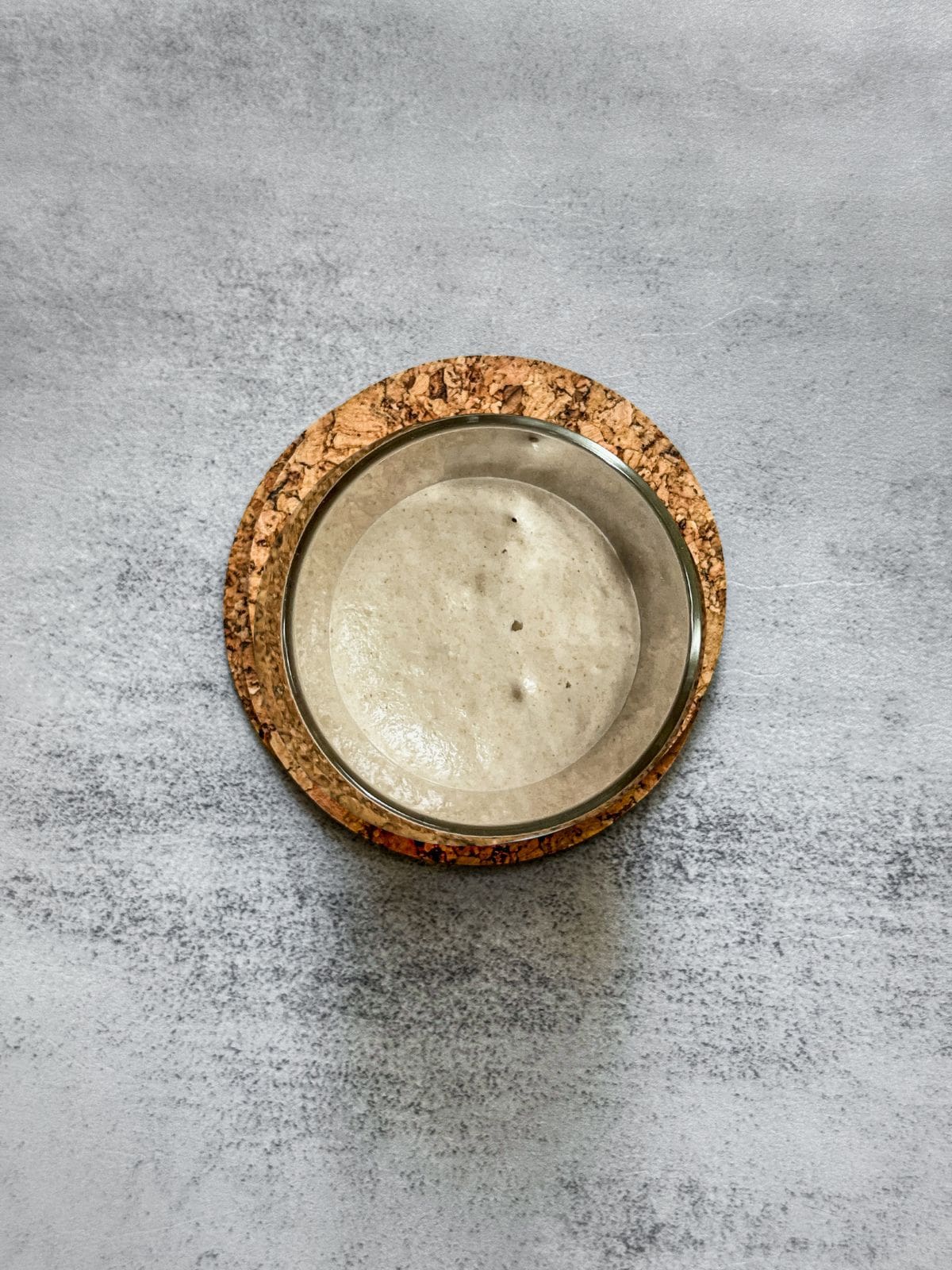
At the same time, lactic acid bacteria begin producing lactic and acetic acids, which gradually increase the starter's acidity. The pH is about 4.5-5.0, steadily dropping, but it has not reached its lowest point.
Enzymes in the flour also activate and start breaking complex starches into simple sugars that feed the microbes. They haven't started breaking down much gluten yet, so the starter is still building its structure.
Sourdough starter at peak
At peak activity, the starter is at its best microbial balance. Yeast produces carbon dioxide at its highest rate, which gives the starter its maximum volume and a light, aerated structure.
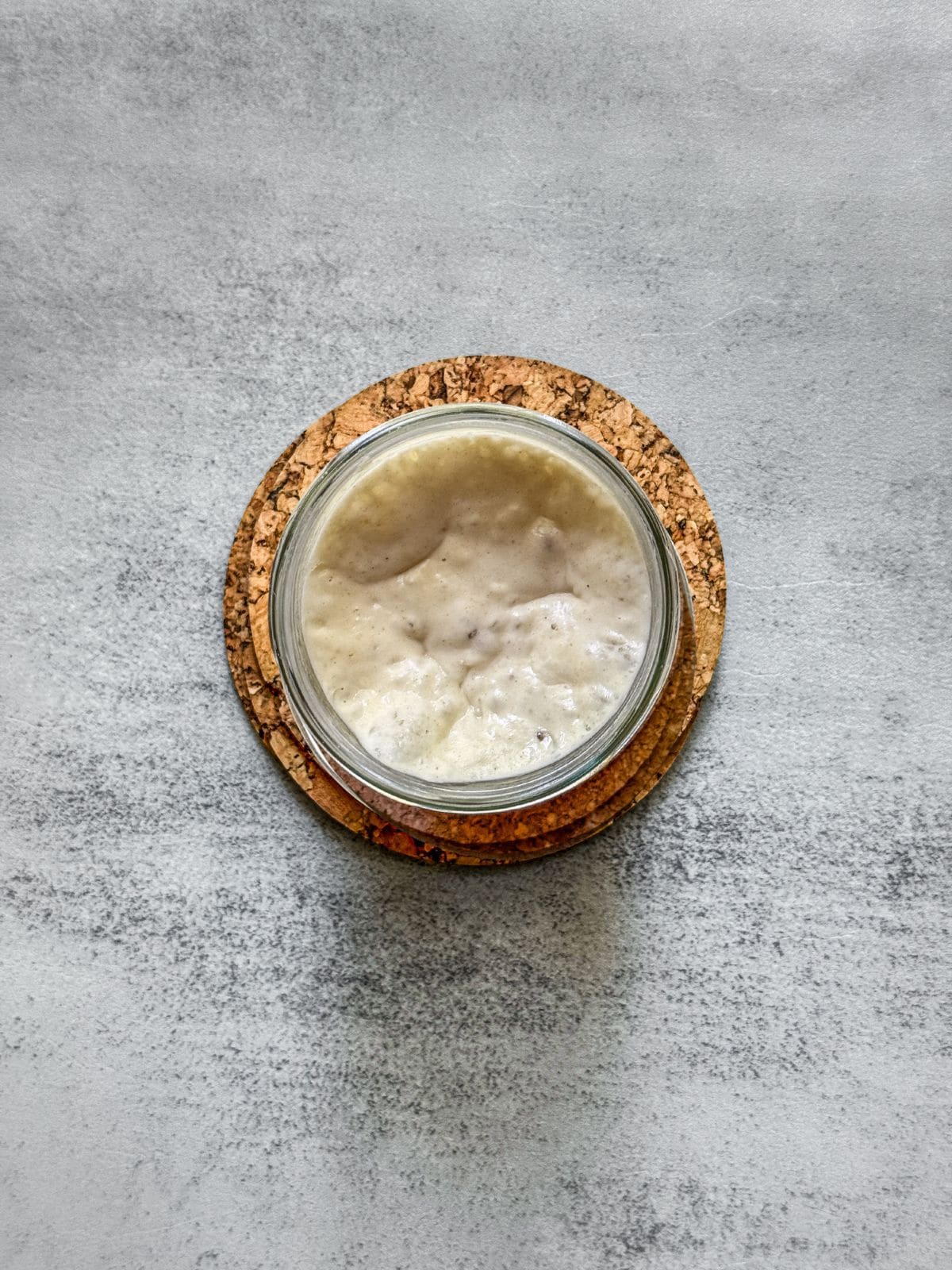
The starter's acidity is more pronounced than earlier, but still not dominating. Its pH usually ranges from 3.7 to 4.1.
At this moment, both yeast and lactobacilli function in a stable equilibrium, when each population feeds off the byproducts of the other in a highly efficient exchange.
Sourdough starter after peak
Once the starter begins to fall, it enters the phase commonly called post-peak or declining activity. By this point, available food has decreased, slowing yeast activity and gradually reducing gas production.
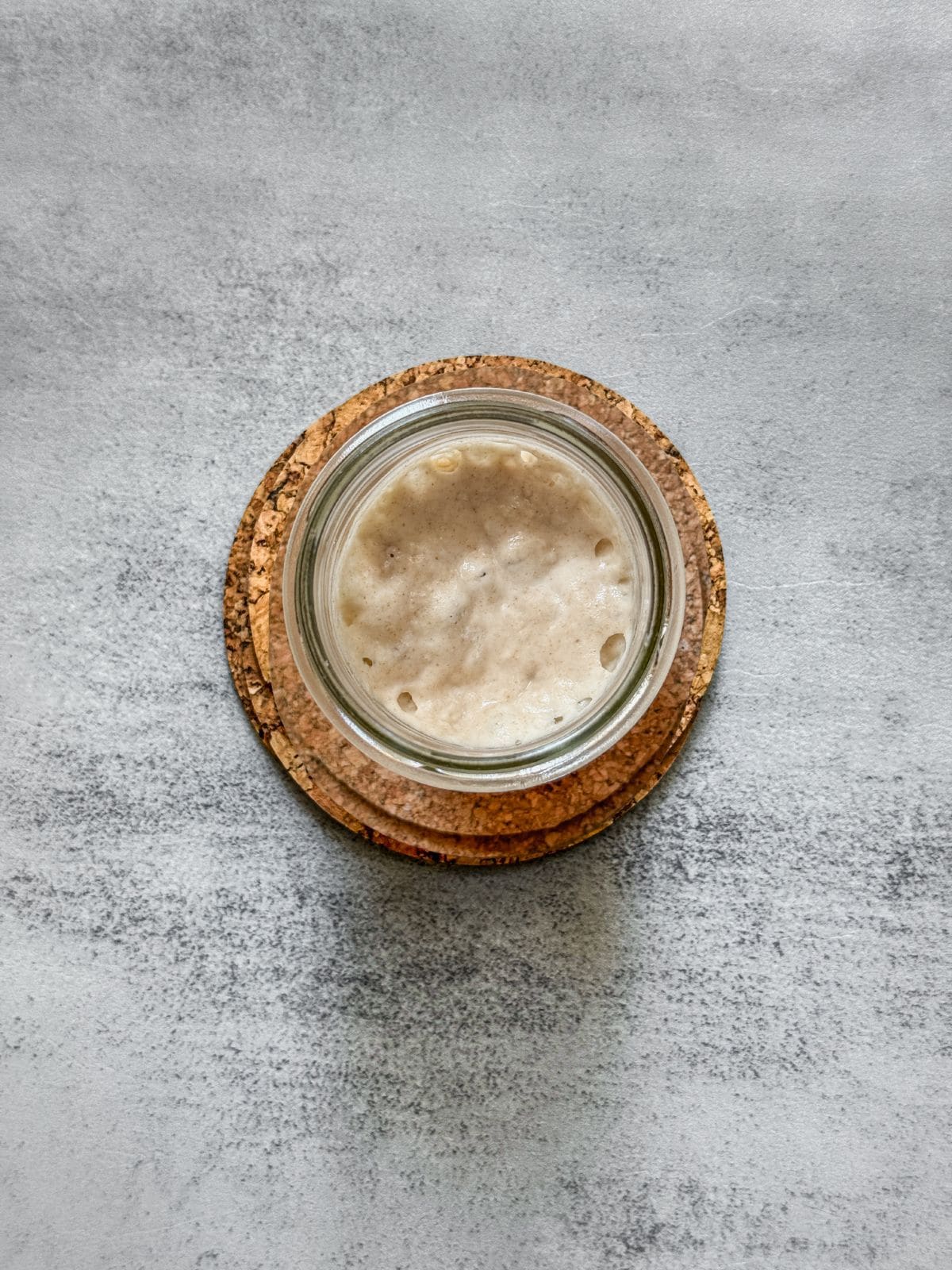
As some yeast cells begin to die, acid-producing bacteria take over a larger share of the microbial activity. Their continued production of lactic and acetic acids further lowers the pH (about 3.5-3.8), increasing the starter's overall acidity.
Structurally, the gluten matrix weakens. As a result, the gas escapes and the starter collapses.
Using sourdough starter before peak
Before the starter reaches its peak, you may notice it has doubled or tripled in size and formed a domed top, but it has not started to fall.
A helpful tip is to mark the jar with a rubber band to track how much the starter has risen. This helps visually identify the domed shape on top and the doubled starter, indicating that it has not yet peaked but has stopped growing.
Using a starter before peak, called a young starter, creates loaves with a light tang and a more complex flavor profile, since organic acids continue to accumulate during the dough's fermentation.
Expect a slightly slower start to bulk fermentation because the levain has not yet reached its highest gas-producing power. This earlier stage is helpful when bakers want a longer, more controlled bulk fermentation or make sourdough less sour.
Using sourdough starter at peak
The peak of your starter is the ideal time to use it. You can recognize this moment when the starter is at its highest level in the jar, showing a slightly flattened top with small wrinkles beginning to form. This happens "just" as the starter starts to deflate.
At this stage, the starter has its maximum leavening power. It results in the most predictable and vigorous bulk fermentation. Dough made with peak starter rises consistently and often produces a strong oven spring.
Bread made with a peak starter has a balanced flavor, with a touch of sweetness and mild sourness.
Using sourdough starter after peak
Once the starter has peaked, it will begin to deflate. The top continues to flatten with multiple tiny bubbles on the surface. You will notice a slight decrease in the starter level on the sides of the jar.
You can still use the starter at this stage, though expect the longer bulk fermentation. Oven spring tends to be lower because the yeast is no longer at maximum strength, but the dough feels easier to handle and shape because it contains less trapped gas.
Using a starter after peak produces bread with a more pronounced sour flavor due to the increased acidity.
This stage is often chosen when bakers want to make sourdough more sour or need more flexibility in their baking schedule.
NOTE: If your starter has fallen significantly, turned runny, or shows excessive bubbles and foam, it has been sitting too long past its peak.
In this case, it is best to feed your starter again before using it. Refeed it to restore its strength and prepare it for baking.
FAQ
Can you use the sourdough starter right after feeding?
No. Right after feeding, the starter is still waking up and hasn't produced enough gas or acidity to raise the dough properly.
Can you use sourdough starter once it's fallen?
Yes. A starter that has just fallen is still active and can be used, though it will give a slightly more sour flavor and less rise than at peak.
What is a fed sourdough starter?
A fed sourdough starter is a starter that has just been given fresh flour and water, beginning a new fermentation cycle.
Can you use sourdough starter straight from the fridge?
Yes, you can use a sourdough starter from the fridge, but it depends on how long it has been in the refrigerator and whether it was placed there at peak or not.
Can you bake with unfed sourdough starter?
You can, but results will vary. An unfed starter is weaker and produces denser bread unless you use it to build a levain first.
Let's talk sourdough
Have you noticed a difference in flavor or rise depending on when you use your starter? Share your experience in the comments.
Ready to keep learning?
Using your starter at the right stage isn't something that happens on its own. The temperature in your kitchen plays a big role. Learn how temperature affects sourdough fermentation, starter activity, and overall bread quality.