

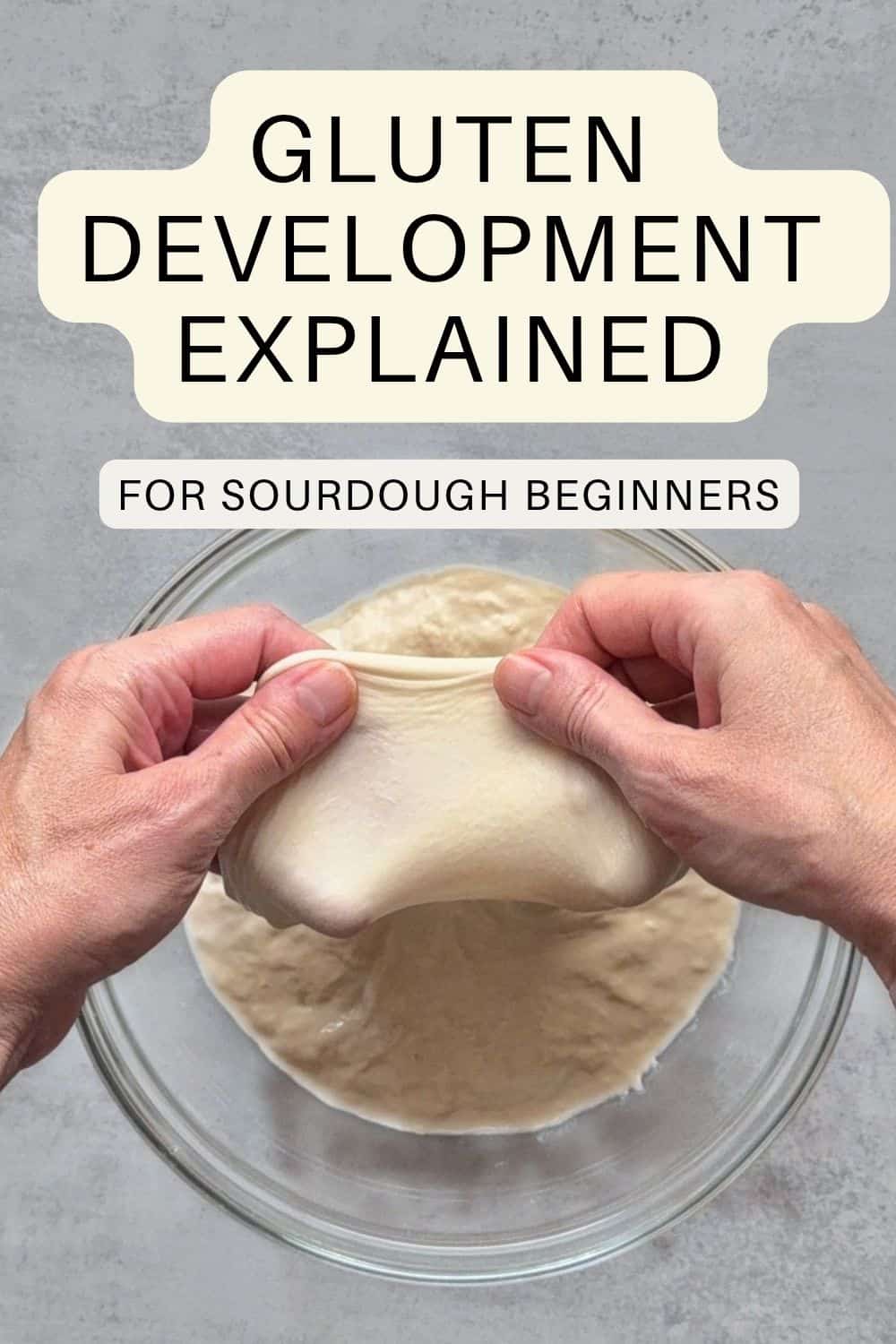
Gluten development is one of the most important parts of making good sourdough bread. It determines how well your dough stretches, holds its shape, traps gas, and rises in the oven.
But many home bakers don't realize: no gluten network sits in your bag of flour waiting to be developed. You create gluten when you add water and mix the dough.
Quick Summary
Gluten forms in sourdough when water reaches the two proteins in wheat flour, glutenin and gliadin. Once hydrated, they can move and bond. Time, mixing, and folds then organize those bonds into a stretchy network that traps gas. Water doesn't add gluten, but it makes gluten possible.
- What gluten is: a stretchy protein network made from glutenin and gliadin
- What starts it: water, which lets the proteins move and bond
- What builds it: resting, mixing, and folds such as stretch and folds or coil folds
- What water does not do: add gluten; the protein comes from the flour
- What weakens it: overfermentation, enzyme activity, and bran in whole wheat flour
- How to check it: smooth dough that holds its shape and stretches without tearing
Understanding how gluten develops explains why some doughs feel elastic, others stretch easily, and some stay slack even after several rounds of stretch and folds.
Let's look at what happens inside your dough, from the moment flour meets water to a strong, extensible gluten network.
What Is Gluten, and Where Does It Come From?
Gluten is a protein network that develops when you add water to wheat flour and mix or handle the dough.
Two main groups of proteins in wheat flour form gluten: glutenin and gliadin. Glutenin gives the dough strength and elasticity, helping it hold its shape and spring back when stretched. Gliadin makes the dough extensible, allowing it to stretch without tearing.
In dry flour, these proteins are separate and haven't formed a network. Once you add water and mix the dough, they hydrate and begin to interact, forming the gluten network that gives bread dough its structure.
What Happens When You Add Water to Flour?
Water does more than just wet the flour. It allows the proteins to hydrate and start forming the gluten network.
When water contacts flour, the proteins absorb it and become flexible. Starch granules and other flour components absorb water at the same time.
At first, the dough looks rough, shaggy, and uneven, and you don't see much structure, but gluten development has already started.
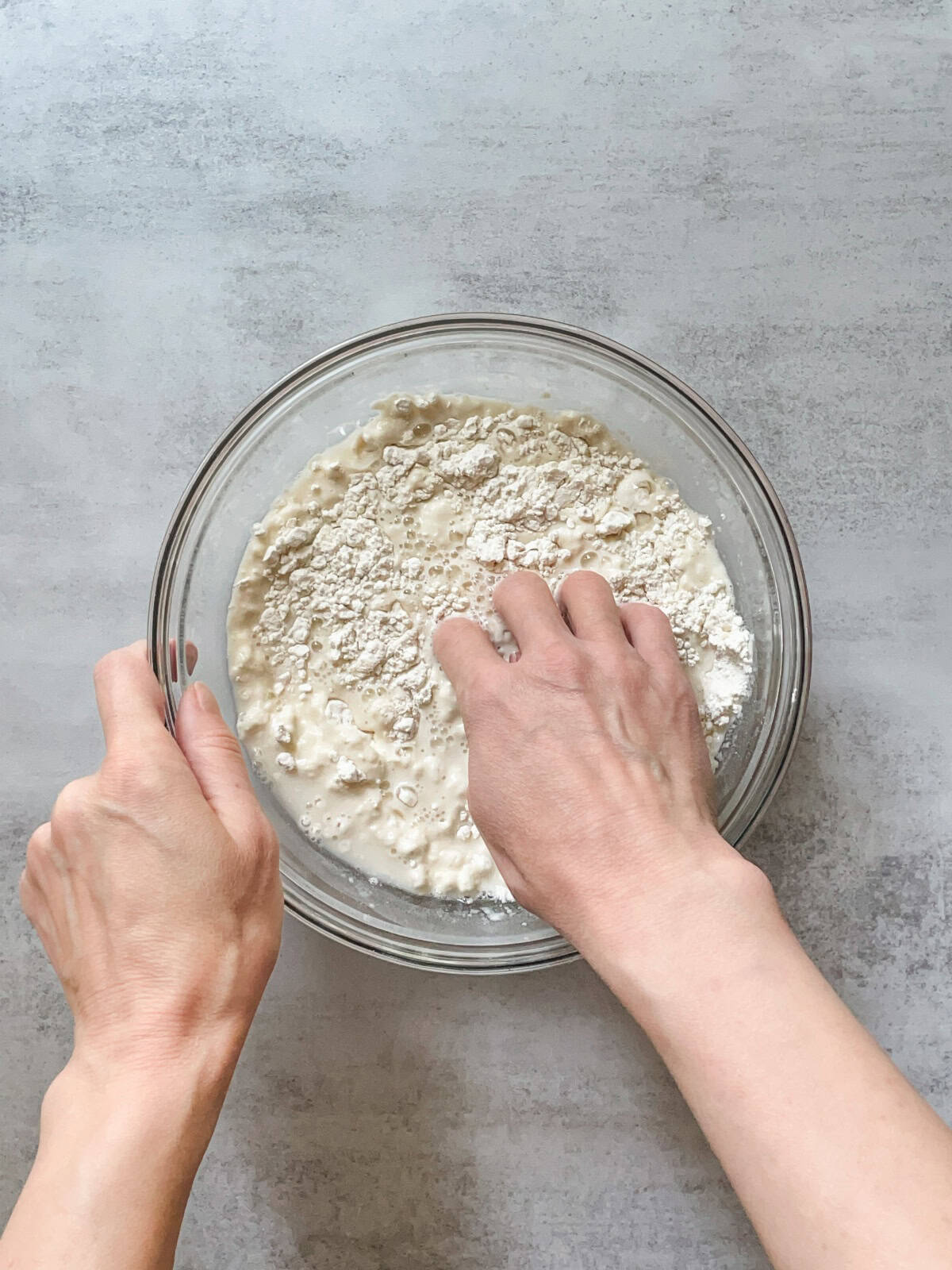
Water hydrates the glutenin and gliadin proteins as soon as it meets the flour.
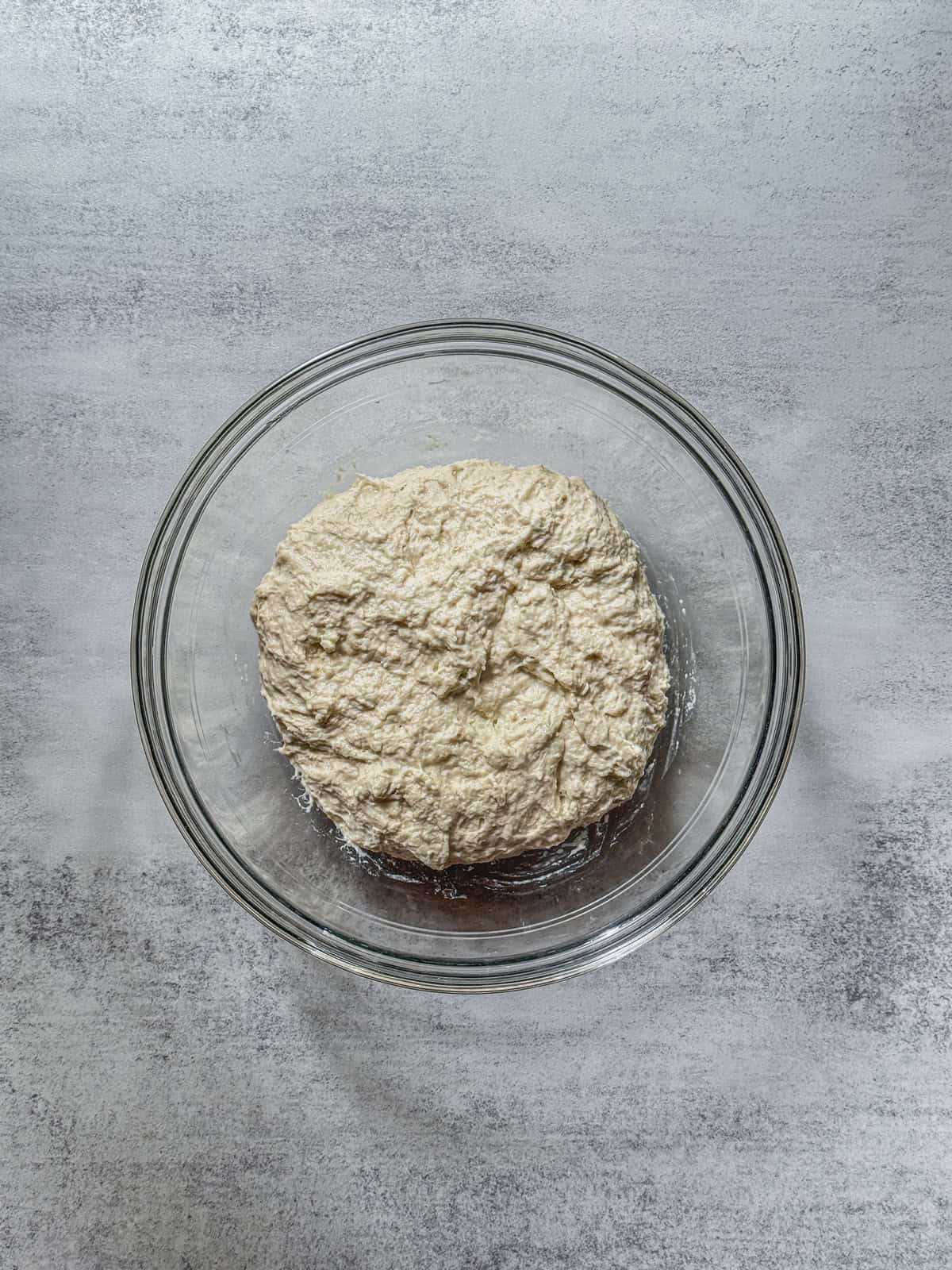
Right after mixing, the dough looks shaggy, but gluten has already started to form.
As you mix the dough, the hydrated proteins come into contact and begin connecting with one another. Mixing helps develop and organize these connections into a continuous gluten network.
As you continue mixing, the dough becomes smoother and more cohesive, but mixing isn't the only factor that affects gluten development. Hydration, flour type, resting time, folding, and fermentation also affect how the dough develops.
This is why the same flour can produce very different doughs depending on how you mix, rest, fold, and ferment it.
How Do Glutenin and Gliadin Work Together?
The two proteins have different roles, and the way they work together affects how your dough behaves.
Glutenin molecules connect through disulfide bonds, which are strong bonds between sulfur atoms in the proteins. These connections help form long protein chains that give the dough strength and elasticity. Mixing and folding help the proteins connect and reorganize, strengthening the gluten network.
Gliadin sits between the glutenin chains, working like a lubricant. It allows the chains to slide past each other, so the dough can stretch and expand instead of snapping back or tearing.
Think about stretching a piece of dough between your hands. If the dough is too elastic, it pulls back quickly and is difficult to shape. If it is too extensible, it stretches easily but spreads out instead of rising. You need both properties for a well-balanced dough.
Good sourdough needs a balance of strength and extensibility. The dough must stretch as fermentation produces gas, but it also needs enough strength to hold those gas bubbles. That balance gives you good oven spring and an open crumb.
How Does Gluten Develop Without Kneading?
You don't need to knead dough to develop gluten. Water, time, and handling do the work.
When you mix flour and water until no dry flour remains and let the dough rest, gluten development continues on its own. The proteins have time to hydrate and interact, helping the gluten network develop without much handling. This is the idea behind autolyse.
What Is Autolyse in Sourdough?
Autolyse is a rest after mixing flour and water. In a traditional autolyse, you add the salt and sourdough starter after this rest.
During this time, the flour absorbs water, allowing the gluten proteins to hydrate and begin forming a network. Enzymes called proteases also become active. They break some proteins into smaller pieces, making the dough more extensible. As a result, the dough becomes easier to stretch and handle.
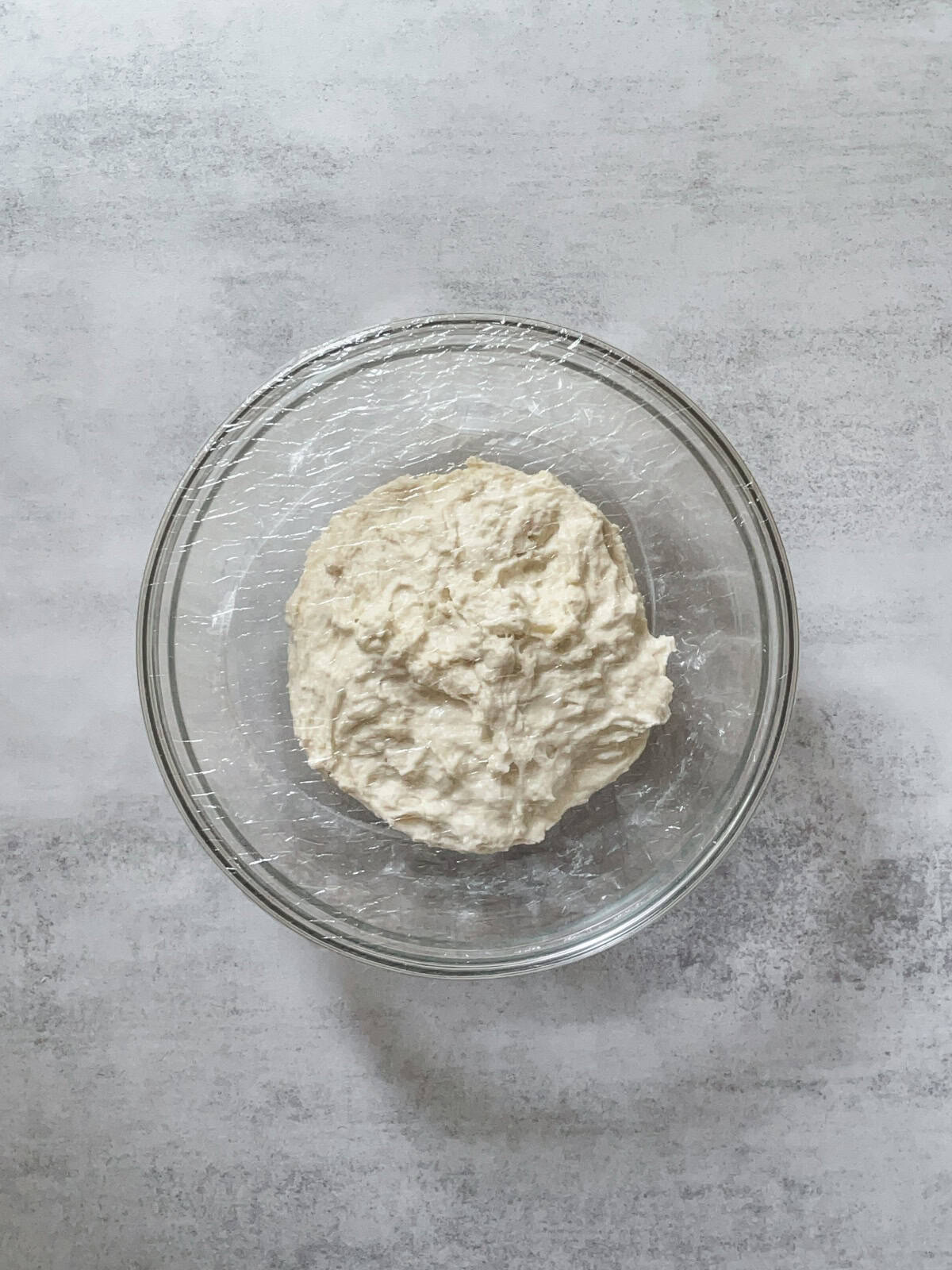
During autolyse, the dough rests while the proteins keep hydrating and bonding.
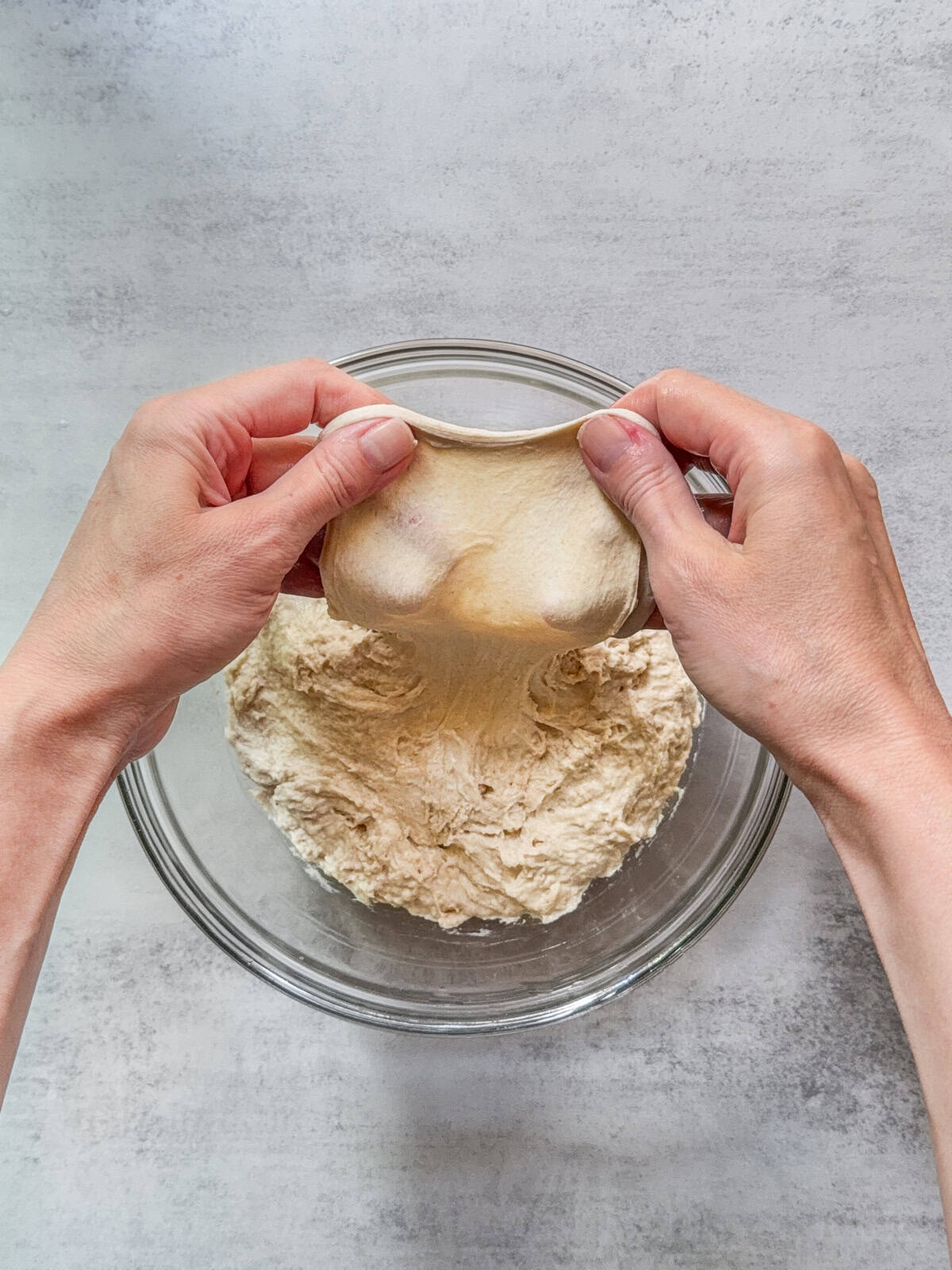
After autolyse, the dough stretches farther without tearing.
So, autolyse doesn't create gluten out of nothing. It gives the proteins a head start, so later mixing and folding work better. Read my guide on how to autolyse sourdough for more details.
How Stretch and Folds and Coil Folds Help Gluten Development
Stretch and folds and coil folds help build dough strength without traditional kneading. When you stretch the dough and fold it over itself, you help organize and strengthen the gluten network.
Allow the dough to rest between folds. It gives the gluten time to relax and the dough time to settle.
As you repeat the folds, you will notice the dough becoming smoother and more cohesive. It holds its shape better and stretches more easily without tearing.
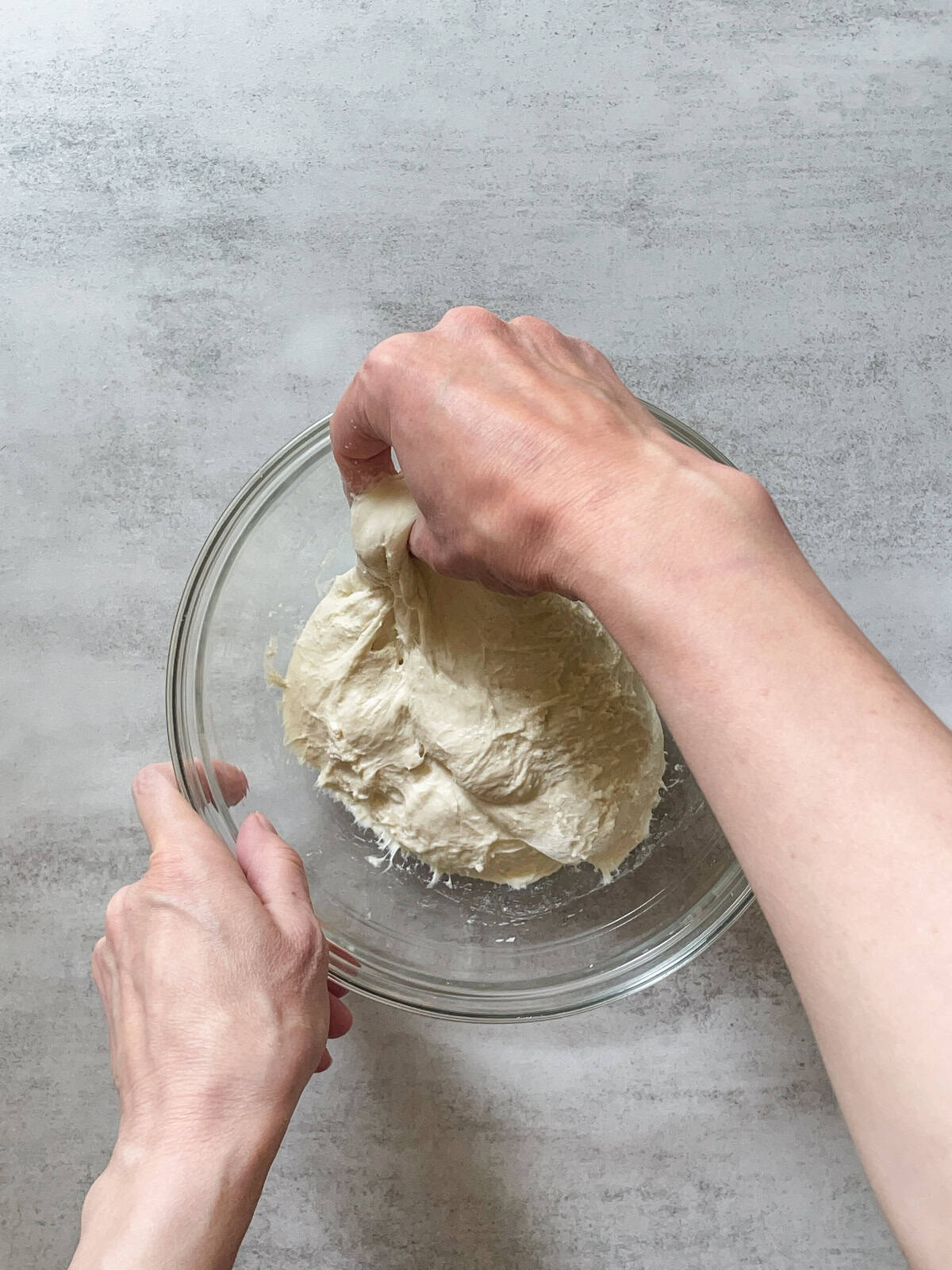
On the first fold, the dough is rough and tears easily.
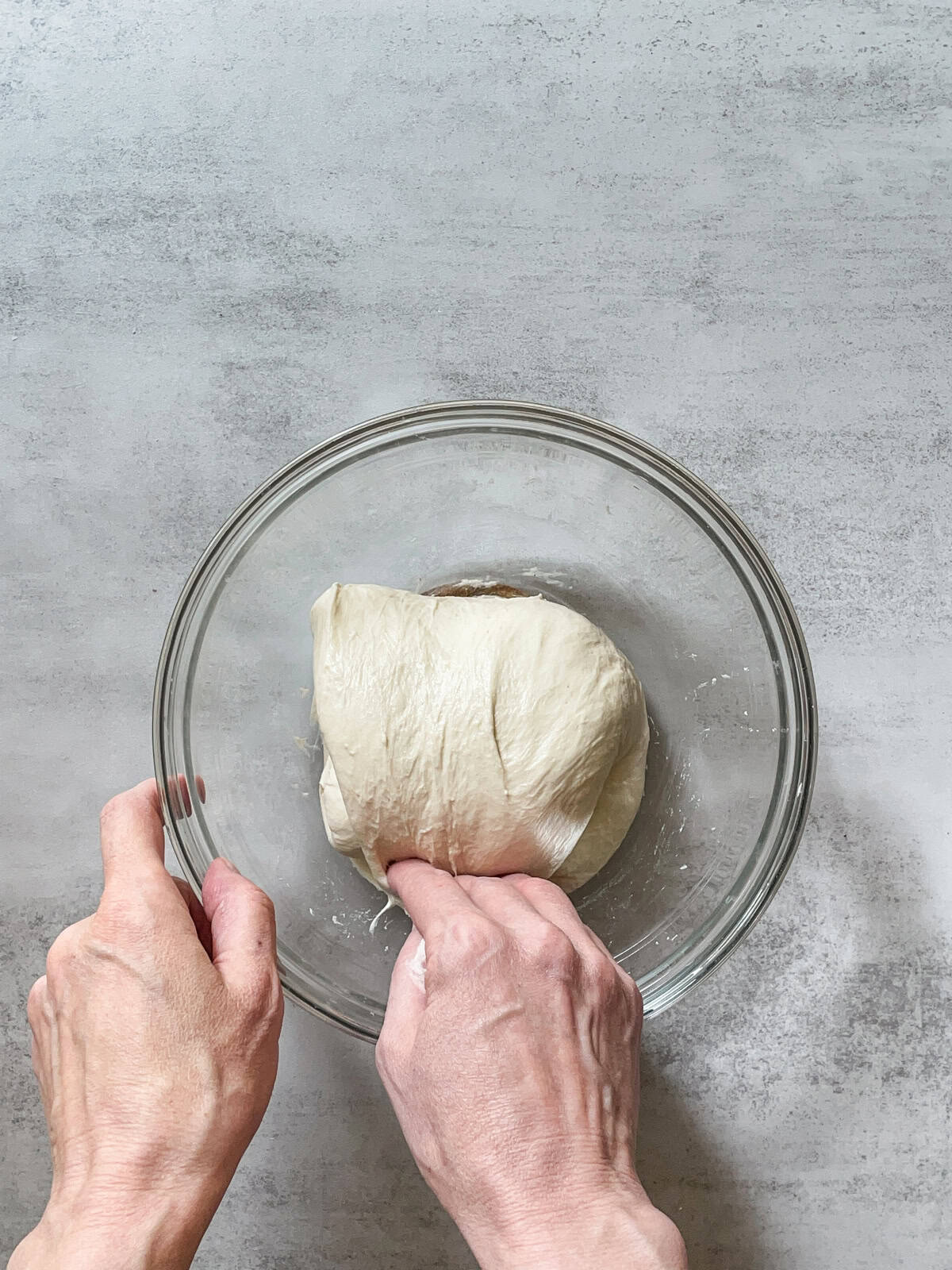
A few rounds later, the dough is smooth and holds its shape.
Stop folding once the dough holds its shape. It needs enough strength to hold gas, and enough extensibility to expand. Remember that extra handling works against you, especially with dough that is already strong or very extensible.
Ways to Build Gluten in Sourdough
Kneading and stand mixers. Kneading develops gluten through repeated mechanical mixing. A stand mixer does the same work faster, bringing the proteins together and developing an elastic, cohesive dough. Both work well for low- and medium-hydration doughs. Watch the dough and stop once it has developed enough strength. Mixing for too long heats the dough and can damage its structure. See my guide to making sourdough in a stand mixer.
Pinch and fold. You pinch the dough between your fingers and fold it over itself. This helps bring the ingredients together and distribute the starter and salt evenly after autolyse. It also begins developing the gluten structure through gentle handling. See my guide to the pinch and fold method.
Slap and fold. You lift the dough, slap it against the counter, and fold it over itself. This vigorous technique develops gluten quickly and helps turn a slack, sticky dough into a stronger, more cohesive mass. It is particularly useful during the early stages of dough development.
Rubaud method. You scoop underneath the dough with a cupped hand, lift it, and let it fall back into the bowl in a steady rhythm. This repeated movement mixes the dough and develops gluten while incorporating air. It works particularly well with well-hydrated doughs. Read more about the Rubaud method.
Stretch and folds. This technique develops strength by stretching the dough and folding it back over itself. Each round helps organize and strengthen the gluten network while allowing the dough to rest between folds. It works well for a wide range of doughs, particularly those with medium to high hydration.
Coil folds. You lift the dough from the middle and let the ends fold underneath it. This gently stretches the dough and helps build strength without putting too much tension on it. Coil folds are especially useful for wet, high-hydration doughs that are difficult to handle with traditional stretch and folds. See my comparison of coil folds vs. stretch and folds.
Lamination. You stretch the dough into a thin sheet on a lightly wet counter and fold it back over itself. This stretches the existing gluten network and helps organize the dough while adding strength. It is also an easy way to add inclusions like seeds, cheese, and dried fruits. Read my guide on sourdough lamination.
| Technique | Best for | How gentle |
|---|---|---|
| Kneading or stand mixer | Lower hydration, under about 70-80% | Vigorous |
| Pinch and fold | Mixing in salt and starter | Gentle |
| Slap and fold | Slack, sticky doughs | Vigorous |
| Rubaud method | Wetter doughs mixed in the bowl | Moderate |
| Stretch and fold | Most doughs, about 65 to 80% hydration | Gentle |
| Coil fold | High hydration, 75% and up | Very gentle |
| Lamination | Strength in one step, adding inclusions | Moderate |
You can combine methods. Many bakers mix with Rubaud, then switch to coil folds as the dough gets stronger. Check my guide to bread dough mixing techniques for more options.
Gluten work is one stage of a bigger process. If you want to see where autolyse, folds, and bulk fermentation fit between feeding your starter and baking, get my free Sourdough Baking Roadmap.
How Do You Know When Gluten Is Developed?
You can tell a lot about gluten development by looking at and handling your dough. As the gluten network develops, the dough becomes smoother, stronger, and more elastic.
Here are the signs of developing gluten:
1. The dough becomes smoother.
Right after mixing, the dough looks rough and uneven. As gluten develops, it becomes smoother and more cohesive.
2. The dough holds its shape better.
Instead of spreading out in the bowl, it holds together and keeps some structure.
3. The dough stretches without tearing right away.
When you lift or stretch a portion, it extends instead of breaking at the slightest pull.
4. The dough becomes more elastic.
After you stretch it, it pulls back slightly. This is elasticity. Too much resistance makes shaping hard.
What Is the Windowpane Test?
The windowpane test is a common way to check gluten development.
Take a small piece of dough and gently stretch it between your fingers. If the gluten network is well developed, it stretches into a thin, translucent membrane that lets light through without tearing.
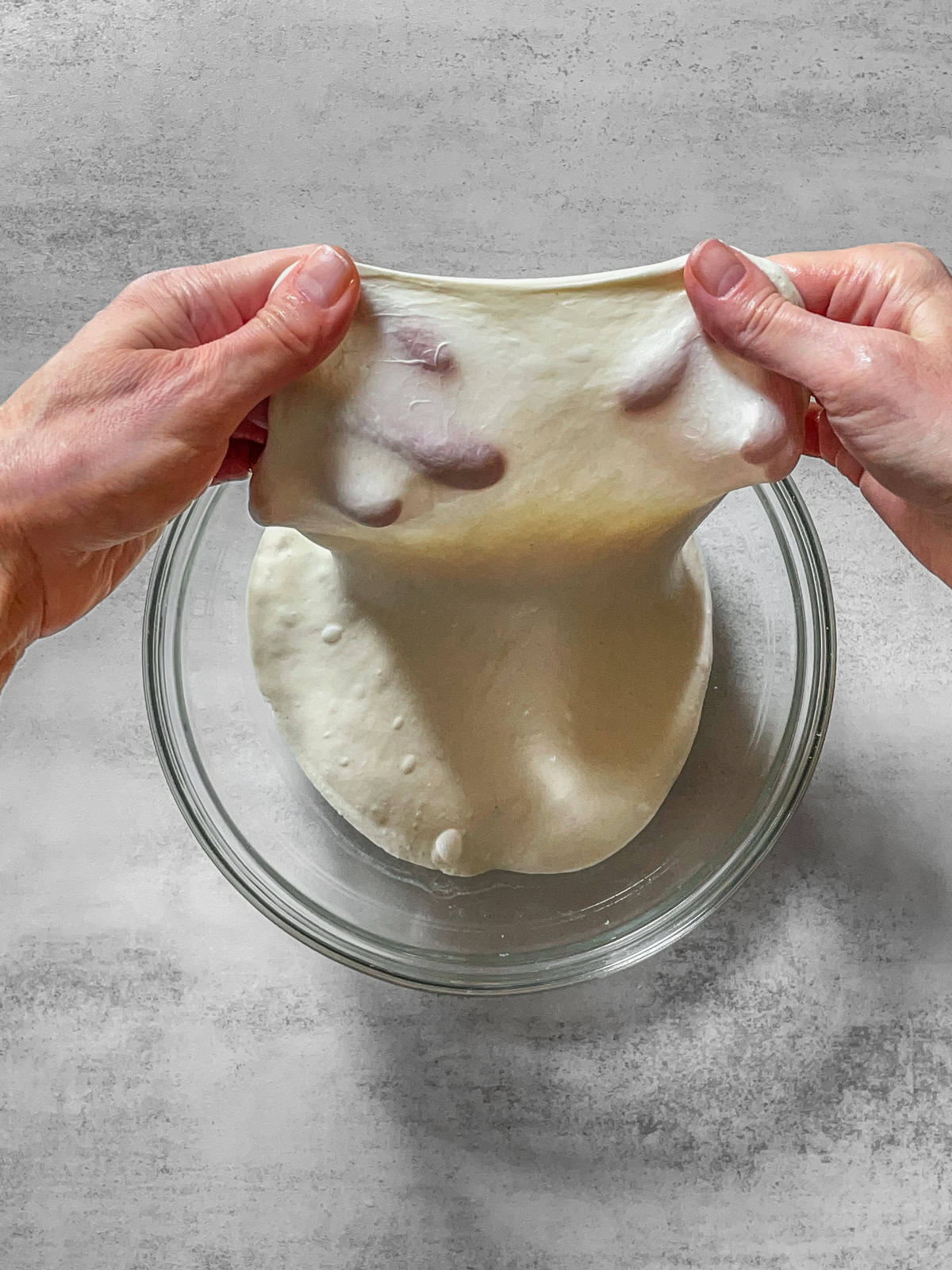
A well-developed dough stretches into a thin, translucent membrane.
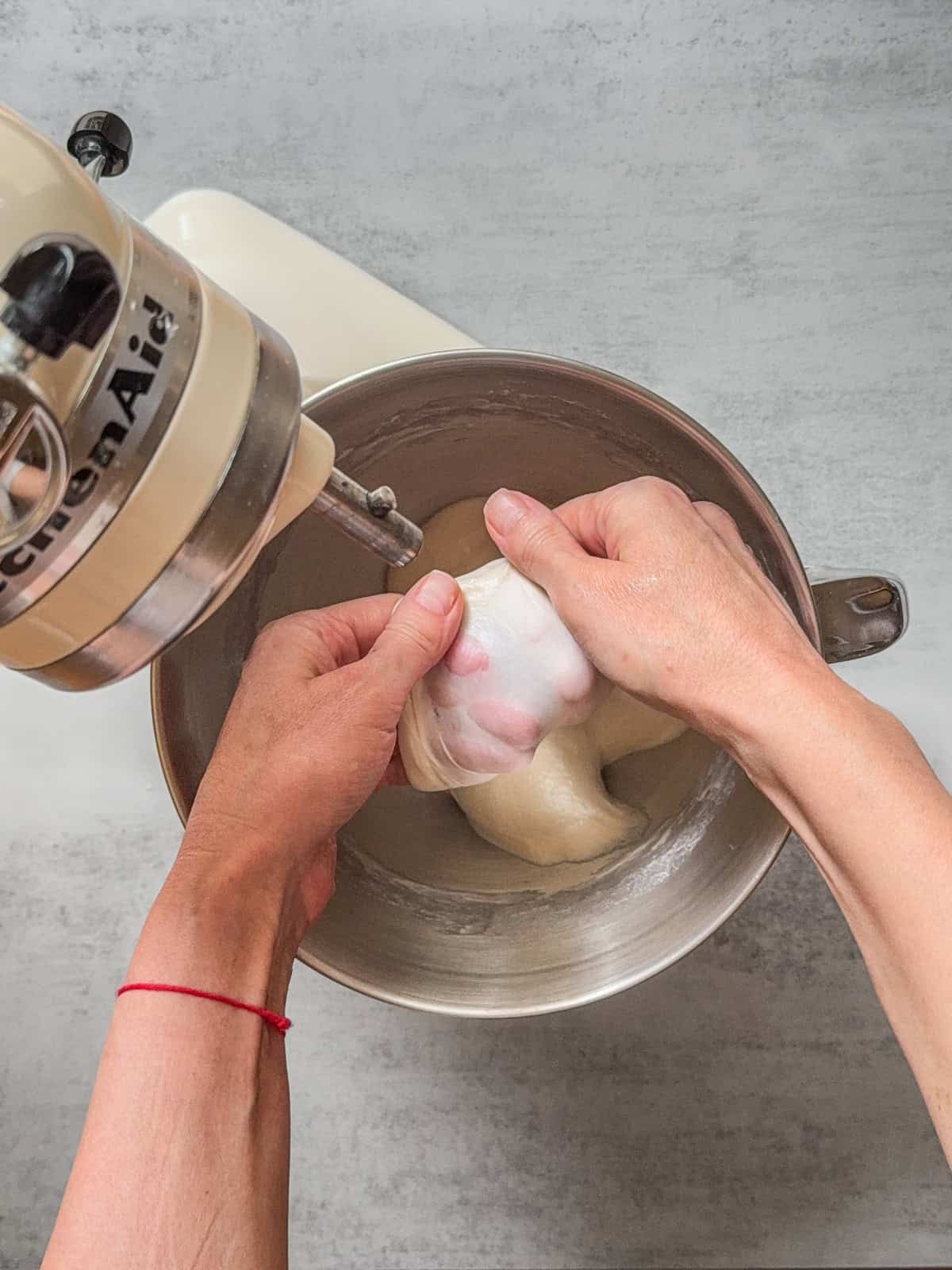
The same test works for dough mixed in a stand mixer.
If it tears right away, the dough needs more strength. Hydration, flour type, and the stage of fermentation also affect the result.
The windowpane test is useful, but you don't need to perform it for every sourdough. High-hydration and whole wheat doughs, for example, can behave differently and may not form a perfectly thin membrane.
Most importantly, the windowpane test tells you about gluten development, not whether fermentation is complete. To check that, see my guide on how to tell when bulk fermentation is done. You can also read my full guide to the sourdough windowpane test.
Does More Water Mean More Gluten?
No. Adding more water doesn't increase the amount of gluten-forming proteins in your dough. That depends on the flour you use.
Water changes how easily these proteins hydrate and interact. The wetter the dough, the more freely the proteins can move and interact, allowing gluten to develop with less mixing. This is why high-hydration and no-knead doughs develop good structure through resting and a few rounds of folds. In a stiffer dough, less water is available, so you need more mixing or kneading.
Water also changes how the dough feels and behaves. More water makes the dough softer and more extensible, but also stickier and harder to handle. Less water makes it firmer and easier to handle, but less stretchy.
So a higher-hydration dough isn't automatically stronger, and more water doesn't guarantee better gluten development. The result depends on your flour's protein content, how much water it can absorb, and how you mix, rest, and handle the dough.
For more on choosing a hydration level, read my beginner's guide to sourdough hydration and high vs. low hydration sourdough.
What Happens If You Add Water Later? (Bassinage)
Bassinage is a technique where you hold back some of the water and add it after the dough has started developing gluten. It helps you work with higher-hydration doughs while keeping more control over their strength and texture.
The idea is to start with a firmer dough, which is easier to mix and develop. Once the gluten network starts to form, gradually add the remaining water. The dough can then take in more water while maintaining its structure.
Here is how to do it:
- Mix the flour, water, starter, and salt, holding back about 5-10% of the water.
- Mix until the dough starts to develop strength and becomes more cohesive.
- Add the reserved water gradually, a little at a time.
- Continue mixing until each addition is absorbed and the dough comes back together before adding more.
If the dough breaks into slippery pieces and stays that way, you added the water too fast. Keep working it, and it usually comes back together.
Bassinage is most useful with high-hydration doughs and with flours that feel weak at full hydration.
How Does Water Temperature Affect Gluten Development?
Water temperature sets the final dough temperature, which affects how the dough develops and behaves.
Warm water helps flour hydrate faster and increases enzyme activity, so the dough relaxes and becomes extensible sooner. It also speeds up fermentation, so bulk fermentation takes less time.
Cold water slows down enzyme activity and keeps the dough cooler and firmer. It is especially useful when using a stand mixer because mixing generates heat through friction.
Most sourdough does well with a dough temperature of about 75 to 78°F (24 to 26°C). You can work out the right water temperature with my desired dough temperature calculator.
Does Sourdough Acid Weaken Gluten?
Sourdough fermentation produces organic acids, mainly lactic and acetic acid. As fermentation continues, the dough becomes more acidic.
During bulk fermentation, acids affect how the gluten network behaves. At the same time, the dough develops gas and flavor. As long as fermentation stays within the intended range, the dough maintains enough strength to hold the gas bubbles and keep its shape.
Overfermentation is a different story. Given enough time, enzymes called proteases break down gluten proteins. As acidity increases, this protein breakdown becomes more pronounced. Eventually, the dough loses strength, becomes sticky and slack, and struggles to hold its shape.
This is why an overproofed sourdough dough turns slack, sticky, and hard to shape. A dough that felt strong earlier in bulk fermentation can lose that strength if fermentation goes too far.
What Does Salt Do to Gluten?
Salt tightens the gluten network and helps it resist stretching. Dough with added salt feels firmer and more cohesive than dough without it.
Salt also slows fermentation, which helps control how fast the dough rises. And it slows how quickly flour absorbs water. That is one reason many bakers add salt after autolyse instead of at the start.
So salt is important for handling and fermentation control, not just flavor, but it doesn't create gluten. The gluten-forming proteins come from the flour, and water and mixing start their development. You can read more in my guide to sourdough bread ingredients.
Why Does Whole Wheat Flour Need More Water?
Whole wheat flour contains the entire wheat kernel: the bran, germ, and endosperm. It has more fiber than white flour, and fiber absorbs a lot of water.
Bran also interferes with gluten. The sharp bran particles cut through the gluten network and break its continuity.
That is why whole wheat dough behaves differently. It usually needs more water to reach a similar consistency, feels rougher because of the bran, and is less extensible. It can also be more challenging to develop and maintain dough strength.
But you can still make a strong sourdough loaf with whole wheat flour. You need to account for its higher water absorption and handle it more gently.
Rye flour is another story. Rye contains different storage proteins and doesn't form a gluten network like wheat. Rye bread gets its structure mainly from water-binding carbohydrates called arabinoxylans, often called pentosans. This is why rye dough behaves so differently from wheat dough.
Why Protein Percentage Doesn't Tell You Everything
Flour bags show a protein percentage, and bakers often use it to decide whether a flour suits sourdough.
Higher-protein flour has more potential to build a strong gluten network, but protein percentage alone doesn't tell you how the dough will behave. Protein type and quality are important too.
Two flours with similar protein can make doughs with different elasticity, extensibility, and water absorption. One will hold its shape easily, while the other will give you a softer dough that is harder to handle.
When you choose flour, look past the number on the bag. Pay attention to how it absorbs water and how your dough behaves during mixing, folding, and fermentation.
Frequently Asked Questions About Gluten Development
What happens when you add water to flour?
Water hydrates two proteins in wheat flour: glutenin and gliadin. As they absorb water, they become more flexible and begin to interact. Mixing, resting, and folding help these proteins form and organize a gluten network. This network gives the dough its strength and elasticity and helps it trap gas as the bread rises.
Does gluten form without kneading?
Gluten development begins as soon as you mix flour and water. As the dough rests, the proteins hydrate and begin to form a network. Stretch and folds and coil folds help strengthen and organize that network. That is why you can make good sourdough bread without kneading.
Does more water mean more gluten?
No. Water doesn't add gluten-forming proteins. It lets the proteins already in the flour move and bond more easily, so more hydrated doughs develop gluten with less mixing, but they are not automatically stronger.
Does gluten keep developing during bulk fermentation?
Yes. The network keeps organizing as the dough rests and as gas stretches it from inside. Folds speed this up. If fermentation goes too far, enzymes and acid start to weaken the network.
How do I know my gluten is developed?
Look for dough that is smooth, cohesive, and holds its shape. It should stretch without tearing right away. Perform the windowpane test, but you don't need it for every dough.
Does sourdough acid weaken gluten?
Not necessarily. As acidity increases, the dough becomes tighter and more elastic at first, but during prolonged fermentation, enzymes break down gluten proteins. Eventually, the dough loses strength, becomes slack, and is harder to handle.
Is sourdough bread gluten-free?
No. Sourdough made with wheat, rye, or barley flour contains gluten. Fermentation breaks down some of the proteins, but not enough to make the bread safe for people with celiac disease.
What does salt do to gluten?
Salt tightens the gluten network, making dough stronger and easier to handle. It also slows fermentation.
Why does whole wheat flour need more water?
Whole wheat flour contains bran and germ, which absorb extra water. Bran particles also cut into the gluten network. Whole wheat dough needs more hydration and gentler handling than dough made with white bread flour.
Want to go deeper into sourdough science?
On Substack, I explore the science behind bread baking, question common sourdough advice, and share experiments and observations that go beyond traditional recipes. Read more on Sourdough Talk on Substack.
Comments
No Comments