
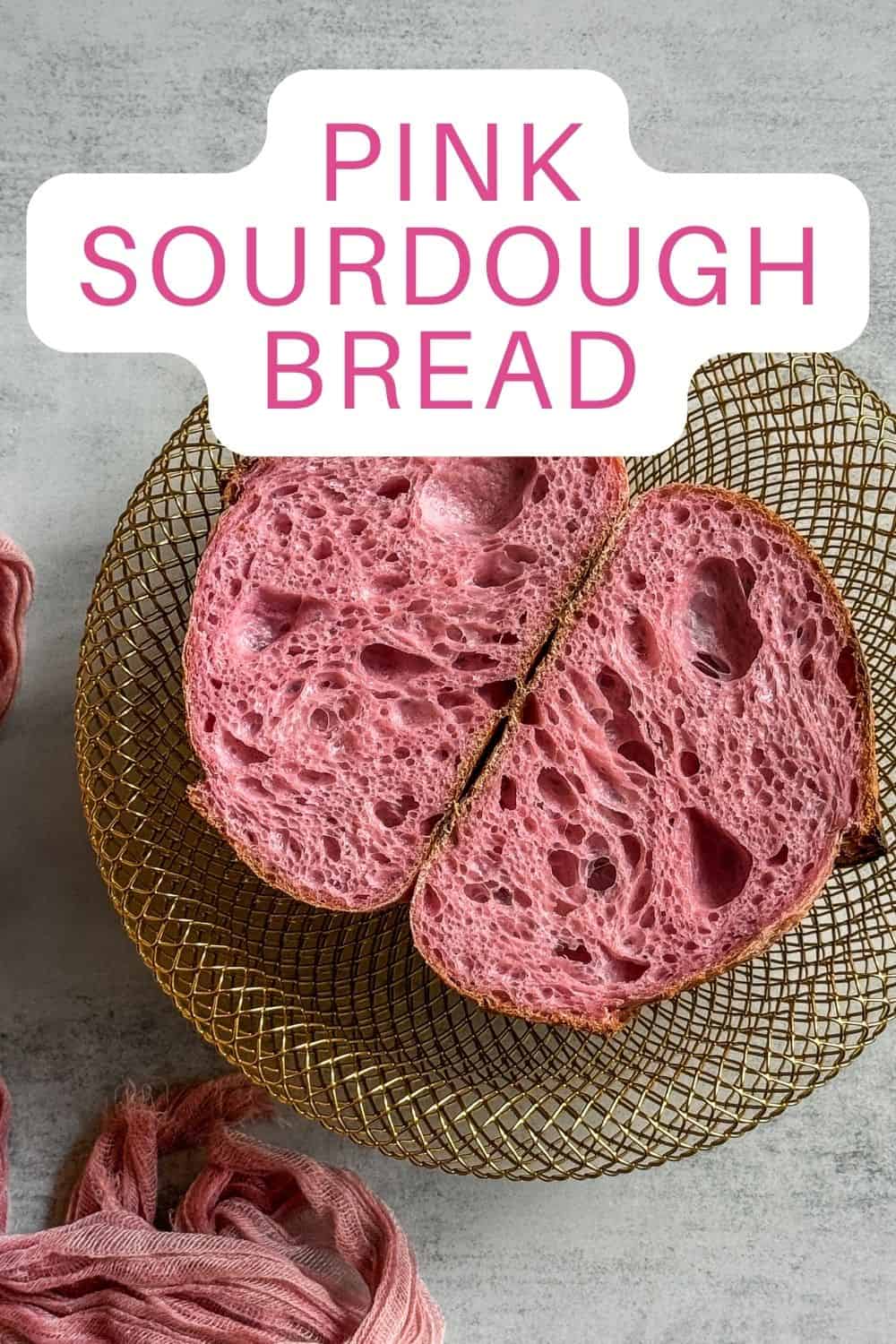
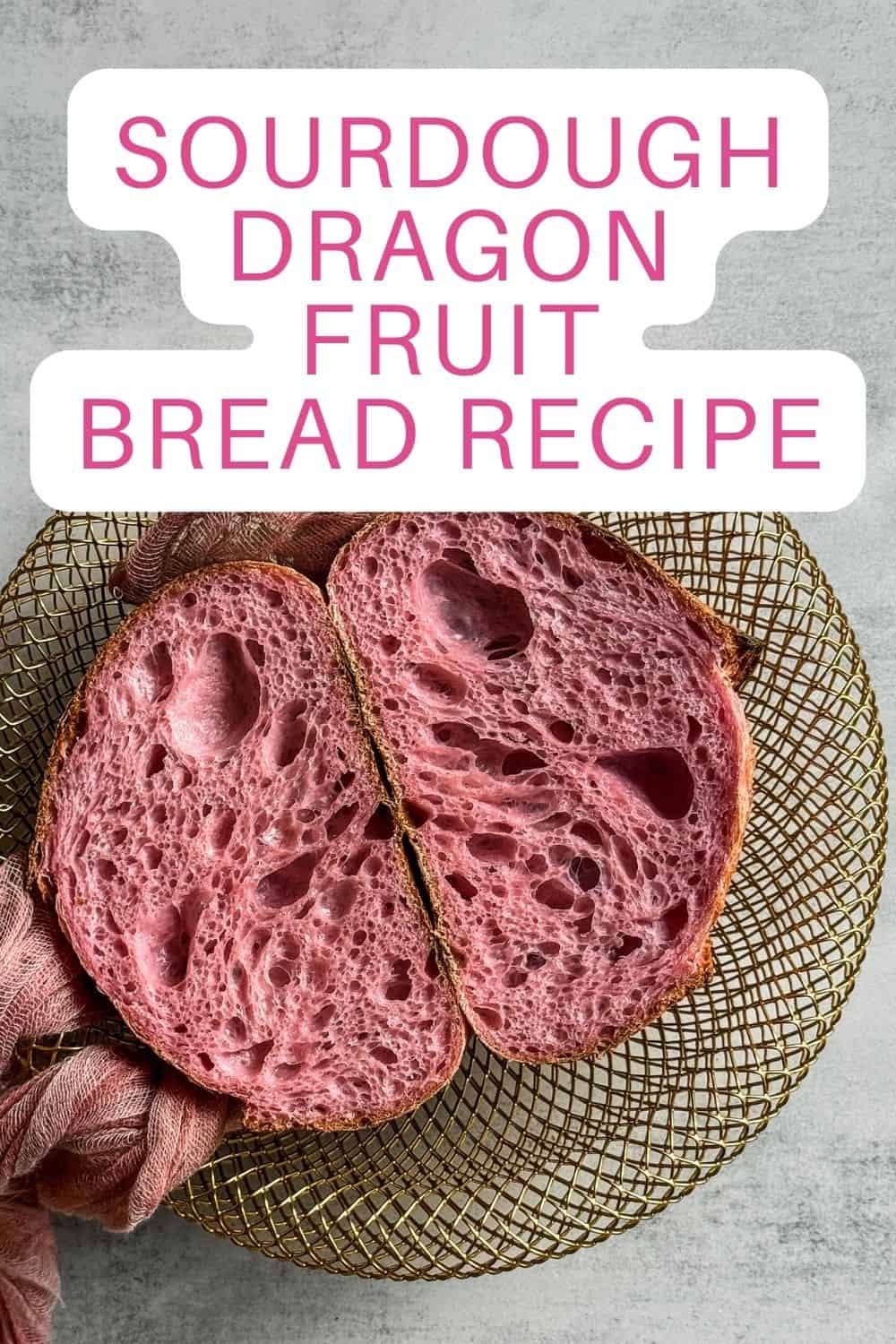
If you are looking for a show-stopping bread for Valentine's Day, make this pink sourdough bread. It is made with dragon fruit powder, which gives a vibrant, long-lasting pink hue and adds a subtle, fruity flavor. Perfect for your breakfast table or gift basket.
If you are a fan of flavored sourdough, try making purple sweet potato sourdough bread, vibrant green spinach sourdough bread, naturally orange carrot sourdough bread, or warm yellow turmeric sourdough bread.
If you are new to sourdough, start with my Beginner's Sourdough Guide. To learn how to make your own starter, follow my Beginner Sourdough Starter recipe. Then, before trying this recipe, practice the basic techniques in my Beginner's Sourdough Bread recipe.
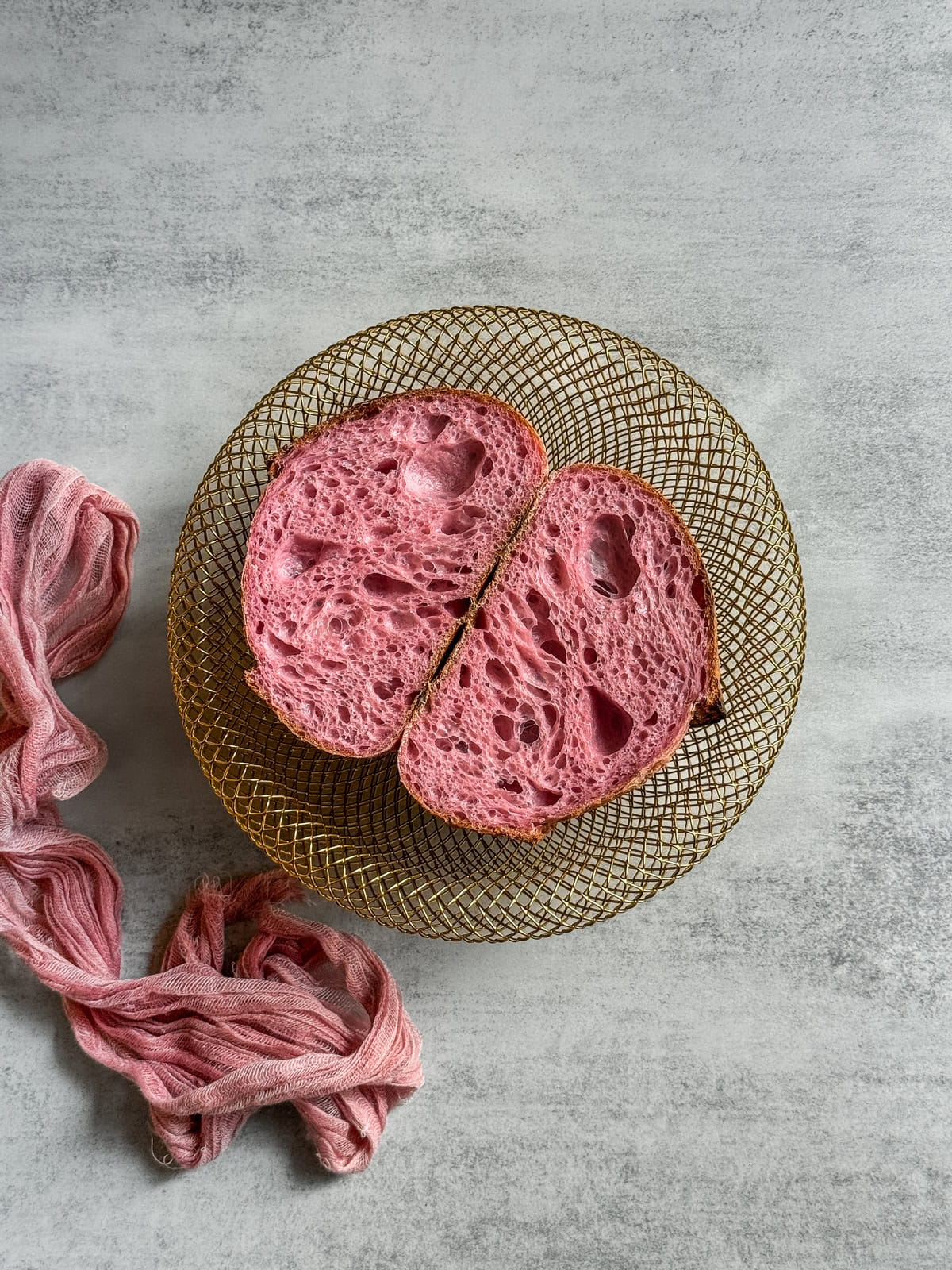
Dragon fruit sourdough bread recipe
When it comes to naturally colored pink sourdough bread, there are a few options. In my quest to create the perfect pink bread loaf, I tried beetroot powder, but the color faded during baking, leaving the bread a muted shade rather than the vibrant pink I had hoped for.
I have also seen people experiment with red rice powder, but it can have unexpected effects on the body because of the natural compounds it contains.
That is why I turned to dragon fruit powder, a safe and natural ingredient for everyone. It is the perfect choice for a beautiful, eye-catching pink sourdough loaf without any worries about fading or unwanted effects.
Ingredients
- Flour: Use bread flour, Kirkland all-purpose flour, or a flour blend (bread plus all-purpose, or bread plus whole wheat).
- Water: Use filtered water, bottled spring water, or good-quality tap water.
- Levain (active starter at peak): Use 100% hydration sourdough starter to make it.
- Salt: Use fine sea salt. Avoid iodized table salt.
- Dragon fruit powder brings color and flavor. I use the dragon fruit powder from Kate Naturals.
Recipe variations
- Adjust the color: Dragon fruit powder controls the intensity of the crumb color. 2% dragon fruit powder (based on flour weight) yields a soft pastel pink crumb, 3% dragon fruit powder yields a bright pink crumb, and 4% dragon fruit powder yields a deep magenta/fuchsia crumb.
- Add sugar or honey: 1-2% (baker's percentage) for subtle sweetness that complements the dragon fruit and improves crust browning.
- Add olive oil: 2-3% for a softer crumb, slightly longer shelf life, and easier slicing for sandwiches.
- Add whole wheat flour: Replace 5% of the bread flour with whole wheat flour for a deeper flavor.
Final bread formula
| Ingredient | Baker's Percentage | Weight |
|---|---|---|
| Bread flour | 100% | 300g |
| Water | 78% | 234g |
| Levain/Active starter, 100% hydration | 20% | 60g |
| Salt | 2% | 6g |
| Dragon fruit powder | 3% | 9g |
- Total dough weight is 609g. If you need to adjust the bread formula for your own loaf, use baker's percentages or my sourdough calculator.
- My kitchen temperature is 73°F (23°C), with a humidity level of 40%
- Bulk fermentation: 6 hours 30 minutes to 7 hours 30 minutes with a 40% increase in dough size.
- Proofing time: 14 hours cold-proof in the fridge
- Bake in a conventional oven at 450°F (232°C) with the lid on for 20 minutes; without the lid, 15-17 minutes.
Tools & Equipment
For all the tools and equipment I use, check out my Essential Sourdough Tools & Equipment guide. It covers everything you need to bake sourdough bread successfully.
How to make pink sourdough bread
1. Autolyse
In a bowl, combine the flour and water until a shaggy dough. Cover and let sit for 30 minutes (see my blog post on sourdough autolyse).
2. Incorporate levain and salt
Add levain (active starter at peak) and mix. Add the salt and dragon fruit powder, then mix using one of the bread dough mixing techniques. Cover the dough and let it rest for 30 minutes. Once you add levain (active sourdough starter), bulk fermentation starts.
3. Bulk fermentation
With wet hands, perform two sets of stretch and folds and two sets of coil folds, with a 30-minute rest between sets. The number of coil folds depends on the dough's strength and extensibility.
If the dough is strong, stop after two sets (don't overwork the dough!). If the dough is weaker and spreads noticeably, add one or two extra sets of coil folds.
If you use a stand mixer for sourdough, it will develop strong gluten. In that case, perform two sets of coil folds, with an optional half set if needed. Don't overwork the dough.
After the final set of coil folds, allow the dough to continue bulk fermentation and monitor its rise closely.
Note: I let the dough rise to just about 40% at 73°F (24°C), but your target rise may differ depending on your kitchen. Warmer temperatures speed up bulk fermentation, while cooler environments slow it down.
Bulk fermentation is complete when the dough shows bubbles on the surface and along the sides, the edges are slightly domed, and the dough gently wobbles when you shake the bowl.
4. Preshape and shape
Lightly flour your work surface, preshape the dough into a round, and let it rest for 10-15 minutes. You can omit preshaping when making a single loaf. Perform the final shaping into a battard, then place it in a prepared 8-inch oval banneton (see my guide to shaping bread dough).
5. Proof
Cover the banneton with a clean towel or a disposable plastic cap, or place it in a reusable plastic bag. Refrigerate overnight (8-14 hours) for a slow, even fermentation.
6. Bake the loaf
Preheat the oven to 500°F (260°C) with a Dutch oven inside for 30 minutes. Transfer the dough onto parchment paper, score the top, and place it inside the Dutch oven. Decrease the oven temperature to 450°F (232 °C), then bake, covered, for 20 minutes. Uncover and bake for another 15-17 minutes.
I love baking sourdough with the open-bake method, using a steam pan. You can read more about this technique on my blog post on baking sourdough without a Dutch oven.
Remove the bread from the Dutch oven and let it cool on a wire rack for at least 2 hours before slicing.
Bulk fermentation expectations
Dragon fruit powder slightly influences bulk fermentation because it contains natural sugars, fiber, and organic acids. While the wild yeast typically produces gas at a normal rate, the added powder changes how the dough looks and behaves during bulk fermentation.
With 2-4% dragon fruit powder (based on flour weight), bulk fermentation sometimes appears slightly slower in volume than plain sourdough under the same conditions. The powder absorbs water and can slightly weaken gluten, potentially limiting the dough's expansion.
The pink-to-magenta color of the dough makes visual fermentation assessment harder. The vibrant color tends to mask small bubbles and surface expansion, so the dough appears less puffy even when fermentation is progressing normally.
So, keep in mind that higher levels of dragon fruit powder (around 4%) make the sourdough more sensitive to overproofing.
Note: Bulk fermentation always depends on your kitchen temperature. Instead of watching the clock, focus on the dough's feel and appearance.
Expert tips
- Prefer hand mixing: Dragon fruit pigments (betalains) are sensitive to oxidation and heat. Hand mixing limits oxidation, while mixers can dull the pink color toward brown, especially at 2-3%.
- Mix gently: Dragon fruit powder slightly weakens gluten. Add it later when hand mixing. With a stand mixer, mix only to a partial windowpane. Do not chase a full windowpane (think windowpane text) to avoid overmixing.
- Always use oven mitts or silicone gloves when handling hot pans.
- Check the bread's internal temperature. It should reach 205-210°F (96-99°C). I usually aim for 207°F (97°C) or higher.
- Store sourdough bread for 3-5 days. Freeze individual slices for up to 1-2 weeks, a whole loaf for 1-2 months.
- Advanced notes: Monitor bulk fermentation with an aliquot jar, checking dough temperature after each fold and every 30-40 minutes. Finish fermentation at the target percentage rise.
Recipe
Pink Sourdough Bread
This pink sourdough bread is a naturally colored artisan loaf with a beautiful, bright pink crumb and crisp golden crust. Made with 3% dragon fruit powder, it adds vibrant color while keeping the classic tangy sourdough flavor and soft, airy texture.
- Prep Time: 22 hours
- Cook Time: 40 minutes
- Total Time: 22 hours, 40 minutes
- Yield: 1 loaf 1x
- Category: Sourdough Recipes
- Method: Baking
- Cuisine: American
Ingredients
For the levain (an active starter):
- 22 g sourdough starter
- 22 g bread flour
- 22 g water
For sourdough bread:
- 300 g bread flour (I use King Arthur organic bread flour)
- 234 g water (75% hydration)
- 60 g levain (active starter at peak)
- 6 g fine sea salt (I use Redmond ancient fine sea salt)
- 9 g dragon fruit powder (3%)
10 g white rice flour (for dusting)
Instructions
- Autolyse: Pour water into a mixing bowl. Mix with flour until a shaggy dough. Cover and let sit for 30 minutes.
- Incorporate levain and salt: Add levain (active starter at peak) and mix. Add the salt and dragon fruit powder, then mix using one of the bread dough mixing techniques. Cover the dough and let it rest for 30 minutes. Once you add levain (active sourdough starter), bulk fermentation starts.
- Bulk fermentation: With wet hands, perform two sets of stretch and folds and two sets of coil folds, with a 30-minute rest between sets. The number of coil folds depends on the dough's strength and extensibility. If the dough is strong, stop after two sets (don't overwork the dough!). If the dough is weaker and spreads noticeably, add one or two extra sets of coil folds. If you use a mixer to mix this bread dough, it will develop strong gluten. In that case, perform two sets of coil folds, with an optional half set if needed. After the final set of coil folds, allow the dough to continue bulk fermentation and monitor its rise closely. Bulk fermentation is complete when the dough shows bubbles on the surface and along the sides, the edges are slightly domed, and the dough gently wobbles when you shake the bowl.
- Preshape and shape: Lightly flour your work surface, preshape the dough into a round, and let it rest for 10-15 minutes. You can omit preshaping when making a single loaf. Perform the final shaping into a battard, then place it in a prepared 8-inch oval banneton.
- Proof: Cover the banneton with a clean towel or a disposable plastic cap, or place it in a reusable plastic bag. Refrigerate overnight (8-14 hours) for a slow, even fermentation.
- Bake the loaf: Preheat the oven to 500°F (260°C) with a Dutch oven inside for 30 minutes. Transfer the dough onto parchment paper, score the top, and place it inside the Dutch oven. Decrease the oven temperature to 450°F (232 °C), then bake, covered, for 20 minutes; uncover and bake for another 15-17 minutes. Remove the bread from the Dutch oven and let it cool on a wire rack for at least 2 hours before slicing.
Notes
- Prefer hand mixing: Dragon fruit pigments (betalains) are sensitive to oxidation and heat. Hand mixing limits oxidation, while mixers can dull the pink color toward brown, especially at 2-3%.
- Mix gently: Dragon fruit powder slightly weakens gluten. Add it later when hand mixing. With a stand mixer, mix only to a partial windowpane. Do not chase a full windowpane to avoid overmixing.
- Always use oven mitts or silicone gloves when handling hot pans.
- Check the bread's internal temperature: It should reach 205-210°F (96-99°C). I usually aim for 207°F (97°C) or higher.
- Store sourdough bread for 3-5 days. Freeze individual slices for up to 1-2 weeks, a whole loaf for 1-2 months.
- Want to create a custom formula for your loaf? Try my sourdough calculator.
- Need help getting started? Check out my beginner's sourdough guide to learn sourdough basics first.
- Note: Nutritional information does not include the white rice flour used for dusting.
Nutrition
- Calories: 1201
- Sugar: 0.9g
- Sodium: 2340mg
- Fat: 3.2g
- Saturated Fat: 0.5g
- Carbohydrates: 251.8g
- Fiber: 8.9g
- Protein: 34.1g
- Cholesterol: 0mg