

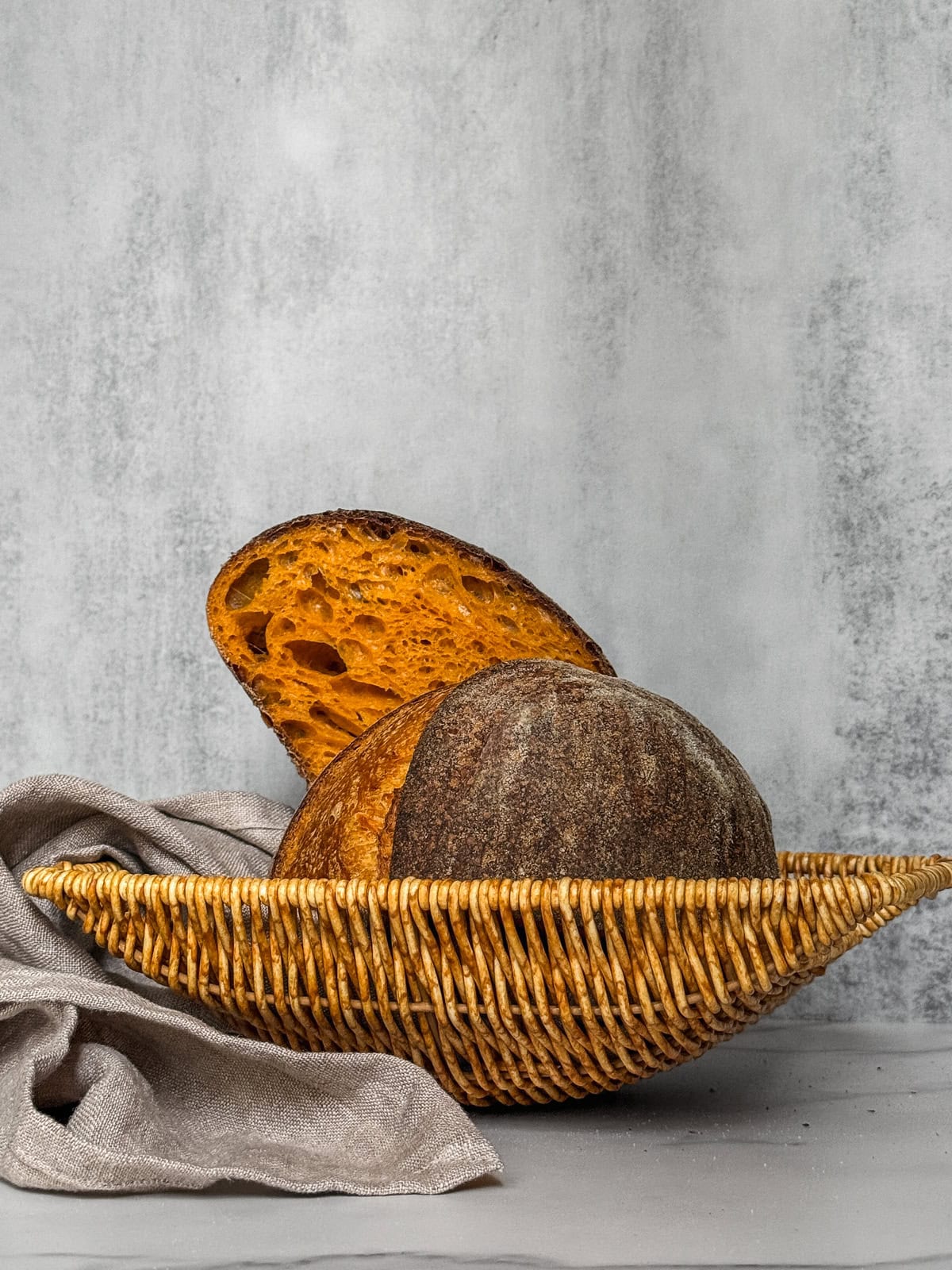
Carrot sourdough bread is an easy way to add natural color to your baking. This loaf has a soft, tender crumb and a warm orange hue, without using any artificial coloring. Its mild, balanced flavor makes it great for both savory toppings and enjoyed on its own.
If you love experimenting with colored sourdough, try making purple sweet potato sourdough bread, vibrant green spinach sourdough bread, or warm yellow turmeric sourdough bread.
If this is your very first loaf, I highly recommend starting with my Beginner's Sourdough Guide to learn the basics.
Why you will love this recipe
The carrot sourdough bread recipe follows the same sourdough process you already know.
If you have mastered my Beginner's Sourdough Bread recipe, or even my master method in the Homemade Sourdough Bread recipe, you are ready to try something new. This carrot sourdough recipe is a simple and rewarding next step for you to try naturally colored breads.
This bread tastes delicious and bakes into a beautiful, naturally orange loaf with a soft, tender crumb that looks as good as it tastes.
Ingredients
- Flour: Use bread flour, Kirkland all-purpose flour, or a flour blend (bread plus all-purpose, or bread plus whole wheat).
- Carrot juice: Make freshly squeezed carrot juice (you will need 425 g carrots). It replaces the water in the recipe and naturally gives the dough a beautiful orange color.
- Salt: Use fine sea salt. Avoid iodized table salt.
- Levain (active starter at peak): Use 100% hydration sourdough starter to build levain. To make your own starter, follow my Beginner's Sourdough Starter recipe.
- Salt: Use fine sea salt. Avoid iodized table salt.
- Turmeric: Adds a warm, subtle flavor and enhances the natural orange color from the carrot juice.
Substitutions & Variations
- Stronger flavor: The carrot juice with 0.3% turmeric gives a gentle, naturally orange color. If you prefer a deeper, earthier flavor, you can increase the turmeric up to 1%.
- Added warmth: Add a pinch of cinnamon, nutmeg, or even ground ginger, which pairs well with the carrot flavor. These spices can affect bulk fermentation, but when used in small, flavoring amounts, they don't significantly change the fermentation.
- Extra texture: Fold in seeds like pumpkin, sunflower, or flax for a bit of crunch. You can also add a handful of chopped walnuts, pecans, or dried fruit like raisins or cranberries for sweetness and contrast.
- Color boost: For an even brighter orange loaf, combine the carrot juice with a small amount of roasted red bell pepper puree. This intensifies the color without changing the sourdough process.
Bread formula for carrot sourdough bread
| Ingredient | Baker's Percentage | Weight |
|---|---|---|
| Bread flour | 100% | 300g |
| Carrot Juice | 75% | 225g |
| Levain/Active starter, 100% hydration | 20% | 60g |
| Salt | 2% | 6g |
| Turmeric | 0.3% | 1g |
- Total dough weight is 592g. If you need to adjust the bread formula for your own loaf, use my sourdough calculator.
- My kitchen temperature is 73°F (23°C), with a humidity level of 40%
- Bulk fermentation: 7 hours 30 minutes to 8 hours with a 90-100% increase in dough size.
- Proofing time: 14 hours cold-proof in the fridge
- Bake in a conventional oven at 450°F (232°C) with the lid on for 20 minutes; without the lid, 17-20 minutes.
Tools & Equipment
For all the tools and equipment I use, check out my Essential Sourdough Tools & Equipment guide. It covers everything you need to bake sourdough bread successfully.
How to make carrot sourdough bread
1. Make levain
To make levain, mix 22 g of sourdough starter with 22 g of flour and 22 g of water. Cover it loosely with a lid and place it in a warm spot to ferment. It usually takes about 4-6 hours to peak (see my post on how to recognize sourdough starter peak).
2. Make carrot juice
Peel 425 g of carrots, chop them, and extract the juice using an electric juicer machine. Alternatively, you can finely grate the carrots and then strain them through a cheesecloth to collect the juice.
3. Autolyse
Pour carrot juice into a mixing bowl. In a separate bowl, combine the flour with turmeric, then add to the carrot juice and mix until a shaggy dough forms.
Cover the bowl with a clean kitchen towel or plastic wrap and let the dough rest for 30 minutes (see my guide to sourdough autolyse).
4. Incorporate levain and salt
Add levain at peak and mix. Then add the salt and continue mixing for 3-10 minutes, until the dough is elastic enough to pass the windowpane test.
Cover the dough with a damp kitchen towel or plastic wrap and let it rest for 30 minutes. Once you add levain (active sourdough starter), bulk fermentation starts.
5. Bulk fermentation
Perform two sets of stretch and folds and two sets of coil folds, with a 30-minute rest between sets. Cover the bowl with a damp kitchen towel or plastic wrap during resting periods.
The number of folds depends on the dough strength. If the dough feels slack or lacks structure, add one or two additional sets of coil folds.
When mixing with a KitchenAid, I skipped stretch and folds and performed two sets of coil folds (the dough felt strong).
After the final set of coil folds, let the dough continue bulk fermentation and monitor its rise closely.
Note: I allowed the dough to rise to just under double at 73°F (24°C), but the target rise may vary in your kitchen. Warmer temperatures speed up bulk fermentation, while cooler environments slow it down.
Bulk fermentation is done when the dough shows bubbles on the surface and along the sides, the edges appear slightly domed, and the dough gently wobbles when you shake the bowl.
6. Preshape and shape
Use white rice flour to lightly flour your work surface. Preshape the dough into a round and let it rest for 10-15 minutes (you can skip this step if making a single loaf).
Shape the dough into a battard, then place it in a prepared 8-inch oval banneton (see my guide to shaping bread dough).
7. Proof
Cover the banneton with a clean towel, a disposable plastic cap, or place it in a reusable plastic bag, then refrigerate overnight (8-14 hours).
8. Bake
Once ready to bake, preheat the oven to 500°F (260°C) with a Dutch oven inside for 30 minutes. Transfer the dough onto parchment paper, score the top, place it inside the Dutch oven, and cover with the lid.
Return the Dutch oven to the oven, reduce the oven temperature to 450°F (232°C), and bake for 20 minutes. Then uncover and bake for another 17-20 minutes, until golden and crisp.
The bread is fully baked when its internal temperature reaches 205-210°F (96-99°C).
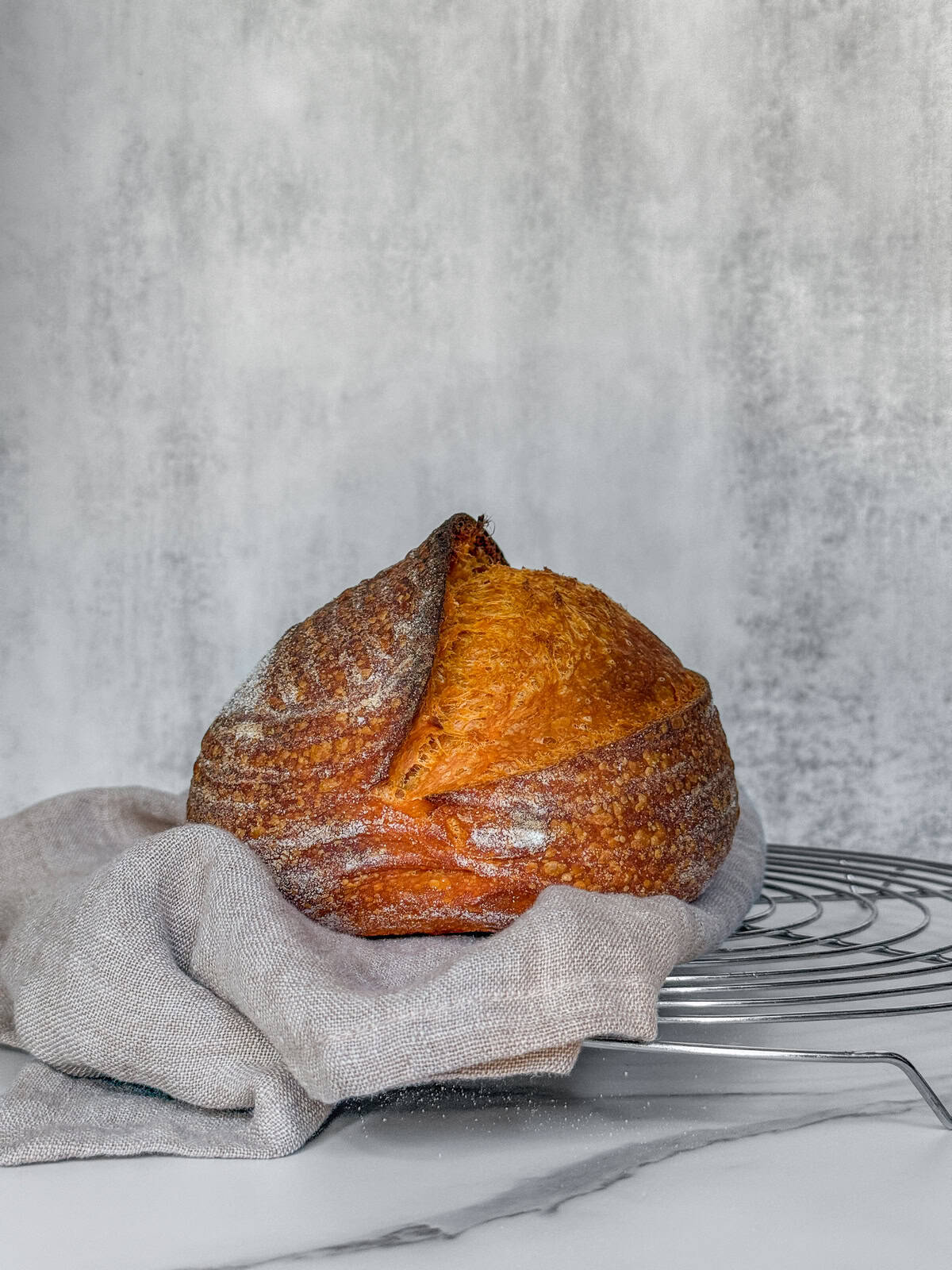
Remove the bread from the Dutch oven and let it cool on a wire rack for at least 2 hours before slicing.
Bulk fermentation expectations
When you add carrot juice and turmeric to the sourdough, the bulk fermentation can shift slightly.
Carrot juice adds extra sugars that feed yeast and bacteria, sometimes speeding up fermentation. Turmeric, on the other hand, is used in small amounts and doesn't significantly speed up or slow down the dough rise.
In practice, sourdough with carrot juice and turmeric often reaches a percentage rise and activity similar to those of a plain dough with the same hydration.
Expert tips
- Adjust hydration: For carrot juice sourdough, aim for about 70-72% hydration to start. Because carrot juice adds natural sugars and extra moisture, the dough might feel a little softer or slightly stickier than your usual plain sourdough.
- Mix the turmeric powder with the flour before adding the water so it is evenly distributed and doesn't clump.
- Store sourdough bread for 3-5 days. Freeze individual slices for up to 1-2 weeks, a whole loaf for 1-2 months.
- Always use oven mitts or silicone gloves when handling hot pans.
- Advanced notes: Track bulk fermentation using an aliquot jar method, checking the dough temperature after each fold and every 30-40 minutes. End fermentation once the dough reaches the target percentage rise.
Recipe
Carrot Sourdough Bread

This carrot sourdough bread is made with freshly squeezed carrot juice, which replaces the water and naturally colors the dough a warm orange. The crumb stays soft and airy, with the familiar flavor of classic sourdough and a subtle hint of sweetness.
- Prep Time: 21 hours
- Cook Time: 40 minutes
- Total Time: 21 hours, 40 minutes
- Yield: 1 loaf 1x
- Method: Baking
- Cuisine: American
Ingredients
For the levain (an active starter):
- 22 g sourdough starter
- 22 g bread flour
- 22 g water
For sourdough bread:
- 300 g bread flour (I use King Arthur organic bread flour)
- 225 g fresh carrot juice (75% hydration)
- 60 g levain (active starter at peak)
- 6 g fine sea salt (I use Redmond ancient fine sea salt)
- 1 g turmeric
10 g white rice flour (for dusting)
Instructions
- Make levain: In a clean jar, mix 22 g of sourdough starter with 22 g of flour and 22 g of water. Cover it loosely with a lid and place it in a warm spot to ferment. It usually takes about 4-6 hours to peak.
- Make carrot juice: Peel 425 g of carrots, chop them, and extract the juice using an electric juicer. Alternatively, you can finely grate the carrots and then strain them through a cheesecloth to collect the juice.
- Autolyse: Pour carrot juice into a mixing bowl. In a separate bowl, combine the flour with turmeric, then add to the carrot juice and mix until a shaggy dough forms. Cover the bowl with a clean kitchen towel or plastic wrap and let the dough rest for 30 minutes.
- Adding levain and salt: Add levain at peak and mix. Then add the salt and continue mixing for 3-10 minutes, until the dough is elastic enough to pass the windowpane test. Cover the dough with a damp kitchen towel or plastic wrap and let it rest for 30 minutes. Once you add levain (active sourdough starter), bulk fermentation starts.
- Bulk fermentation: Perform two sets of stretch and folds and two sets of coil folds, with a 30-minute rest between sets. Cover the bowl with a damp kitchen towel or plastic wrap during resting periods. If the dough feels slack or lacks structure, add one or two additional sets of coil folds. After the final set of coil folds, let the dough continue bulk fermentation and monitor its rise closely. Bulk fermentation is done when the dough shows bubbles on the surface and along the sides, the edges appear slightly domed, and the dough gently wobbles when you shake the bowl.
- Preshape and shape: Use white rice flour to lightly flour your work surface. Preshape the dough into a round and let it rest for 10-15 minutes (you can skip this step if making a single loaf). Shape the dough into a battard, then place it in a prepared 8-inch oval banneton
- Proof: Cover the banneton with a clean towel, a disposable plastic cap, or place it in a reusable plastic bag, then refrigerate overnight (8-14 hours).
- Bake: Once ready to bake, preheat the oven to 500°F (260°C) with a Dutch oven inside for 30 minutes. Transfer the dough onto parchment paper, score the top, place it inside the Dutch oven, and cover with the lid. Return the Dutch oven to the oven, reduce the oven temperature to 450°F (232°C), and bake for 20 minutes. Then uncover and bake for another 17-20 minutes, until golden and crisp. The bread is fully baked when its internal temperature reaches 205-210°F (96-99°C). Remove the bread from the Dutch oven and let it cool on a wire rack for at least 2 hours before slicing.
Notes
- Adjust hydration: For carrot juice sourdough, aim for about 70-72% hydration to start. Because carrot juice adds natural sugars and extra moisture, the dough might feel a little softer or slightly stickier than your usual plain sourdough.
- Mix the turmeric powder with the flour before adding the water so it is evenly distributed and doesn't clump.
- Safety tip: Always use oven mitts or silicone gloves when handling hot pans.
- Check for doneness: Your bread is fully baked when the internal temperature reaches 205-210°F (96-99°C). I usually aim for 207°F (97°C) or higher. Use a digital probe thermometer to check.
- Storage and freezing: Store sourdough bread at room temperature for 3-5 days. Freeze for up to 3 months. Thaw at room temperature. Freeze individual slices for up to 1-2 weeks, a whole loaf for 1-2 months.
- Want to create a custom formula for your loaf? Try my sourdough calculator.
- Need help getting started? Check out my beginner's sourdough bread guide to learn sourdough basics first.
- Note: Nutritional information does not include the white rice flour used for dusting.
Nutrition
- Calories: 1293
- Sugar: 12g
- Sodium: 2488mg
- Fat: 3.2g
- Saturated Fat: 0.5g
- Carbohydrates: 274g
- Fiber: 14.4g
- Protein: 35.9g
- Cholesterol: 0mg