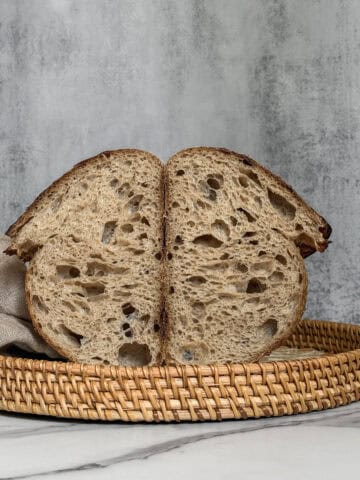

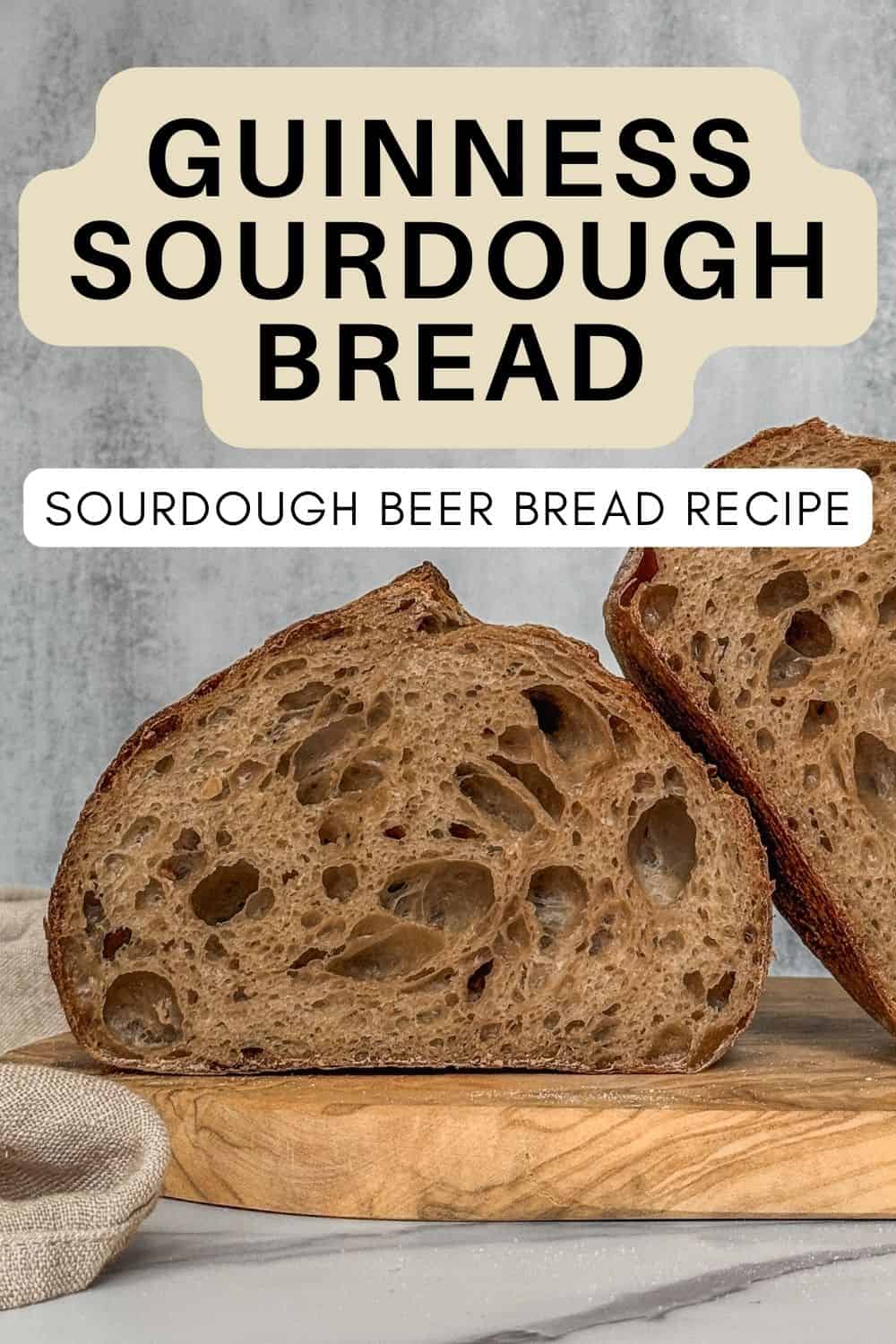
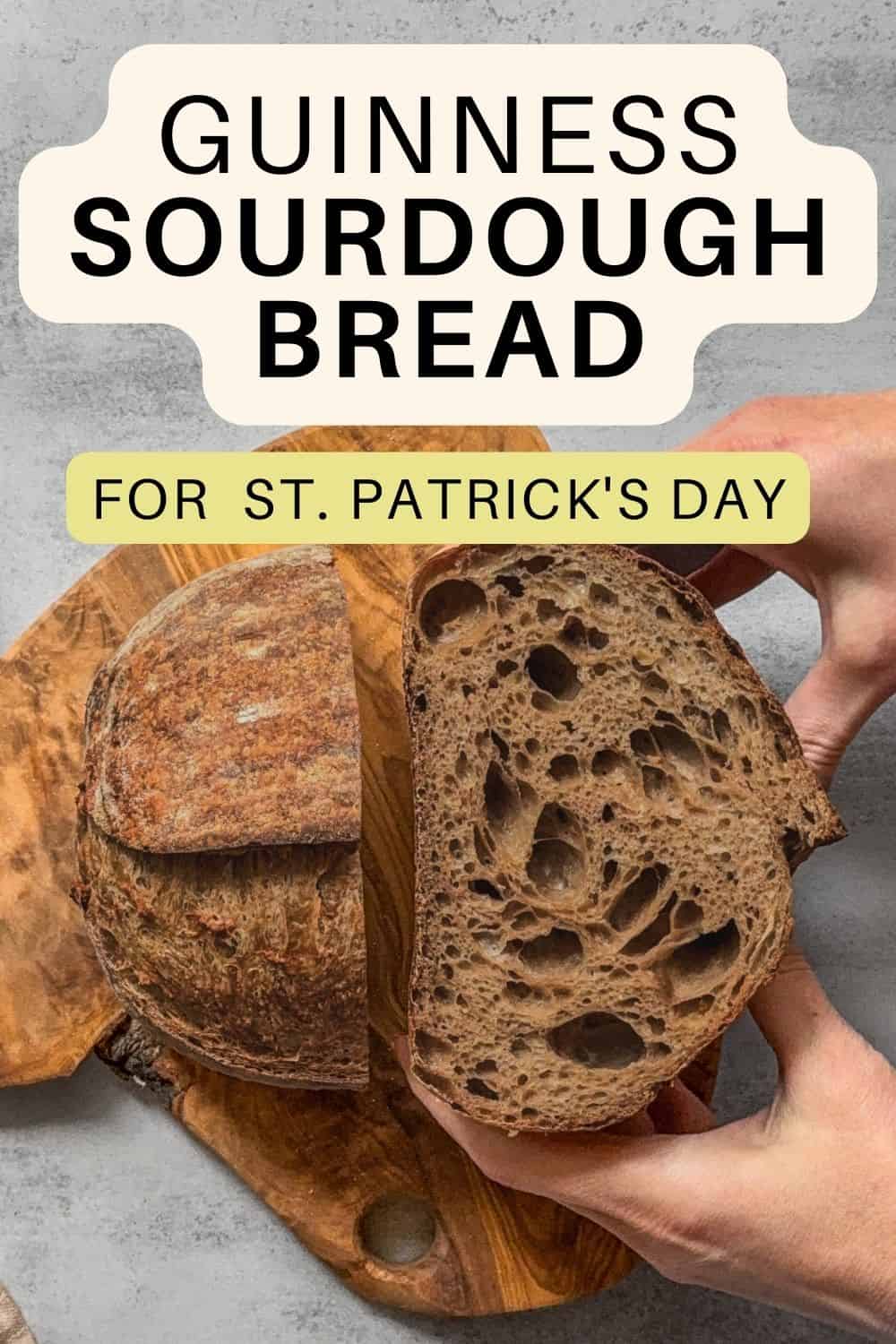
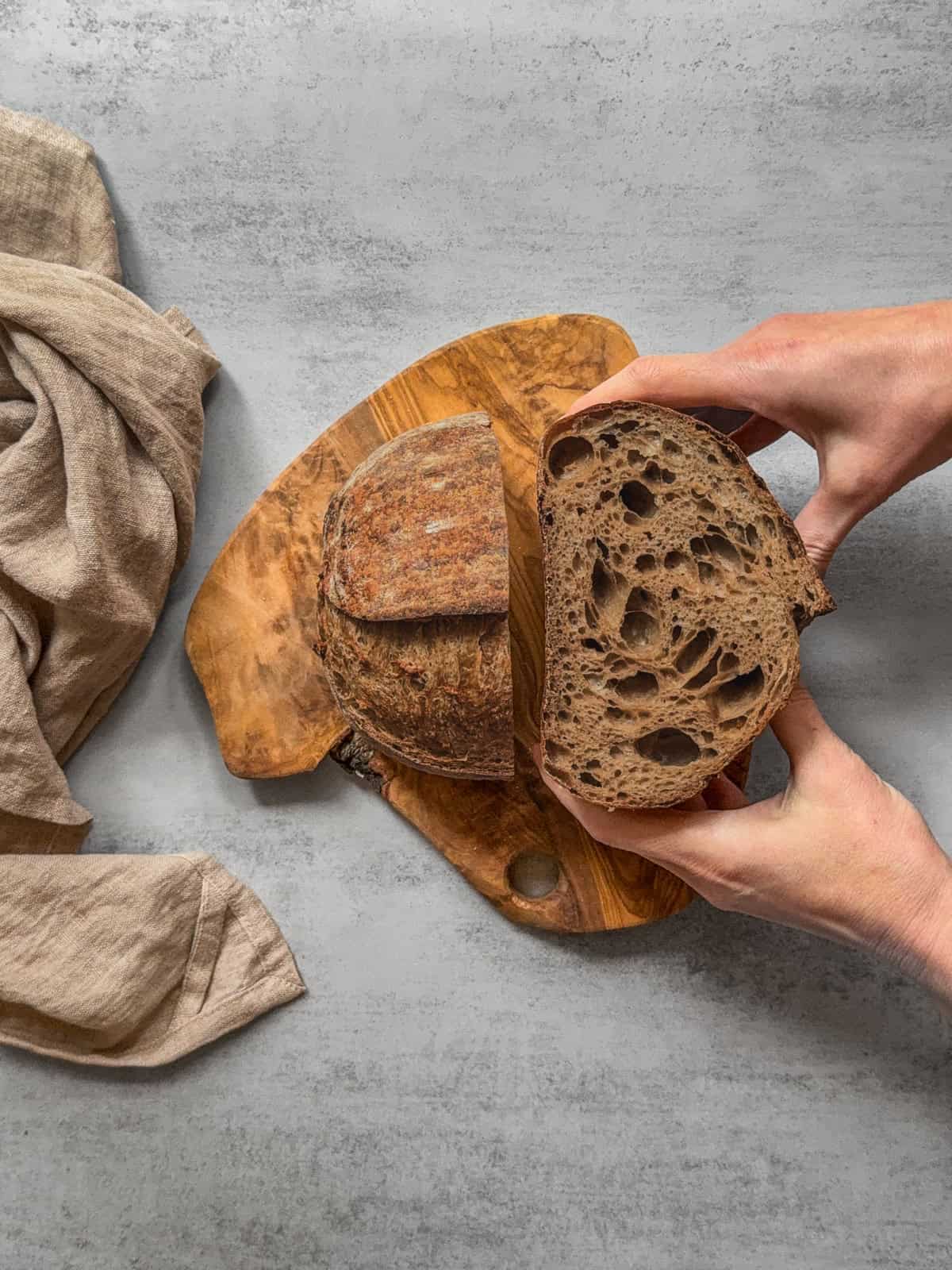
Make this Guinness sourdough bread, a rich, malty sourdough loaf made with Guinness stout, naturally leavened starter, and a touch of molasses and cocoa for roasted depth.
This rustic loaf is perfect for St. Patrick's Day, with its deep mahogany crust, subtle roasted barley aroma, and chewy crumb. Guinness replaces water in the dough, giving the sourdough a complex malt flavor.
Because the dough includes several additional ingredients beyond the classic flour, water, and salt, this recipe is best suited for bakers with some sourdough experience. Ingredients like stout, molasses, and cocoa influence bulk fermentation, so you have to understand how to read and manage the dough.
If you are new to sourdough baking, start with my Beginner's Sourdough Guide. To learn how to make your own starter, follow my Beginner Sourdough Starter recipe. Then, before trying this recipe, practice the basic techniques in my Beginner's Sourdough Bread recipe.
Why you'll love this recipe
- A unique sourdough with deep-roasted flavor: Guinness adds notes of roasted barley, coffee, and malt that create a more complex flavor than standard sourdough.
- Perfect for St. Patrick's Day: This loaf pairs well with Irish dishes like corned beef, stews, or simply thick slices of salted butter.
- Naturally leavened and slow fermented: Wild yeast fermentation produces both carbon dioxide and small amounts of ethanol, contributing to sourdough's distinctive aroma and flavor.
- Simple ingredient list: Despite the complex flavor, the recipe uses only a few ingredients: flour, Guinness, sourdough starter, salt, and small flavor boosters.
- Incredible crust and color: The natural sugars in stout and molasses caramelize during baking, resulting in a deep brown crust and a beautiful color.
Ingredients
- Flour: Use bread flour, Kirkland all-purpose flour, or a blend (bread plus rye or bread plus whole wheat) for added flavor and texture.
- Guinness stout: Make sure it is at room temperature and degassed. You can replace it with any good-quality stout.
- Levain (active starter at peak): Use 100% hydration sourdough starter at peak activity.
- Salt: Use fine sea salt. Avoid iodized table salt.
- Molasses: Use blackstrap or regular molasses for depth. Keep it minimal to avoid the sweetness overpowering the Guinness flavor.
- Olive oil: Use good-quality extra-virgin olive oil or a neutral-tasting vegetable oil.
- Cocoa powder: A small amount enhances the roasted flavor of the stout without making the bread taste like chocolate.
Recipe variations
- Evaporate the alcohol for a more intense stout flavor: Simmer the Guinness for 2-3 minutes, then let it cool completely before adding it to the dough. This removes alcohol while concentrating the rich roasted malt notes.
- Add soaked oats or cracked rye (Irish bakery method): Soak 20 g of rolled oats or cracked rye in 40 g of the Guinness measured from the recipe for 30-60 minutes. Fold the soaked grains into the dough during the first stretch-and-fold to enhance flavor and texture.
- Laminate toasted oats for extra texture: Toast 15 g of rolled oats in a dry pan and let them cool. Gently laminate the sourdough on the counter, sprinkle the oats over it, and fold. This evenly distributes the oats and helps trap fermentation gases.
- Experiment with different stouts: Try any dark stout or porter. Each beer brings its own unique flavor and color, influenced by the malt intensity. Avoid hop-forward beers, as they can add an unpleasant bitterness to the bread.
Final bread formula
| Ingredient | Baker's Percentage | Weight |
|---|---|---|
| Bread flour | 90% | 270g |
| Rye flour | 10% | 30g |
| Guinness | 80% | 240g |
| Levain/Active starter, 100% hydration | 23% | 70g |
| Salt | 2.3% | 7g |
| Molasses | 1.3% | 4g |
| Olive oil | 3% | 9g |
| Unsweetened cocoa powder | 1% | 3g |
- Total dough weight is 633g. If you need to adjust the bread formula for your own loaf, use baker's percentages or my sourdough calculator.
- My kitchen temperature is 73°F (23°C), with a humidity level of 40%
- Bulk fermentation: about 7 hours and 30 minutes with a 35-40% increase in dough size.
- Proofing time: 14 hours cold-proof in the fridge
- Bake in a conventional oven at 450°F (232°C) with the lid on for 20 minutes; without the lid, 15-17 minutes.
Tools & Equipment
For all the tools and equipment I use, check out my Essential Sourdough Tools & Equipment guide. It covers everything you need to bake sourdough bread successfully.
How to make Guinness sourdough bread
1. Degas the Guinness
Pour the Guinness into a bowl and stir for about 20-30 seconds to release carbonation. Excess carbonation can interfere with gluten formation.
2. Autolyse
Mix in a bowl, mix bread and rye flour with cocoa powder. Then, pour degassed Guinness stout, and mix until no dry flour remains. Cover and rest 30 minutes. This rest allows flour to hydrate and gluten to begin forming naturally (see my blog post on sourdough autolyse).
3. Add remaining ingredients
After autolyse, add the levain (active sourdough starter at peak activity), salt, molasses, and olive oil to the dough. Mix gently but thoroughly (use one of the bread dough mixing techniques).
Cover the dough and let it rest for 30 minutes. Once you add levain (active sourdough starter), bulk fermentation starts.
3. Bulk fermentation
With wet hands, perform two sets of stretch and folds followed by two sets of coil folds, allowing a 30-minute rest between each set. The exact number of coil folds varies depending on the dough's strength and extensibility.
After the final set of coil folds, let the dough continue bulk fermentation and monitor its rise closely.
Note: I allowed the dough to rise about 35% at 73°F (23°C), but could push it further to 40-45%. Your target rise will vary depending on your kitchen temperature. Warmer conditions will speed up bulk fermentation, while cooler environments will slow it down.
Bulk fermentation is complete when small bubbles appear on the surface and along the sides of the dough, the edges look slightly domed, and the dough gently wobbles when you shake the bowl.
4. Preshape and shape
Lightly flour your work surface, preshape the dough into a round, and let it rest for 10-15 minutes. If you are making just one loaf, you can skip the preshaping step. Then shape the dough into a batard and place it seam side up in a prepared 8-inch oval banneton (see my guide to shaping bread dough).
5. Proof
Cover the banneton with a clean towel or a disposable plastic cap, or place it in a reusable plastic bag. Refrigerate overnight (8-14 hours) for a slow, even fermentation.
6. Bake the loaf
Preheat the oven to 500°F (260°C) with a Dutch oven inside for 30 minutes. Turn the dough out onto parchment paper, score the top, and carefully transfer it into the hot Dutch oven.
Reduce the oven temperature to 450°F (232°C) and bake covered for 20 minutes. Remove the lid and continue baking for 15-17 minutes, until the crust is deeply browned.
I also like baking sourdough using the open-bake method with a steam pan. You can learn more about this technique in my blog post on baking sourdough without a Dutch oven.
Once baked, remove the bread from the Dutch oven and let it cool on a wire rack for at least 2 hours before slicing.
Bulk fermentation expectations
Guinness affects bulk fermentation due to its alcohol content, dissolved carbon dioxide, organic acids, and sugars.
While wild yeast in the starter generally produces gas at a normal rate, adding stout changes how the dough develops and appears during bulk fermentation.
With 240 g of Guinness in a 300 g flour dough (80% hydration), bulk fermentation often shows a slightly slower or less pronounced volume increase compared with plain sourdough bread under identical conditions.
Alcohol mildly inhibits yeast activity, while the acids and carbonation favor lactobacilli, producing acid faster than gas. This leads to a dough that is acidic enough (pH 4.2-4.3) before it visibly expands, which is typical of beer-based sourdoughs.
The dark color of the dough, deepened by Guinness and cocoa powder, masks subtle visual cues of fermentation. Small bubbles and early dough puffiness are harder to see, giving the impression that the dough is lagging even when fermentation is progressing normally.
Additionally, the sugars and proteins in Guinness interact with gluten, slightly softening the dough structure. This makes the dough feel looser and less elastic during bulk fermentation, yet the gluten network is usually sufficient to retain gas and produce a good oven spring once shaped.
Note: Bulk fermentation still depends on your kitchen temperature. Instead of watching the clock, focus on the dough's feel and appearance.
Expert tips
- Degas the Guinness before mixing: Fresh stout contains dissolved CO₂, which can interfere with gluten development. Make sure to degass the Guinness before adding it to the dough.
- Use gentle handling during shaping: Guinness dough feels slightly softer due to sugars and proteins in the stout. Handle the dough gently during shaping to preserve the gas produced during fermentation.
- Watch the crust color during baking: Sugars from Guinness and molasses promote faster browning. If the crust darkens too quickly, lower the oven temperature slightly during the final stage of baking.
- Always use oven mitts or silicone gloves when handling hot pans.
- Check the bread's internal temperature. It should reach 205-210°F (96-99°C). I usually aim for 207°F (97°C) or higher.
- Store sourdough bread for 3-5 days. Freeze individual slices for up to 1-2 weeks, a whole loaf for 1-2 months.
- Advanced notes: Monitor bulk fermentation with an aliquot jar, checking dough temperature after each fold and every 30-40 minutes. Finish fermentation at the target percentage rise.
How to serve
This rich, malty Guinness sourdough pairs well with a variety of savory dishes, making it perfect for everyday meals and festive occasions like St. Patrick's Day.
Spread thick slices with creamy Irish butter or serve them with sharp cheddar cheese. You can also toast slices and top them with smoked salmon, cream cheese, and fresh herbs such as dill or chives.
The bread also makes an excellent base for corned beef sandwiches. Layer it with sliced corned beef, mustard, and pickles for a hearty meal.
Serve this bread alongside a bowl of savory beef stew. The bread's deep, malty flavor pairs well with slow-cooked meat and vegetables, and the crusty exterior is perfect for dipping into the broth.
FAQ
The dark color comes from the stout, cocoa powder, and molasses. These ingredients also contain natural sugars that caramelize during baking, creating a deep brown crust.
Guinness adds subtle roasted malt and coffee-like notes rather than a strong beer flavor.
Most of the alcohol from Guinness evaporates during fermentation and baking. The dough undergoes a long fermentation, and the high heat of the oven further drives off alcohol. By the time the bread is fully baked, only negligible traces, if any, remain.
Yes. Because the alcohol largely evaporates during fermentation and baking, Guinness sourdough bread is generally considered safe for children to eat. What remains is the rich, roasted malt flavor rather than the alcohol itself.
Recipe
Guinness Sourdough Bread
This Guinness sourdough bread is rich and malty, made with stout beer, rye flour, molasses, and a hint of cocoa powder. The loaf has a soft crumb and a dark crust, and pairs perfectly with hearty dishes or Irish butter. Perfect for St. Patrick's Day baking.
- Yield: 1 loaf 1x
- Category: Sourdough Recipes
- Method: Baking
- Cuisine: American
Ingredients
For the levain (an active starter):
- 22 g sourdough starter
- 22 g bread flour
- 22 g water
For the bread dough:
- 270 g bread flour (I use King Arthur organic bread flour)
- 30 g rye flour
- 240 g Guinness stout (room temperature, degassed)
- 70 g levain (active sourdough starter at peak)
- 7 g fine sea salt (I use Redmond ancient fine sea salt)
- 4 g molasses
- 9 g olive oil
- 4 g unsweetened cocoa powder
10 g white rice flour (for dusting)
Instructions
- Degass the Guinness: Pour it into a bowl and stir for 20-30 seconds to release the carbonation. Excess carbonation can interfere with gluten formation.
- Autolyse: Mix in a bowl, mix bread and rye flour with cocoa powder. Then, pour degassed Guinness stout, and mix until no dry flour remains. Cover and rest 30 minutes.
- Add remaining ingredients: After autolyse, add levain (active sourdough starter at peak activity), salt, molasses, and olive oil to the dough. Mix gently but thoroughly until everything is fully incorporated (use one of the bread dough mixing techniques). Cover the dough and let it rest for 30 minutes. Once you add levain (active sourdough starter), bulk fermentation starts.
- Bulk fermentation: With wet hands, perform two sets of stretch and folds followed by two sets of coil folds, allowing a 30-minute rest between each set. The exact number of coil folds varies depending on the dough's strength and extensibility. After the final set of coil folds, let the dough continue bulk fermentation and monitor its rise closely. Bulk fermentation is complete when small bubbles appear on the surface and along the sides of the dough, the edges look slightly domed, and the dough gently wobbles when you shake the bowl.
- Preshape and shape: Lightly flour your work surface, preshape the dough into a round, and let it rest for 10-15 minutes. If you are making just one loaf, you can skip the preshaping step. Then shape the dough into a batard and place it seam side up in a prepared 8-inch oval banneton.
- Proof: Cover the banneton with a clean towel or a disposable plastic cap, or place it in a reusable plastic bag. Refrigerate overnight (8-14 hours) for a slow, even fermentation.
- Bake the loaf: Preheat the oven to 500°F (260°C) with a Dutch oven inside for 30 minutes. Turn the dough out onto parchment paper, score the top, and carefully transfer it into the hot Dutch oven. Reduce the oven temperature to 450°F (232°C) and bake covered for 20 minutes. Remove the lid and continue baking for 15-17 minutes, until the crust is deeply browned. Once baked, remove the bread from the Dutch oven and let it cool on a wire rack for at least 2 hours before slicing.
Notes
- Degass the Guinness before mixing: Fresh stout contains dissolved CO₂, which can interfere with gluten development. Make sure to degass the Guinness before adding it to the dough.
- Use gentle handling during shaping: Guinness dough feels slightly softer due to sugars and proteins in the stout. Handle the dough gently during shaping to preserve the gas produced during fermentation.
- Watch the crust color during baking: Sugars from Guinness and molasses promote faster browning. If the crust darkens too quickly, lower the oven temperature slightly during the final stage of baking.
- Handle hot equipment safely: Always use oven mitts or silicone gloves when handling hot pans or Dutch ovens.
- Check the bread's internal temperature: It should reach 205-210°F (96-99°C). I usually aim for 207°F (97°C) or higher.
- Store the bread properly: Store sourdough bread at room temperature for 3-5 days. Freeze for up to 3 months. Thaw at room temperature. Freeze individual slices for up to 1-2 weeks, a whole loaf for 1-2 months.
- Want to create a custom formula for your loaf? Try my sourdough calculator.
- Need help getting started? Check out my beginner's sourdough bread guide to learn sourdough basics first.
- Note: Nutritional information does not include the white rice flour used for dusting.
Nutrition
- Calories: 1494
- Sugar: 3.4g
- Sodium: 2723mg
- Fat: 12.8g
- Saturated Fat: 2.1g
- Carbohydrates: 264.8g
- Fiber: 16.4g
- Protein: 37.3g
- Cholesterol: 0mg