

My purple sweet potato sourdough bread isn't just sourdough. It is sourdough with a twist of color, softness, and subtle sweetness. With its naturally vibrant crumb and tender texture, this bread feels both rustic and special.
If you love sourdough and enjoy experimenting with natural ingredients, bake warm turmeric sourdough bread, vibrant green spinach sourdough bread, or naturally orange carrot sourdough bread.
New to sourdough? Start with my Beginner's Sourdough Guide. To learn how to make your own starter, follow my Beginner Sourdough Starter recipe. Then, before trying this recipe, practice the basic techniques in my Beginner's Sourdough Bread recipe.
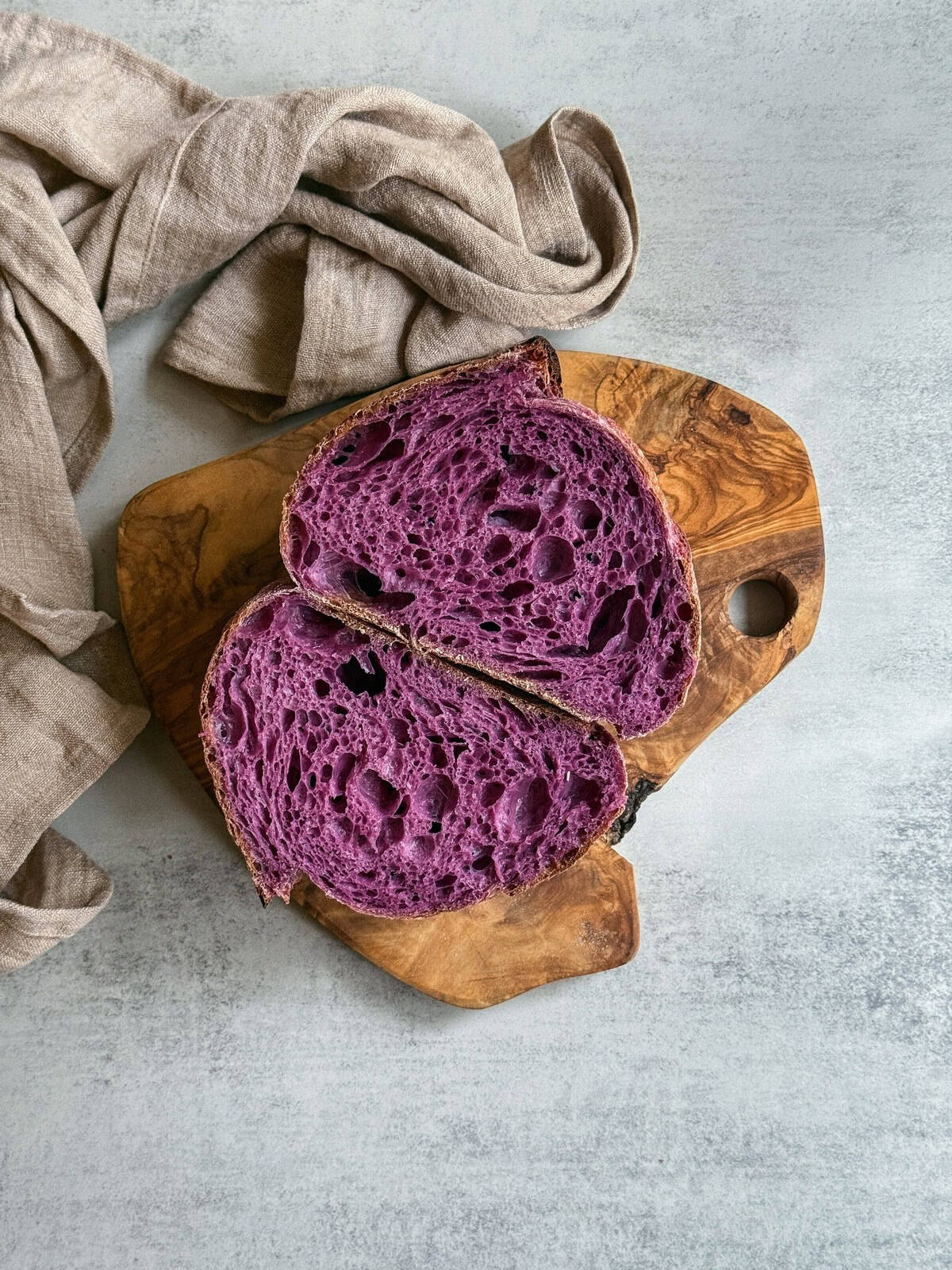
Purple sweet potato sourdough bread recipe
This recipe is part of my flavored sourdough bread series and is a natural next step after mastering plain sourdough. You can subscribe to my learning email series to follow the full step-by-step learning path.
While this bread can be made with mashed purple sweet potato to create a beautiful marble effect, I chose to use purple sweet potato powder for this version.
It gives the bread its stunning color and a subtle flavor, less sweet than fresh sweet potato, so it mainly adds color, and it doesn't require any advanced techniques (yet!). Spoiler alert: it is lamination.
Ingredients
- Flour: Use bread flour, Kirkland all-purpose flour, or a flour blend (bread plus all-purpose, or bread plus whole wheat).
- Water: Use filtered water, bottled spring water, or good-quality tap water.
- Levain (active starter at peak): Use 100% hydration sourdough starter to make it.
- Salt: Use fine sea salt. Avoid iodized table salt.
- Purple sweet potato powder brings color and flavor. I use the purple sweet potato powder from Suncore Foods.
Substitutions & Variations
- Marble effect: Use about 20% mashed purple sweet potatoes (based on the flour weight). Incorporate them during the second set of stretch and folds, or during lamination performed after that set.
- More texture: Add toasted walnuts with dried cranberries for bursts of flavor and crunch, or sprinkle tri-color sesame seeds on top for added crunch and visual appeal.
Final bread formula
| Ingredient | Baker's Percentage | Weight |
|---|---|---|
| Bread flour | 100% | 300g |
| Water | 75% | 225g |
| Levain/Active starter, 100% hydration | 20% | 60g |
| Salt | 2% | 6g |
| Purple sweet potato powder | 5% | 15g |
- Total dough weight is 606g. If you need to adjust the bread formula for your own loaf, use baker's percentages or my sourdough calculator.
- My kitchen temperature is 73°F (23°C), with a humidity level of 40%
- Bulk fermentation: 7 hours 30 minutes to 8 hours 30 minutes with a 90% increase in dough size.
- Proofing time: 14 hours cold-proof in the fridge
- Bake in a conventional oven at 450°F (232°C) with the lid on for 20 minutes; without the lid, 15-17 minutes.
Tools & Equipment
For all the tools and equipment I use, check out my Essential Sourdough Tools & Equipment guide. It covers everything you need to bake sourdough bread successfully.
How to make purple sweet potato sourdough bread
1. Autolyse
Pour water into a mixing bowl. In a separate bowl, mix the flour and purple sweet potato powder, then add it to the water and mix until smooth. Cover and let sit for 30 minutes (see my blog post on sourdough autolyse).
2. Incorporate levain and salt
Add levain (active starter at peak) and mix. Add the salt, then mix using one of the bread dough mixing techniques. Cover the dough and let it rest for 30 minutes. Once you add levain (active sourdough starter), bulk fermentation starts.
3. Bulk fermentation
With wet hands, perform two sets of stretch and folds and two sets of coil folds, with a 30-minute rest between sets. The number of coil folds depends on the dough's strength and extensibility.
If the dough is strong, stop after two sets (don't overwork the dough!). If the dough is weaker and spreads noticeably, add one or two extra sets of coil folds.
If you use a mixer to mix this bread dough, it will develop strong gluten. In that case, perform two sets of coil folds, with an optional half set if needed. Don't overwork the dough.
After the final set of coil folds, allow the dough to continue bulk fermentation and monitor its rise closely.
Note: I let the dough rise to just under double at 73°F (24°C), but your target rise may differ depending on your kitchen. Warmer temperatures speed up bulk fermentation, while cooler environments slow it down.
Bulk fermentation is complete when the dough shows bubbles on the surface and along the sides, the edges are slightly domed, and the dough gently wobbles when you shake the bowl.
4. Preshape and shape
Lightly flour your work surface, preshape the dough into a round, and let it rest for 10-15 minutes. You can omit preshaping when making a single loaf. Perform the final shaping into a battard, then place it in a prepared 8-inch oval banneton (see my guide to shaping bread dough).
5. Proof
Cover the banneton with a clean towel or a disposable plastic cap, or place it in a reusable plastic bag. Refrigerate overnight (8-14 hours) for a slow, even fermentation.
6. Bake the loaf
Preheat the oven to 500°F (260°C) with a Dutch oven inside for 30 minutes. Transfer the dough onto parchment paper, score the top, and place it inside the Dutch oven. Decrease the oven temperature to 450°F (232 °C), then bake, covered, for 20 minutes; uncover and bake for another 15-17 minutes.
I love baking sourdough with the open-bake method, using a steam pan. You can read more about this technique on my blog post on baking sourdough without a Dutch oven.
Remove the bread from the Dutch oven and let it cool on a wire rack for at least 2 hours before slicing.
Bulk fermentation expectations
Purple sweet potato powder slows the drop in dough pH, even though yeast still produces gas at a normal rate. This means the dough may rise before enough acidity has fully developed.
With 1-3% purple sweet potato powder (based on flour weight), bulk fermentation can sometimes appear slightly faster in volume than plain dough under the same conditions.
However, the vibrant purple color can make the dough look less puffy, even when fermentation is progressing well.
Note: Bulk fermentation always depends on your kitchen temperature. Instead of watching the clock, focus on the dough's feel and appearance.
Expert tips
- Adjust the dough hydration. Purple sweet potato powder absorbs water and slightly thickens the dough. Increase sourdough hydration by about 3% when using the powder to keep the dough balanced and easy to handle.
- Track dough strength visually and by feel. If it is slack or spreads too much, add extra coil folds. If it is strong, avoid overworking.
- Always use oven mitts or silicone gloves when handling hot pans.
- Check the bread's internal temperature. It should reach 205-210°F (96-99°C). I usually aim for 207°F (97°C) or higher.
- Store sourdough bread for 3-5 days. Freeze individual slices for up to 1-2 weeks, a whole loaf for 1-2 months.
- Advanced notes: Monitor bulk fermentation with an aliquot jar, checking dough temperature after each fold and every 30-40 minutes. Finish fermentation at the target percentage rise.
Recipe
Purple Sweet Potato Sourdough Bread

Purple sweet potato sourdough bread is a creative twist on a classic sourdough. It is made with purple sweet potato powder or mashed purple sweet potato, which adds color and a subtle earthy flavor.
- Prep Time: 21 hours
- Cook Time: 40 minutes
- Total Time: 21 hours, 40 minutes
- Yield: 1 loaf 1x
- Method: Baking
- Cuisine: American
Ingredients
For the levain (an active starter):
- 22 g sourdough starter
- 22 g bread flour
- 22 g water
For sourdough bread:
- 300 g bread flour (I use King Arthur organic bread flour)
- 225 g water (75% hydration)
- 60 g levain (active starter at peak)
- 6 g fine sea salt (I use Redmond ancient fine sea salt)
- 15 g purple sweet potato powder
10 g white rice flour (for dusting)
Instructions
- Autolyse: Pour water into a mixing bowl. In a separate bowl, mix the flour and purple sweet potato powder, then add to the water and mix well. Cover and leave for 30 minutes.
- Incorporate levain and salt: Add levain (active starter at peak) and mix. Add the salt and mix well. Cover the dough and let it rest for 30 minutes.
- Bulk fermentation: Perform two sets of stretch-and-folds and two sets of coil folds, with a 30-minute rest between sets. If the dough is strong, stop after two sets (don't overwork the dough!). If the dough is weaker and spreads noticeably, add one or two extra sets of coil folds. After the final set of coil folds, allow the dough to continue bulk fermentation and monitor its rise closely. Bulk fermentation is done when the dough shows bubbles on the surface and along the sides, the edges are slightly domed, and the dough gently wobbles when you shake the bowl.
- Preshape and shape: Lightly flour your work surface, preshape the dough into a round, and let it rest for 10-15 minutes. You can omit preshaping when making a single loaf. Perform the final shaping into a battard, then place it in a prepared 8-inch oval banneton.
- Proof: Cover the banneton with a clean towel, disposable plastic cap, or place it inside a reusable plastic bag. Refrigerate overnight (8-14 hours) for a slow, even fermentation.
- Bake: Preheat the oven to 500°F (260°C) with a Dutch oven inside for 30 minutes. Transfer the dough onto parchment paper, score the top, and place it inside the Dutch oven. Decrease the oven temperature to 450°F (232 °C), then bake, covered, for 20 minutes; uncover and bake for another 15-17 minutes.
- Cool the bread: Remove the bread from the Dutch oven and let it cool on a wire rack for at least 2 hours before slicing.
Notes
- Adjust the dough hydration. Purple sweet potato powder absorbs water and slightly thickens the dough. Increase the dough hydration by about 3% to keep the dough balanced and easy to handle.
- Track dough strength: Check the dough visually and by feel. If it is slack or spreads too much, add extra coil folds. If it is strong, avoid overworking.
- Texture notes: When using the purple sweet potato powder, expect the loaves to have a slightly firmer crumb.
- Safety tip: Always use oven mitts or silicone gloves when handling hot pans.
- Check for doneness: Your bread is fully baked when the internal temperature reaches 205-210°F (96-99°C). I usually aim for 207°F (97°C) or higher. Use a digital probe thermometer to check.
- Storage and freezing: Store sourdough bread at room temperature for 3-5 days. Freeze for up to 3 months. Thaw at room temperature. Freeze individual slices for up to 1-2 weeks, a whole loaf for 1-2 months.
- Want to create a custom formula for your loaf? Try my sourdough calculator.
- Need help getting started? Check out my beginner's sourdough bread guide to learn sourdough basics first.
- Note: Nutritional information does not include the white rice flour used for dusting.
Nutrition
- Calories: 1201
- Sugar: 0.9g
- Sodium: 2340mg
- Fat: 3.2g
- Saturated Fat: 0.5g
- Carbohydrates: 251.8g
- Fiber: 8.9g
- Protein: 34.1g
- Cholesterol: 0mg