

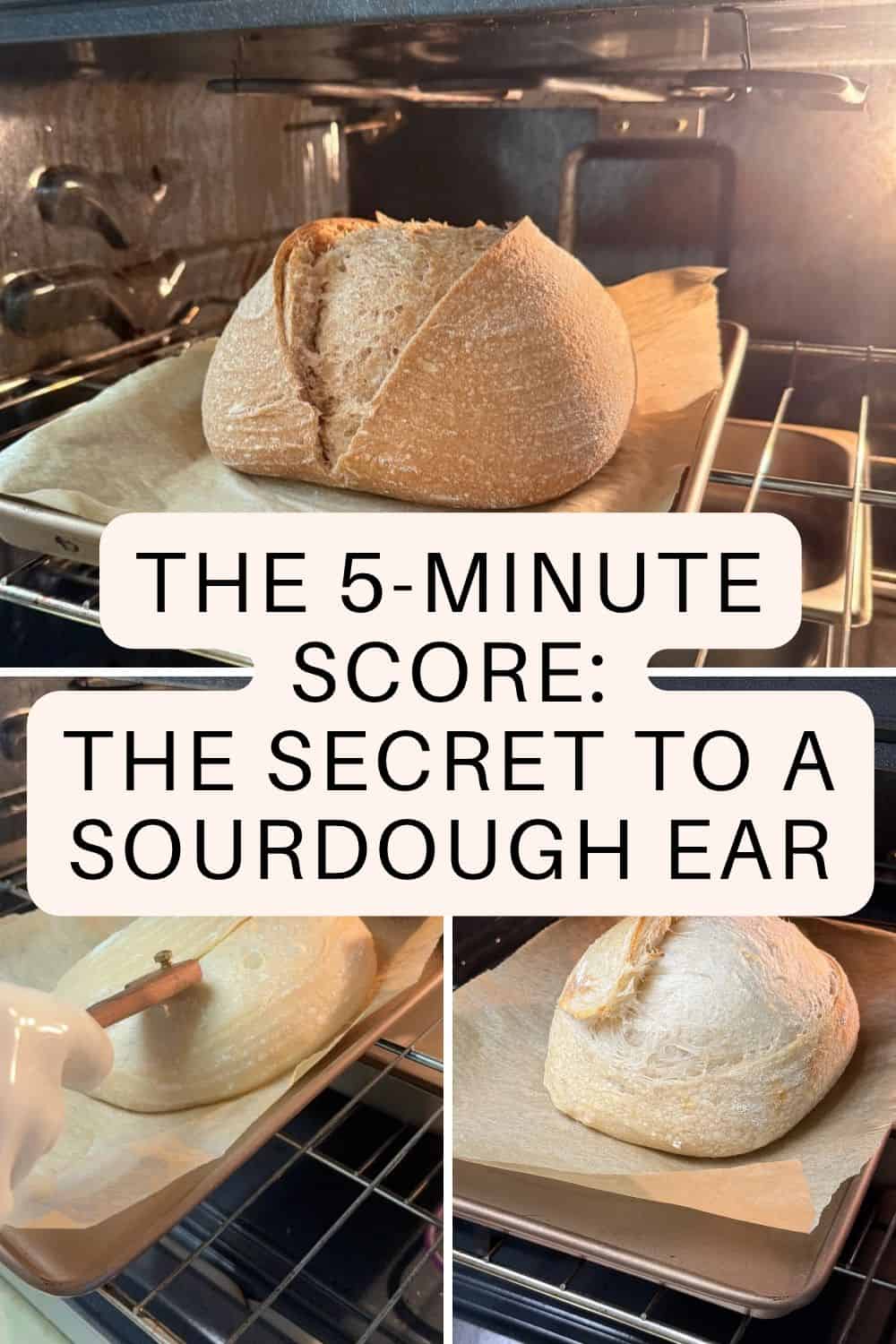
Sourdough scoring is more than just decoration. It controls how your bread expands and creates that signature ear. If you have mastered basic scoring, learn advanced sourdough scoring techniques that use the 5-minute score: partial bake, double, and delayed scoring.
Note: These methods are for different situations, so I will guide you on when and why to use each.
Quick Summary
Partial bake, double, and delayed scoring all mean cutting the dough after it goes into the oven, once the surface starts to set. Each one solves a different problem, so pick the method based on how well your dough is proofed.
- Partial bake scoring: one shallow score a few minutes into the bake, for dough that is slightly overproofed
- Double scoring: score before baking, then score again along the same line once the loaf starts to rise in the oven, for well-proofed dough and a beautiful ear
- Delayed scoring: no score before baking, one score a few minutes in, for well-proofed dough that is too soft to cut cleanly
- Best setup: a Challenger Bread Pan, an upside-down Dutch oven, or open baking, so you can reach the loaf
- Safety: wear oven mitts and move fast, because the steam is hot and escapes when you open the oven
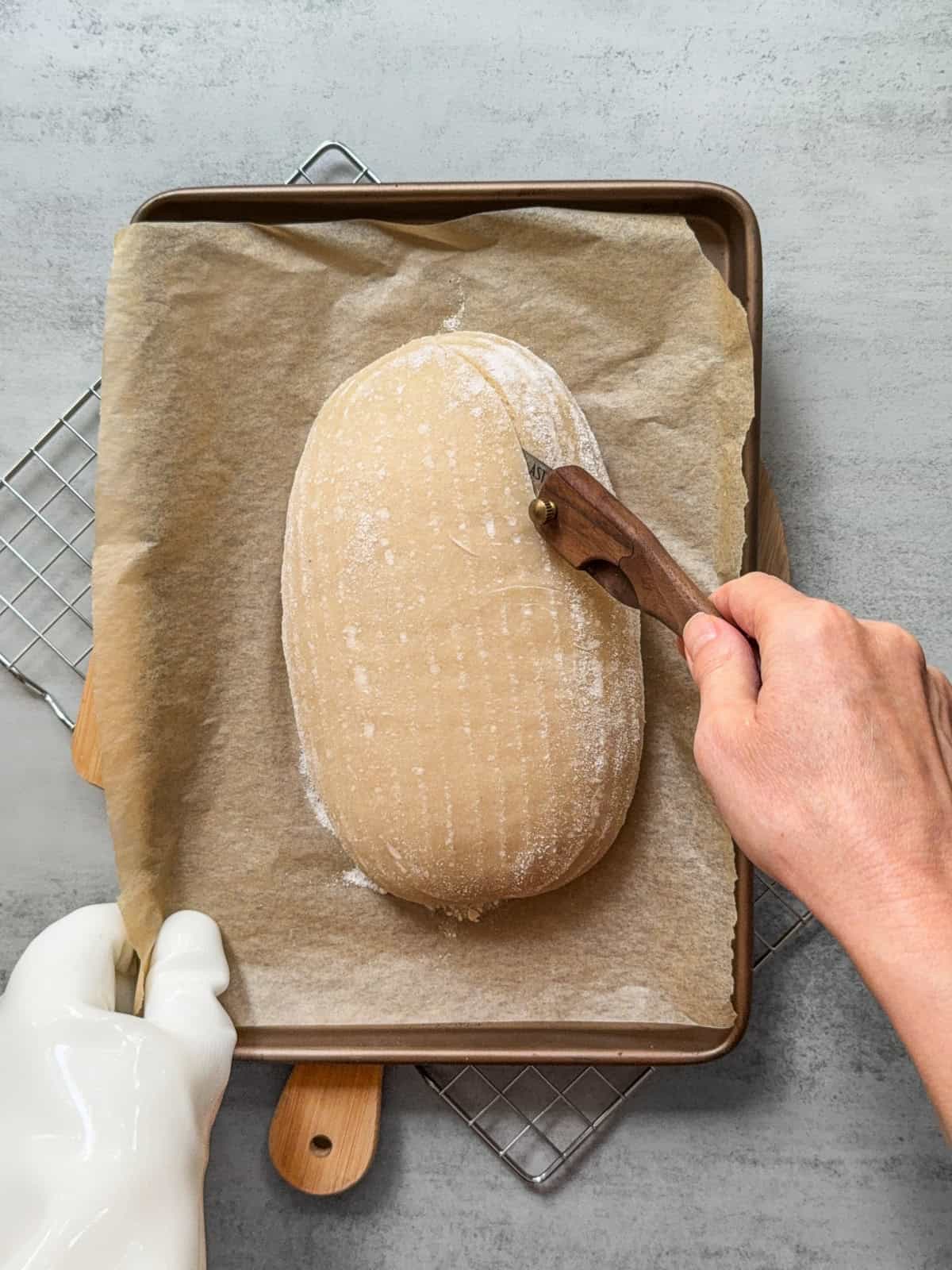
What Is the 5-Minute Score?
The 5-minute score is any cut you make a few minutes into the bake, once the surface of the dough starts to set. Cutting at this stage guides how the loaf opens in the oven and helps it form an ear. There are three ways to use it, and each one serves a different purpose:
- Partial bake scoring: a rescue technique for overproofed dough.
- Double scoring: improves oven spring and produces more pronounced ears.
- Delayed scoring: a hybrid method for well-proofed dough, helping beginners or those who struggle to get a clean ear.
| Technique | Best For | Timing | Goal |
| Partial bake scoring | Overproofed or delicate, soft dough | 5-6 minutes into baking | Control expansion, improve loaf shape |
| Double scoring | Properly proofed dough | 5-6 min into bake | Maximize the oven spring, defined ear |
| Delayed scoring | Well-proofed dough struggling with an ear | 5-6 minutes into baking | Guide oven spring, create a clean ear |
These methods fine-tune a loaf that is already close to right. They can't fix a weak starter, a short bulk, or loose shaping. If your loaves come out flat or tight, check your bulk fermentation, proofing, and shaping first.
Partial Bake Scoring
What Is Partial Bake Scoring?
Partial bake scoring is the simplest way to use the 5-minute score. It is a single slash made after the dough has started baking, usually 5 minutes in. Unlike double scoring, it only involves one cut and is ideal for controlling overproofed sourdough.
This technique works with a partially set crust during the early stages of the oven spring. It helps you control how your bread expands during baking. However, scoring at this point lets some steam escape, so you have to move quickly.
Why Use Partial Bake Scoring
One main benefit is better control over how your loaf expands as it bakes. If you deal with overproofed sourdough, a quick, shallow score a few minutes into the bake helps manage the rise and improve the loaf's final shape.
It also gives you a chance to develop a more defined sourdough ear, especially if you are still mastering bulk fermentation.
How to Perform Partial Bake Scoring
- Preheat your oven with a Dutch oven or baking stone inside, following the baking temperature and timing instructions in your recipe.
- Get your tools ready while waiting. Prepare a bread lame or razor blade, oven mitts or gloves, and safety goggles.
- Place dough in the oven: If baking in a Dutch oven, place it onto parchment paper for easy handling, and, wearing oven mitts, lower it into the hot pot and cover with the lid. If baking without a Dutch oven, slide the dough onto the baking stone and pour water into a tray to create steam.
- Set a timer for 5-6 minutes. When it goes off, the surface should look dry and slightly set but still pale. If you score too early, the dough will be too delicate, and if you wait too long, the crust will be too firm to score cleanly.
- Carefully open the oven: After the timer goes off, open the oven carefully, wearing your mitts and goggles, and remove the Dutch oven lid if you use one.
- Make the cut: Using the blade, quickly cut into the partially baked crust. If you are aiming for an ear, make a deep central cut at 90°. If your dough is overproofed, use a shallow cut at a 45° angle to keep the loaf's structure.
- Close the oven door: After scoring, put the Dutch oven's lid back on with your oven mitts and close the oven door promptly to keep as much heat and steam as possible.
- Continue baking as instructed, but reduce the first steamed phase by 5-6 minutes.
Check out a quick video on partial bake score (PBS) by @bakingshots.
Forgot to Score Your Sourdough? Use the 5-Minute Score
It happens to all of us. You slide the loaf into the oven, close the door, and only then notice the smooth, uncut top. Don't panic. You can still score it if you catch it early.
Open the oven a few minutes into the bake, while the bread crust looks dry and slightly set but is still pale. Wear your oven mitts, make one confident slash with a sharp blade, and quickly close the lid or oven door.
Once the crust is firm and starts to brown, it is too late. The blade will drag and tear the loaf instead of opening it. At that point, just let it bake. An unscored loaf may burst in a random spot, but it still tastes the same.
Double Scoring
What Is Double Scoring?
Double scoring is a sourdough scoring method in which you score the dough twice. The first score occurs before the dough goes into the oven, and the second, or re-scoring, occurs 5-6 minutes into baking.
This technique is usually used with a Challenger Bread Pan, a Lodge Dutch oven (lid as the bottom), and an open-baking setup. It also works for baking in a traditional Dutch oven, but rescoring the dough can be a bit tricky.
Why Use Double Scoring
Double scoring helps maximize oven spring, guide dough expansion, and create a defined ear. It is ideal for well-proofed sourdough, giving you better control over rise, crust, and crumb.
How to Double-Score Sourdough Bread
- Prepare your oven: Preheat the oven to the required temperature with a baking stone, steel sheet, Challenger bread pan, or Dutch oven inside. Keep your oven mitts, blade, and goggles next to the oven.
- Make the first score: Gently flip the dough from the fridge onto parchment paper. Use a sharp blade to make the first score at a 45° angle for side scoring or a 90° angle for central scoring. This creates a weak point in the dough that allows it to expand while baking, often called "the score line."
- Start baking: Quickly move the scored dough into the preheated oven. For open baking, use a pizza peel to slide the dough onto a baking stone or steel sheet, and add hot water to a pan to create steam. Wear oven mitts for this step. If you use a Dutch oven, lift the dough with the parchment paper and place it inside the pot, then cover it with the lid to trap the steam.
- Set the timer: Bake the loaf for 5 to 6 minutes to allow the initial steam to do its work. The surface should look dry and slightly set but still pale.
- Perform the second score: Make a single cut beneath the first score at a 70-80° angle (or two cuts on either side of a central score). If using a Dutch oven, wear oven mitts and remove the lid slowly to avoid scalding from hot steam, and use the same blade to make a deep slash beneath the initial cut.
- Finish baking: Reintroduce steam with a water spray if using the open baking method. Continue baking until the loaf is golden, then cool on a wire rack before slicing.
Now, take a moment to watch a quick video featuring double-scoring techniques: side-scored batard by @breadbypam and central-scored batard by @marielesterbaker.
Double-Scoring Variation
Another way to double-score is to wait 5-6 minutes into the bake for the first score, then make the second score 5-6 minutes later. This method skips the initial scoring before the dough goes into the oven.
While this technique involves opening the oven twice (which can cause some steam loss), it can work well for some bakers.
Delayed Sourdough Scoring
What Is Delayed Scoring?
Delayed scoring is a hybrid technique: like partial bake scoring, but for well-proofed sourdough. Instead of scoring before baking, you make a single slash 5-6 minutes into the bake.
Why Use Delayed Scoring
Delayed scoring is especially helpful for bakers who struggle to create a well-defined sourdough ear. Waiting until 5-6 minutes into the bake prevents the soft, delicate dough from dragging or tearing.
At this stage, the crust is partially set. This allows the loaf to expand in a controlled way and guides the oven spring for a clean, even rise. This makes it easier for beginners to achieve a professional-looking loaf with a pronounced ear.
How to Perform Delayed Scoring
Bake the unscored loaf for 5-6 minutes until the surface looks dry and slightly set but still pale.
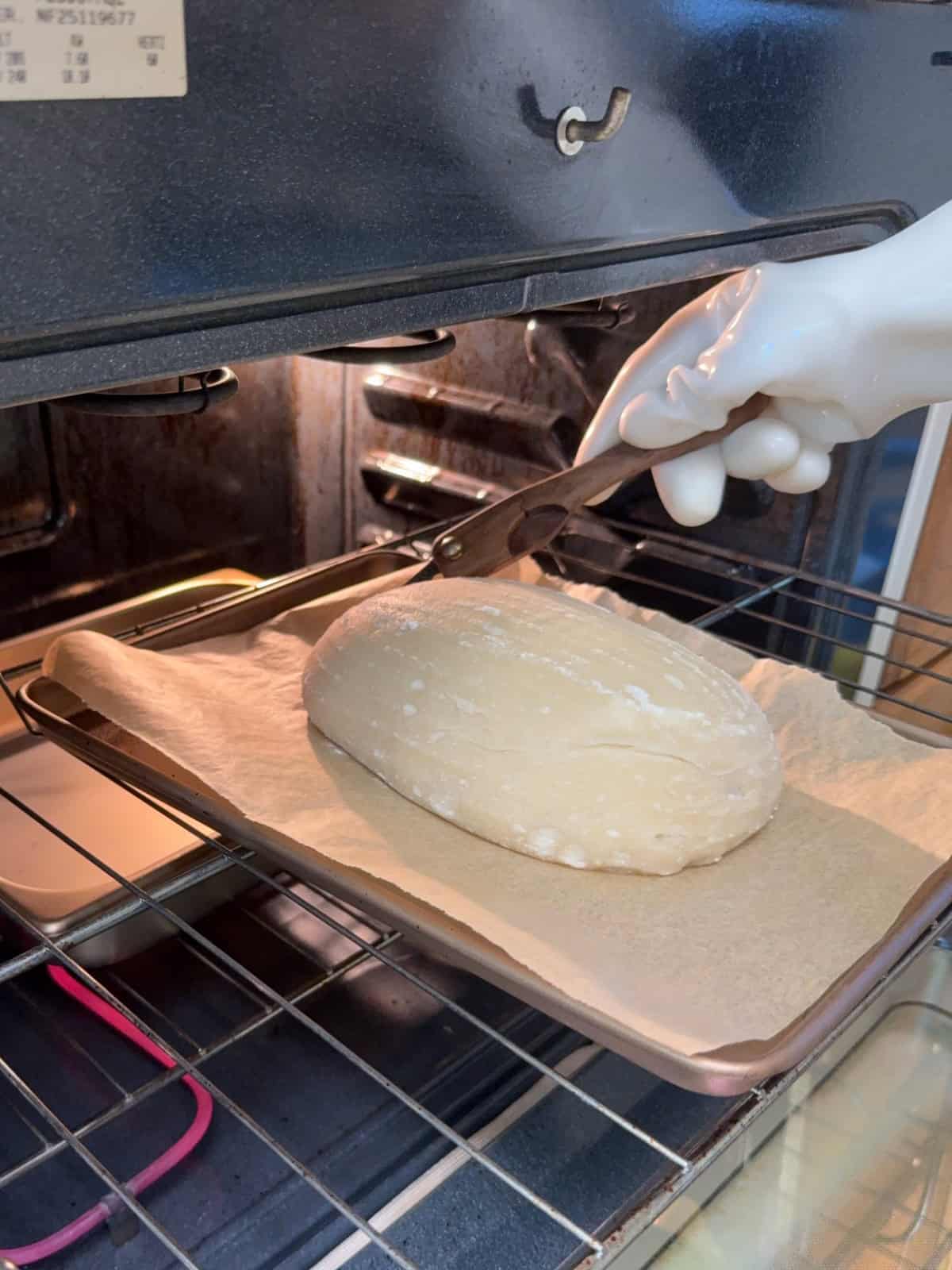
Wearing oven mitts, pull out the rack and make one quick, confident slash (see my guide on sourdough scoring vs slashing).
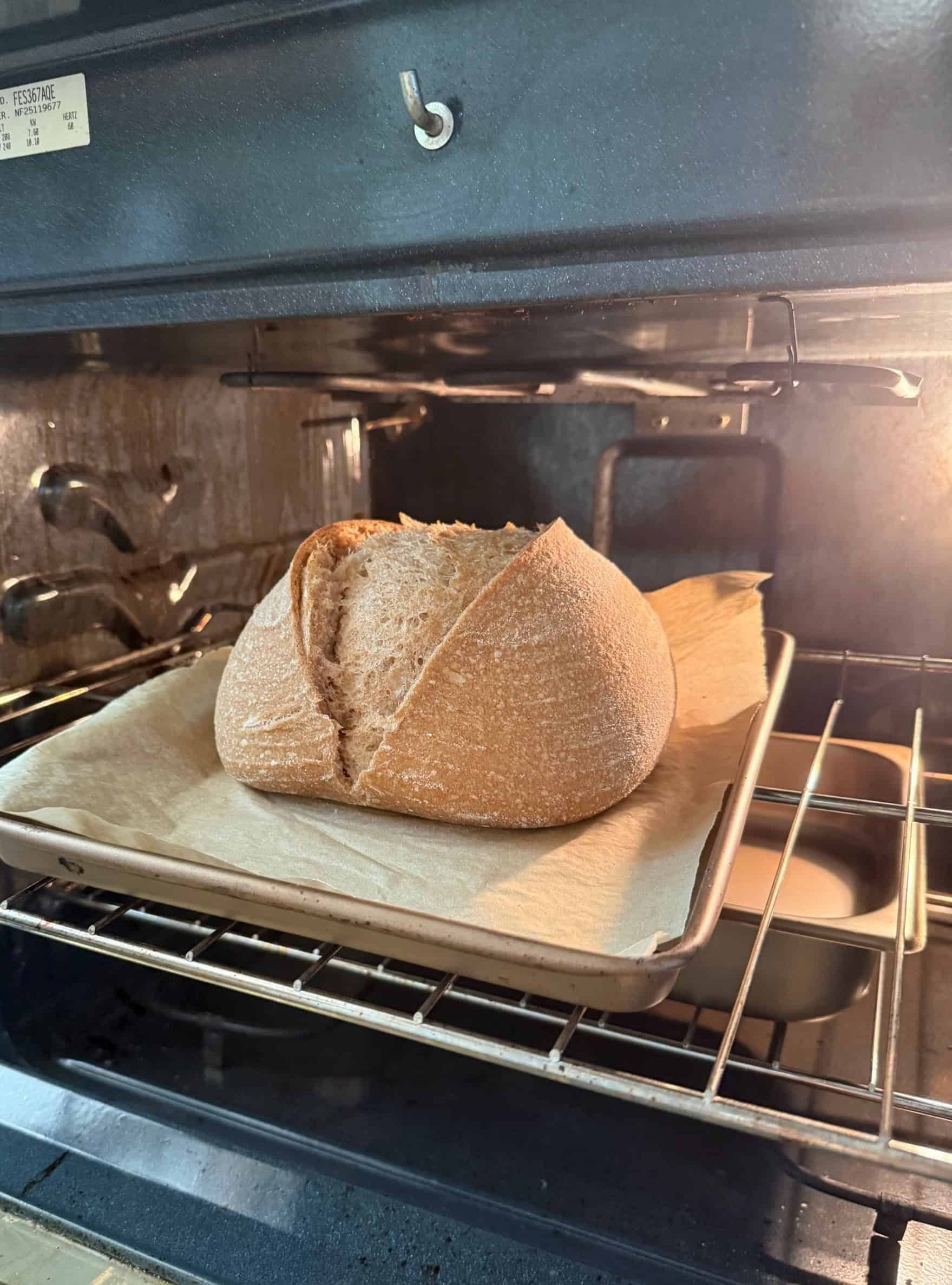
Close the oven quickly and keep baking. The cut opens into a beautiful ear as the loaf finishes rising.
Top Tips
- Always use a sharp blade for clean and precise cuts.
- Score in one smooth motion.
- Wear oven mitts and move quickly to retain steam.
- Angle your blade appropriately for each technique.
- Practice to get the hang of these techniques.
Scoring is the last thing you do before the bake, and it only works if every step before it went right. My free Sourdough Baking Roadmap shows each stage in order, from feeding your starter to the final bake, so you can see where the score fits.
Frequently Asked Questions About the 5-Minute Score
What is the 5-minute score in sourdough?
It is a score made a few minutes into the bake, once the surface of the dough starts to set. It guides how the loaf opens in the oven and helps it form an ear. You can use it as your only score or as a second score over the first one.
When exactly should I score during the bake?
Most bakers score 5 to 7 minutes into the bake. Look at the surface: it should look dry and slightly set but still pale. If it has started to brown, you waited too long.
Does double scoring make the loaf flatter?
It can. In a side-by-side test, Breadtopia found that a loaf scored twice baked wider and flatter than a loaf scored once. Your proof and shaping affect the result too, so try both methods with the same dough.
Can I use the 5-minute score in a regular Dutch oven?
Yes, but it is harder. The deep walls make it difficult to reach the loaf with a blade. A Challenger Bread Pan or a Dutch oven used upside down, with the lid as the base, makes it much easier.
Will the 5-minute score fix overproofed dough?
It helps the loaf hold its shape better, but it cannot undo overproofing. Use a shallow cut so the loaf does not spread more. To fix the cause, see my guide to overproofed sourdough bread.
Is it safe to score bread in a hot oven?
Yes, if you prepare. Opening the oven releases hot steam. Wear oven mitts and goggles, lift the lid away from your face, and work quickly so you lose as little heat and steam as possible.
Final Thoughts
Some bakers find that partial bake scoring "works around struggles" like overproofed dough and difficulty achieving ears, especially for beginners.
The truth is, even experienced bakers sometimes overproof, and many use this method to "save" their loaves. There is no shame in that.
Bakers also debate how much double scoring helps achieve a more open crumb and a defined ear. Breadtopia says this method "yields a wider, flatter loaf," while others say it improves the bread's rise and texture.
In the end, each sourdough scoring technique has its benefits depending on your goal. The main downside is that they add an extra step to the baking process and carry a small risk of burns, especially when working with hot steam.
Let's Talk Sourdough
Have you ever tried advanced sourdough scoring? If so, which technique do you usually use, partial bake or double scoring, and how did it affect your loaf? Please share your experience in the comments.
Ready to Keep Learning?
Now that you have learned slashing and scoring bread, it is time to learn the science behind it.
I recommend checking this post before jumping into decorative sourdough scoring and bread designs. While the science topic might seem a bit dull, trust me, you will gain valuable insights on how to choose and control your scoring techniques.
Comments
No Comments