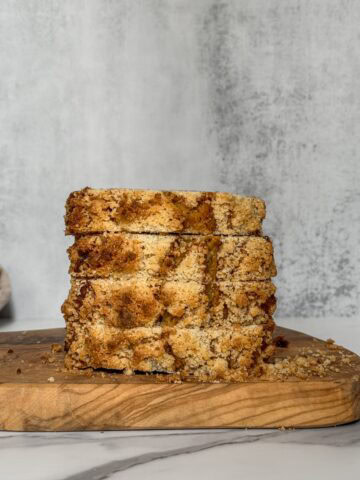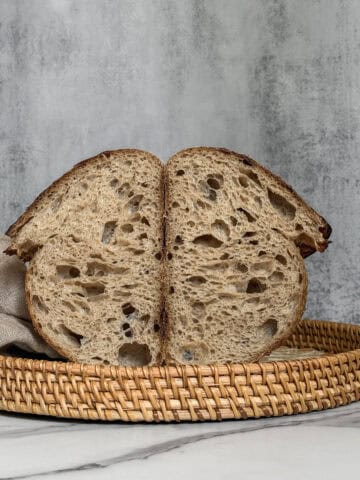

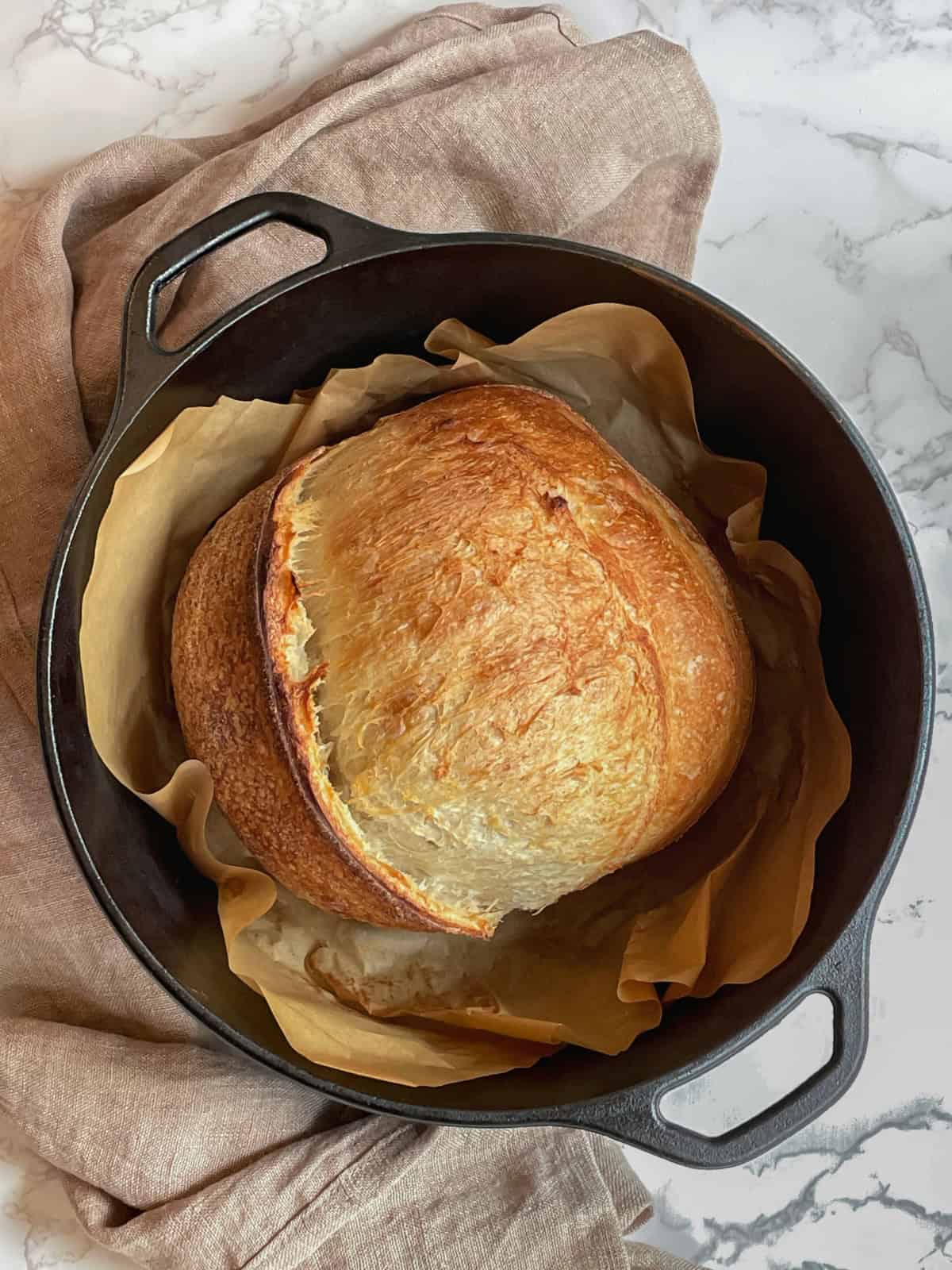
Quick summary: Unloaf sourdough bread is the easiest way to make real sourdough bread. It skips the parts that intimidate beginners and slow down busy bakers: no fed levain, no stretch and folds, and no preheating. You mix the dough, let it ferment, give it one simple shape, then cold-proof and bake it in a cold Dutch oven. That is it.
I am a big believer in classic technique (making levain, proper bread dough mixing, folding, preshaping, shaping, and baking with steam), and I love chasing great oven spring and an open crumb.
But the unloaf has earned its place: it is perfect for busy parents, anyone short on time, or those days you just want homemade bread without the fuss. It uses up your discard and asks almost nothing of you.
New to sourdough? I would start with my Beginner's Sourdough Guide and Beginner's Sourdough Bread recipe to learn the basics first, then come back for this easy method.
What is unloaf sourdough bread?
Unloaf sourdough bread is a relaxed style of sourdough that "un-does" the traditional rules. The name comes from three things it skips: unfed starter (you use discard, not a fed levain), untouched dough (no stretch and folds), and an unheated oven (you start in a cold Dutch oven, no preheating).
You still give the dough a simple shape, then cold-proof and bake. The result trades the big open crumb of artisan sourdough for an easy, flavorful everyday loaf.
Using unfed sourdough starter (aka discard)
Unfed sourdough starter is the same as a discard. It hasn't been fed for a while, and its age has a big impact on how it behaves in your dough.
- Unfed starter 1-3 days old: The yeast is still fairly active, though the starter may be slightly more acidic than a fresh, fed starter. Lactic acid bacteria (LAB) are already producing acids, mainly lactic acid, which adds a mild tang. Bulk fermentation will be a little slower than with a fully active starter.
- Unfed starter around 1 week old: Yeast activity slows further, while LAB populations take over, producing both lactic and acetic acids. The dough will ferment more slowly, and the flavor becomes tangier.
- Unfed starter older than 1 week: Yeast activity is very low, and the starter becomes more acidic, which inhibits both yeast and LAB in your dough. Bulk fermentation will be slower, and you may need a longer rise or slightly warmer conditions to get good results.
Ingredients
- Flour: Use white bread flour with high protein content. I am using King Arthur bread flour with 12.7% protein.
- Water: Use filtered or spring bottled water.
- Unfed sourdough starter: Flat starter with an age of less than a week. I am using the 100% hydration starter I fed 3 days ago, which reached its peak and was then placed in the fridge.
- Salt: Use fine sea salt. Avoid iodized table salt.
Final bread formula
| Ingredient | Baker's Percentage | Weight |
|---|---|---|
| Bread flour | 100% | 500g |
| Water | 75% | 375g |
| Unfed Sourdough Starter, 100% hydration | 20% | 100g |
| Salt | 2% | 10g |
- Total dough weight is 985g. If you need to adjust the bread formula for your own loaf, try my sourdough calculator.
- My kitchen temperature is 73°F (23°C) and the humidity is 40%.
- Bulk fermentation: 8-9 hours with a 75-80% increase in dough size (learn how to adjust bulk fermentation).
- Proofing time: 14 hours cold-proof in the fridge
- Bake in a cold oven at 450°F (232°C) with the lid on for 45-50 minutes.
How to make unloaf sourdough bread
1. Mix ingredients
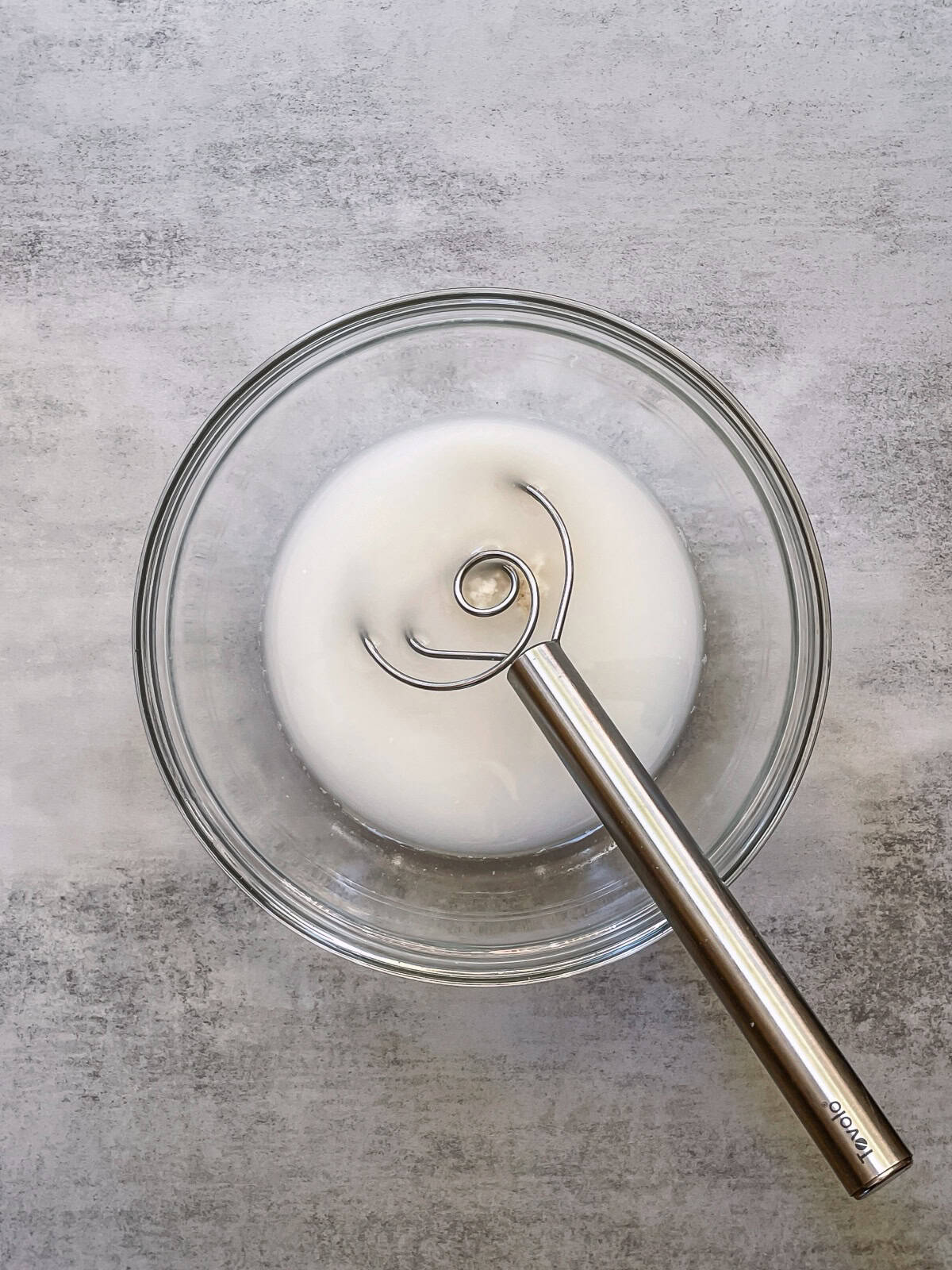
In a large mixing bowl, mix unfed sourdough starter and water.
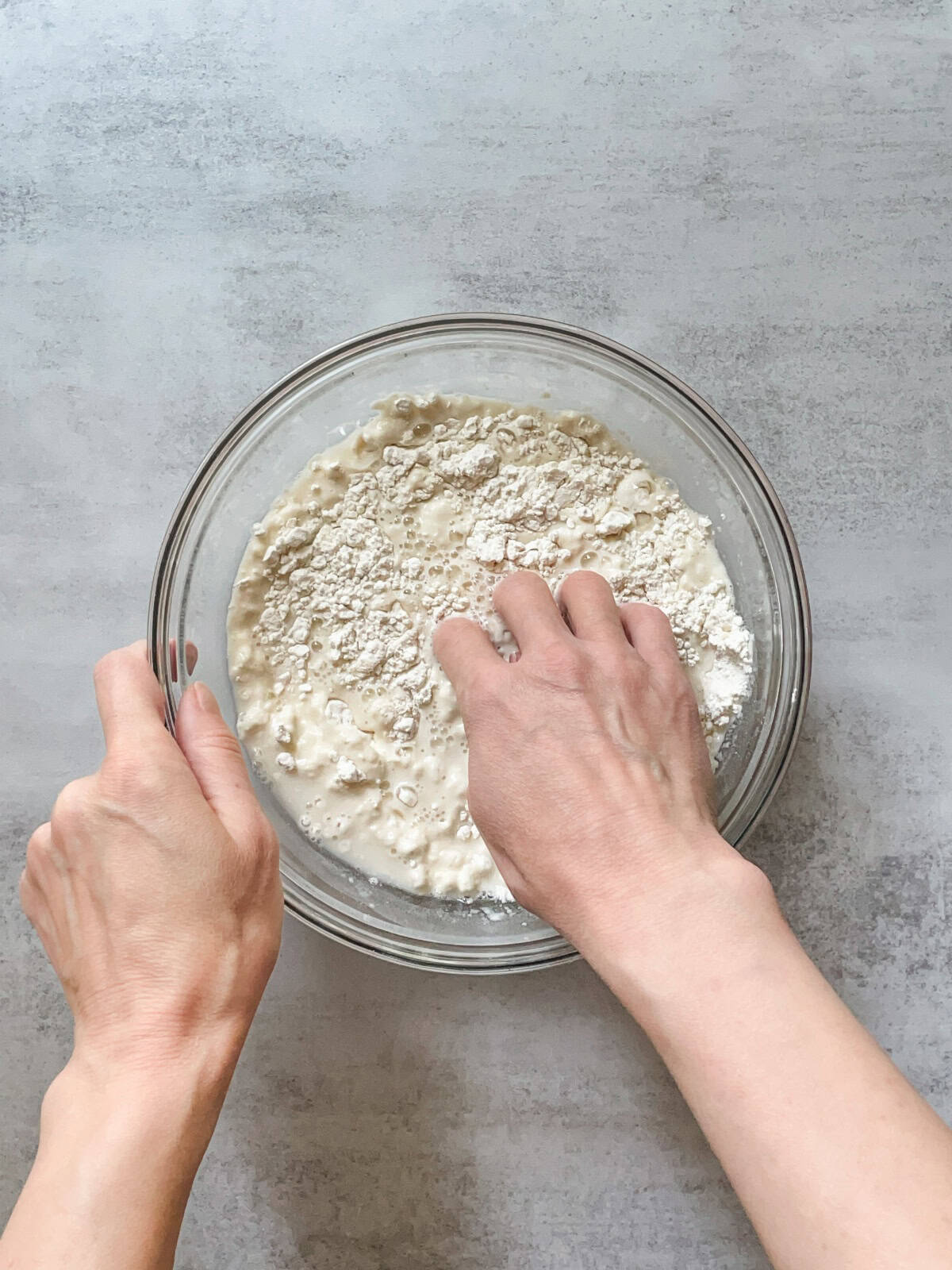
Add bread flour and salt, and mix by hand for 3-5 minutes. Cover the bowl with a plastic cap or a damp kitchen towel, and let it ferment.
2. Bulk fermentation
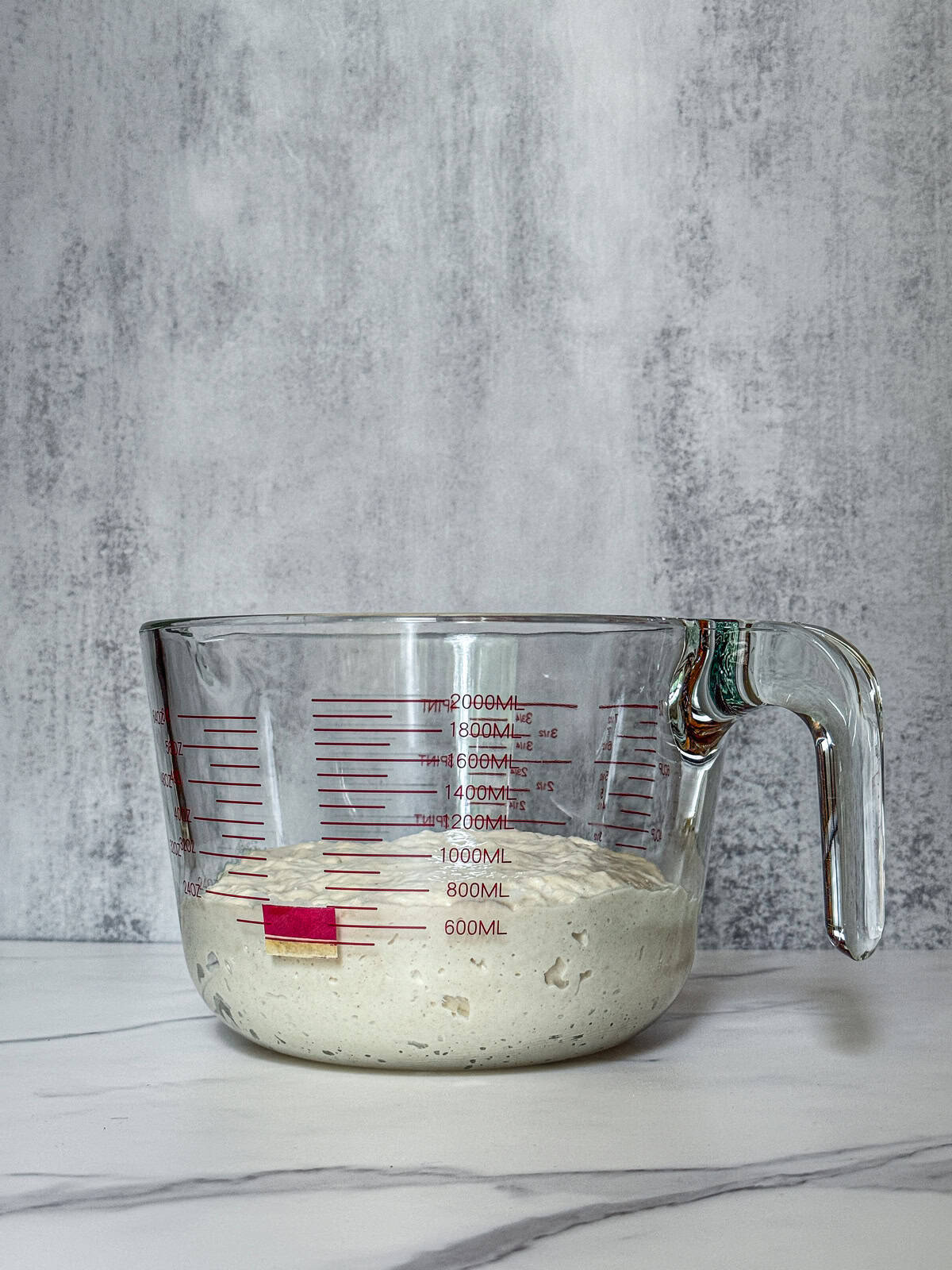
To track bulk fermentation, transfer the dough to a straight-sided container or a 2-L measuring cup.

Alternatively, use the aliquot jar method to track bulk fermentation.
The target dough rise depends on the dough temperature, which is influenced by your room temperature.
Look for visual signs when bulk fermentation is done, such as bubbles on the surface, and a light, airy feel. The dough edges should look slightly domed, and the dough should gently wobble when you shake the bowl from side to side.
Note: I usually aim for a 75-80% rise at 73°F (24°C), but with King Arthur bread flour and proper upfront mixing, I can sometimes push it to 90%.
3. Preshape (optional) and shape
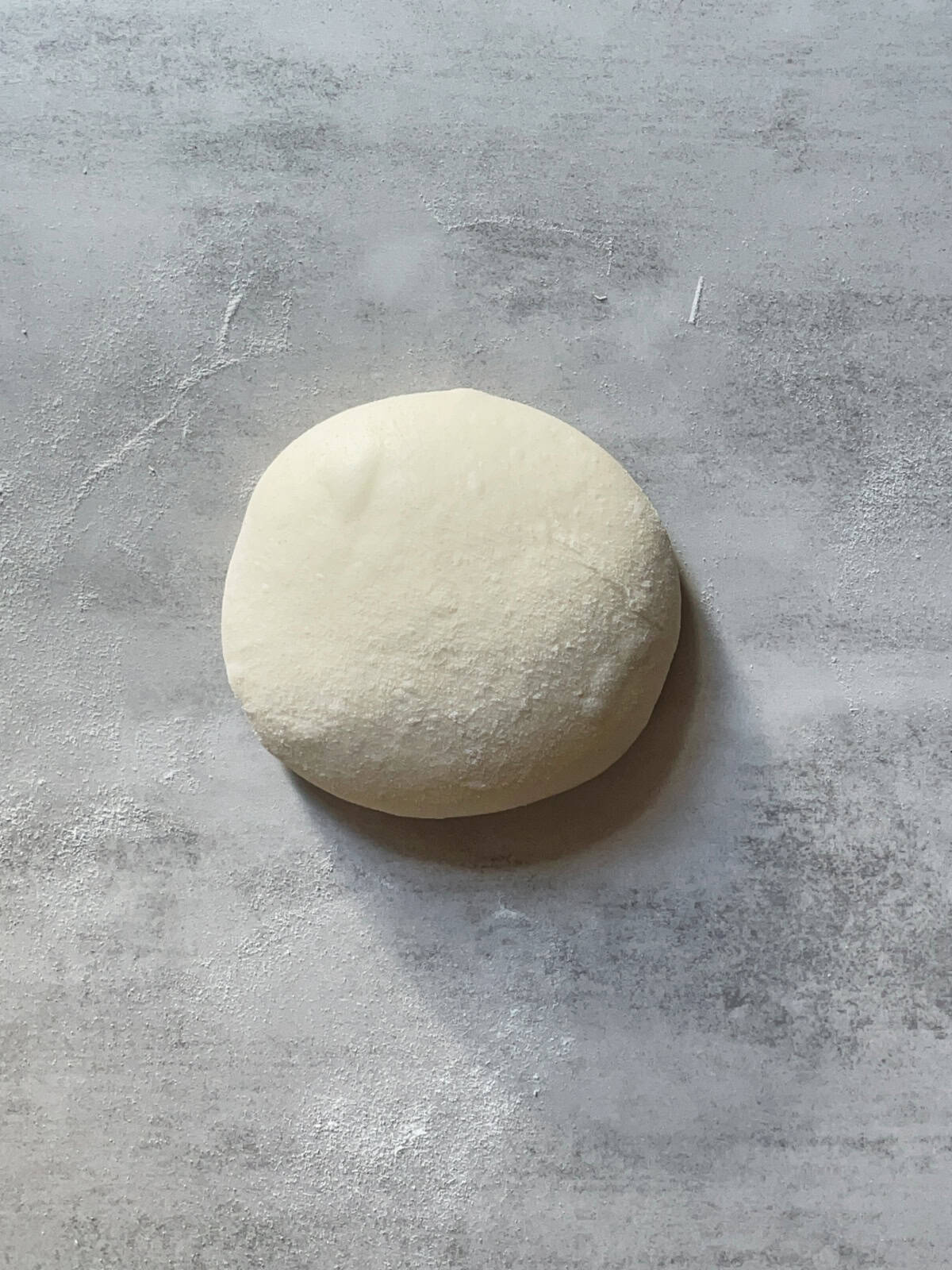
Lightly flour your work surface with white rice flour, preshape the dough into a round, and let it rest for 10-15 minutes. This step is optional: you can skip it when making a single loaf.
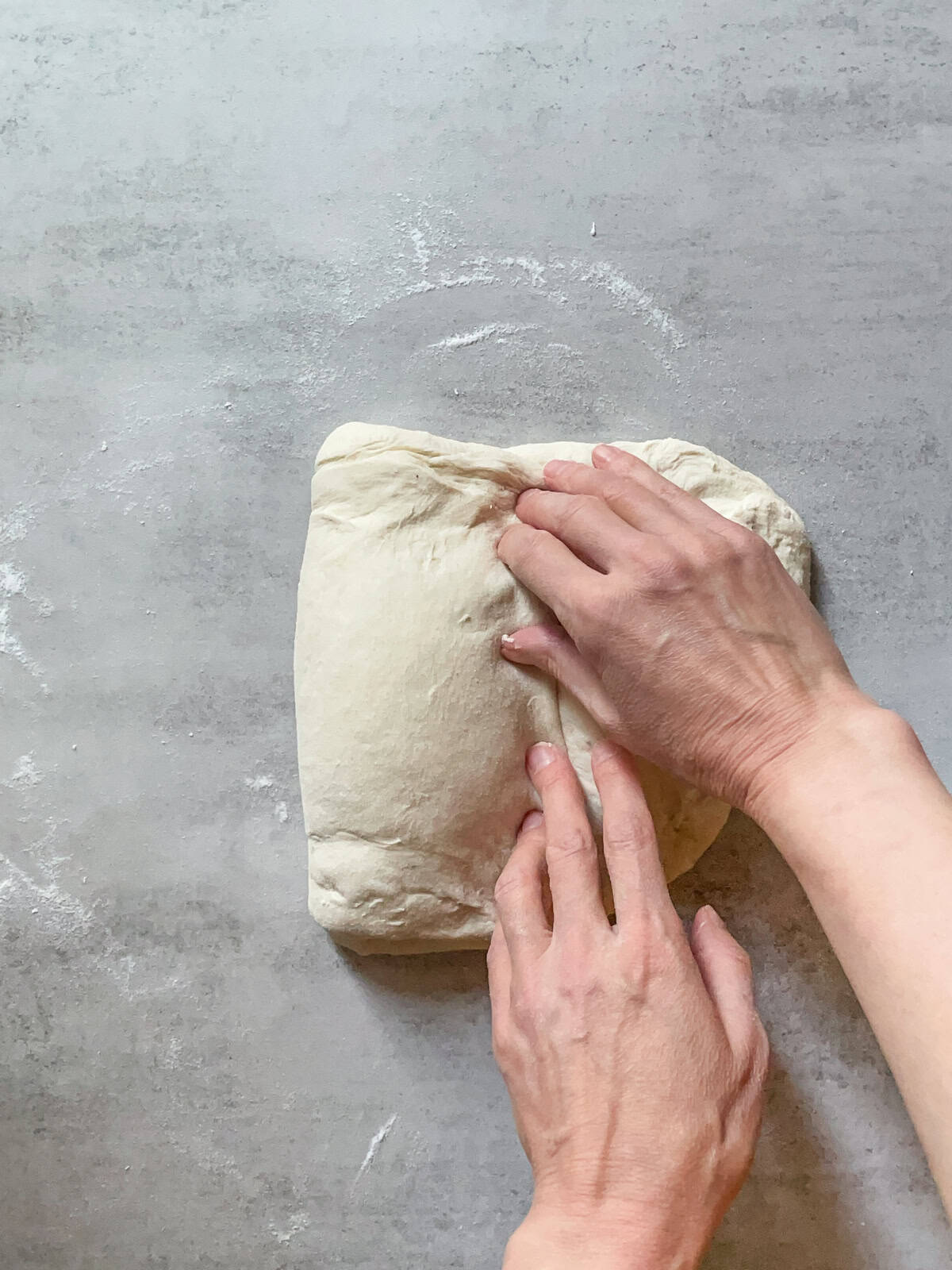
Shape the dough into a batard (or a boule), then place it seam-side up in a prepared 12-inch oval banneton (see my guide to shaping bread dough).
If you don't have a banneton, a bowl lined with a floured tea towel works just as well (see my guide for proofing basket alternatives).
4. Proof
Cover the banneton with a clean towel, disposable plastic cap, or place it inside a reusable plastic bag. Transfer the dough to the refrigerator and let it proof overnight.
Want bread sooner? After shaping, you can skip the overnight cold proof. Let the dough proof on the counter for a couple of hours (the exact time depends on your room temperature), then score it and bake it immediately in a cold Dutch oven. An overnight cold proof develops a deeper flavor, but baking the loaf the same day also produces excellent results.
5. Score
Take the chilled dough from the fridge and place it on a piece of parchment paper. Using a bread lame, make a single slash or score a square pattern for a boule.
6. Bake
Bake the bread in a cold conventional oven. Lift the parchment paper, place the dough in a Dutch oven, cover it with the lid, and put the pot in the cold oven. Set the oven to 450°F (230°C) and bake for about 45-50 minutes with the lid on.
Check the doneness, using a probe thermometer. The bread internal temperature should reach 205-210°F (96-99°C). I usually aim for 207°F (97°C) or higher.
Carefully remove the bread from the Dutch oven and let it cool on a wire rack for at least 2 hours before slicing.
Expert tips
- Unfed starter: While you can use unfed sourdough starter straight from the fridge, I recommend using a starter that was fed within the past week and allowed to peak before being refrigerated. I am all about better-quality bread than just mediocre.
- Warm up your starter: If time allows, let your unfed sourdough starter warm up at room temperature before mixing the dough. Using a cold starter lowers the final dough temperature (FDT), slowing fermentation and extending bulk fermentation.
- Baking vessel: You can bake sourdough in a cold oven using a Dutch oven, but a roasting pan is preferable because it heats up faster.
- Safety tip: Always use oven mitts or silicone gloves to handle hot pans.
- Storage and freezing: Store sourdough bread for 3-5 days. Freeze individual slices for up to 1-2 weeks, a whole loaf for 1-2 months.
Bulk fermentation expectations
Using sourdough discard slows bulk fermentation compared to a fully active levain / sourdough starter at peak. Depending on the starter's age, expect:
- 1-3 day-old discard: about 5-10% longer bulk fermentation
- About one week-old discard: about 10-20% longer
- Older discard: up to 25-30% longer, and it will benefit from fermenting the dough in a warm place.
Note: These are only estimates. Always watch the dough, not the clock. Look for signs such as increased volume, bubbles, and a light, jiggly texture to determine when bulk fermentation is finished.
FAQ
Can you add inclusions to unloaf sourdough? Yes. Since there are no stretch and folds, add them during shaping: press the dough into a rough square, sprinkle on your inclusions, then roll or fold it up and shape.
Can you bake unloaf in a loaf pan instead of a Dutch oven? Yes. Shape as usual, then bake in a greased loaf pan (see my loaf pan method).
Can you use sourdough starter straight from the fridge? You can, but let it come to room temperature first for a better rise. A cold starter lowers the dough temperature and slows fermentation (see my guide to using a starter straight from the fridge).
Is unfed starter the same as discard? Yes. An unfed starter is one that hasn't been fed recently, which is the same as a discard.
Can you make this as mini loaves? Yes. Divide the shaped dough and bake in mini loaf pans. Reduce the baking time for the smaller size (see my mini loaves recipe).
PrintRecipe
Unloaf Sourdough Bread Recipe
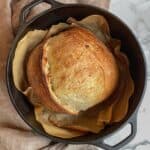
Unloaf sourdough bread recipe is a relaxed, beginner-friendly sourdough made with unfed starter. No stretching, no fancy shaping, and no preheating: mix the dough, place it in a pan, and bake for simple, homemade, unloaf bread.
- Prep Time: 21 hours, 40 minutes
- Cook Time: 50 minutes
- Total Time: 22 hours, 30 minutes
- Yield: 10 slices 1x
- Method: Baking
- Cuisine: American
Ingredients
For the bread dough:
- 500 g bread flour (I use King Arthur organic bread flour)
- 375 g water (75% hydration)
- 100 g unfed starter (flat and warmed up)
- 10 g fine sea salt (I use Redmond ancient fine sea salt)
10 g white rice flour (for dusting)
Instructions
- Mix ingredients: In a large mixing bowl, mix unfed sourdough starter and water. Add bread flour and salt, and mix by hand for 3-5 minutes. Cover the bowl with a damp kitchen towel or a plastic cap and let it ferment.
- Bulk fermentation: To track bulk fermentation, transfer the dough to a straight-sided container or a 2-L measuring cup. Alternatively, use the aliquot jar method. The target dough rise depends on the dough temperature, which is influenced by your room temperature. Look for visual signs when bulk fermentation is done, such as bubbles on the surface, and a light, airy feel. The dough edges should look slightly domed, and the dough should gently wobble when you shake the bowl from side to side.
- Preshape (optional) and shape: Lightly flour your work surface with white rice flour, preshape the dough into a round, and let it rest for 10-15 minutes. This step is optional: you can skip it when making a single loaf. Shape the dough into a batard (or a boule), then place it seam-side up in a prepared 12-inch oval banneton.
- Proof: Cover the banneton with a clean towel, disposable plastic cap, or place it inside a reusable plastic bag. Transfer the dough to the refrigerator and let it proof overnight.
- Score: Take the chilled dough from the fridge and place it on a piece of parchment paper. Using a bread lame, make a single slash for a batard or score a square pattern for a boule.
- Bake the bread in a cold conventional oven. Place the dough in a cold Dutch oven or Granite Ware roasting pan, cover with the lid, and place the pot in the cold oven. Set the oven to 450°F (230°C) and bake for about 45-50 minutes with the lid on. Check the doneness, using a probe thermometer. The bread internal temperature should reach 205-210°F (96-99°C).
- Cool bread: Carefully remove the bread from the Dutch oven and let it cool on a wire rack for at least 2 hours before slicing.
Notes
- Unfed starter: While you can use unfed sourdough starter straight from the fridge, I recommend using a starter that was fed within the past week and allowed to peak before being refrigerated. I am all about better-quality bread than just mediocre.
- Warm up your starter: If time allows, let your unfed sourdough starter warm up at room temperature before mixing the dough. Using a cold starter lowers the final dough temperature (FDT), slowing fermentation and extending bulk fermentation.
- Baking vessel: You can bake sourdough in a cold oven using a Dutch oven, but a roasting pan is preferable because it heats up faster.
- Storage and freezing: Store sourdough bread for 3-5 days. Freeze individual slices for up to 1-2 weeks, a whole loaf for 1-2 months.
- Safety tip: Always use oven mitts or silicone gloves when handling hot pans.
- Check for doneness: Your bread is fully baked when the internal temperature reaches 205-210°F (96-99°C). I usually aim for 207°F (97°C) or higher. Use a digital probe thermometer to check.
- Want to create a custom formula for your loaf? Try my sourdough calculator.
- Need help getting started? Check out my beginner's sourdough bread guide to learn sourdough basics first.
- Note: Nutritional information does not include the white rice flour used for dusting.
Nutrition
- Serving Size: 1 slice
- Calories: 167
- Sugar: 0.1g
- Sodium: 324mg
- Fat: 0.5g
- Saturated Fat: 0.1g
- Carbohydrates: 35g
- Fiber: 1.2g
- Protein: 4.7g
- Cholesterol: 0mg